In depth
Water Damage Restoration in Philadelphia: how the job actually runs.
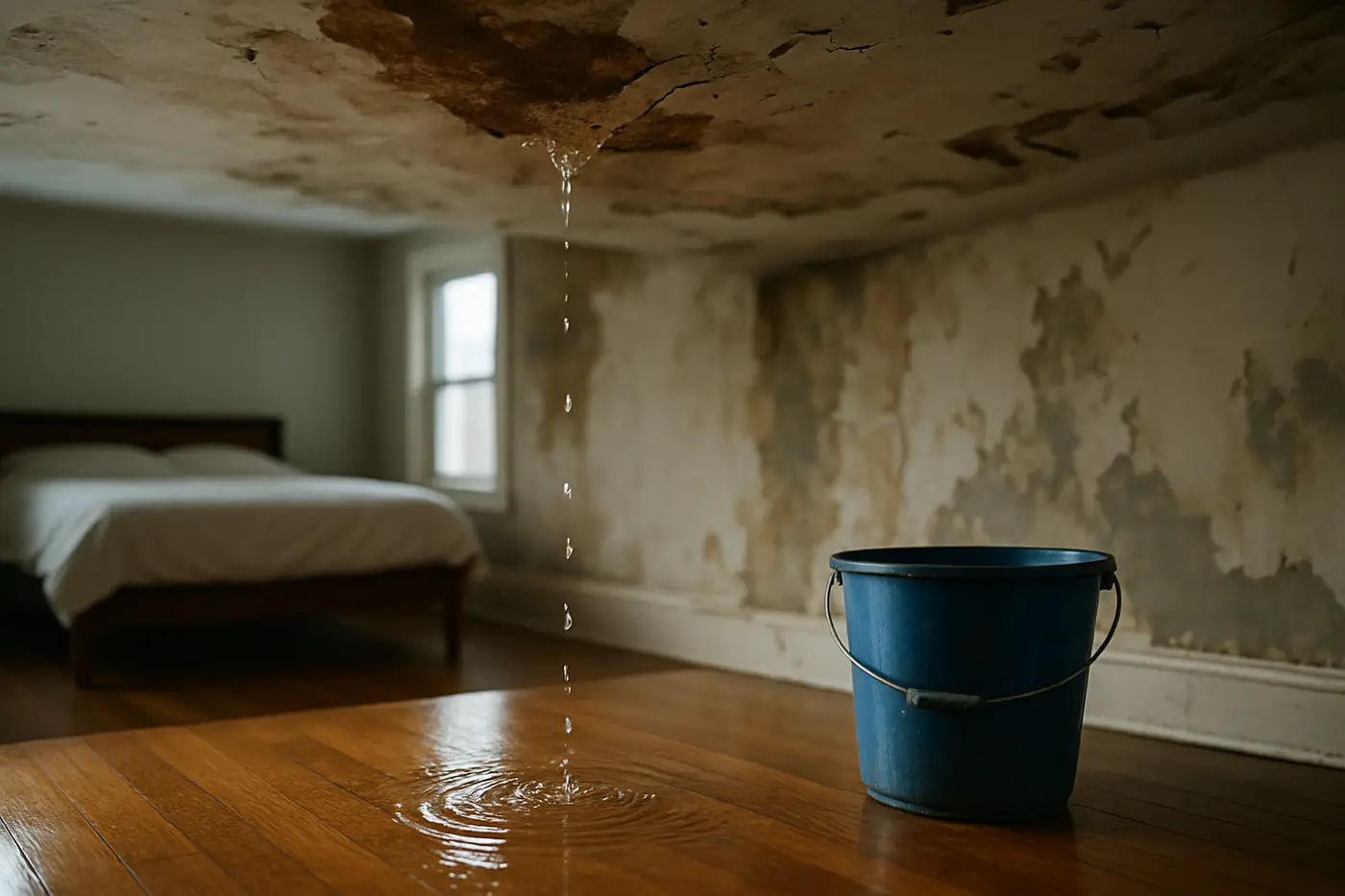
Water damage in a Philadelphia rowhome has a clock on it. Wet drywall, plaster, joists and carpet pad support mold within 24 to 48 hours, and in a July basement with a dew point near 70 degrees F that window is at the short end. Water damage restoration is the work of getting the water out, mapping what it wet, drying the structure to a measured standard and documenting every step so the loss stays a water claim instead of becoming a mold claim. We work to the IICRC S500 standard for water damage and, when the clock has already run out, to S520 for the mold.
The 24 to 48 hour window
Mold spores are already on every surface in your house. What they need is moisture and food, and a wet rowhome supplies both: drywall paper, wood lath, joists, cardboard, carpet pad. Within about a day the spores germinate; within two, growth is established. That is why a burst pipe cleaned up on Tuesday is a drying job and the same pipe found on Saturday is a remediation job. Our post on why you have 24 to 48 hours explains the science. The practical rule: call the day it happens, not the day it smells.
What water damage restoration involves under IICRC S500
Stop the source. Shut the supply, tarp the roof, or wait until the sewer backup recedes. Nothing dries while the water is still coming in.
Extract. Standing water is pumped and vacuumed with truck-mounted or portable extractors. Every gallon extracted is a gallon the dehumidifiers do not have to pull out of the air.
Moisture mapping. Walls, floors and framing are metered and the readings drawn on a floor plan. This defines the drying chamber and tells us what the water reached that you cannot see: the party-wall cavity, the bottom plate behind the kitchen cabinets, the joists under the bathroom.
Remove what will not dry. Carpet pad, wet batt insulation, cardboard, and any porous material touched by Category 3 water comes out. Drywall wet more than 48 hours or wicked more than a few inches usually comes out in a flood cut.
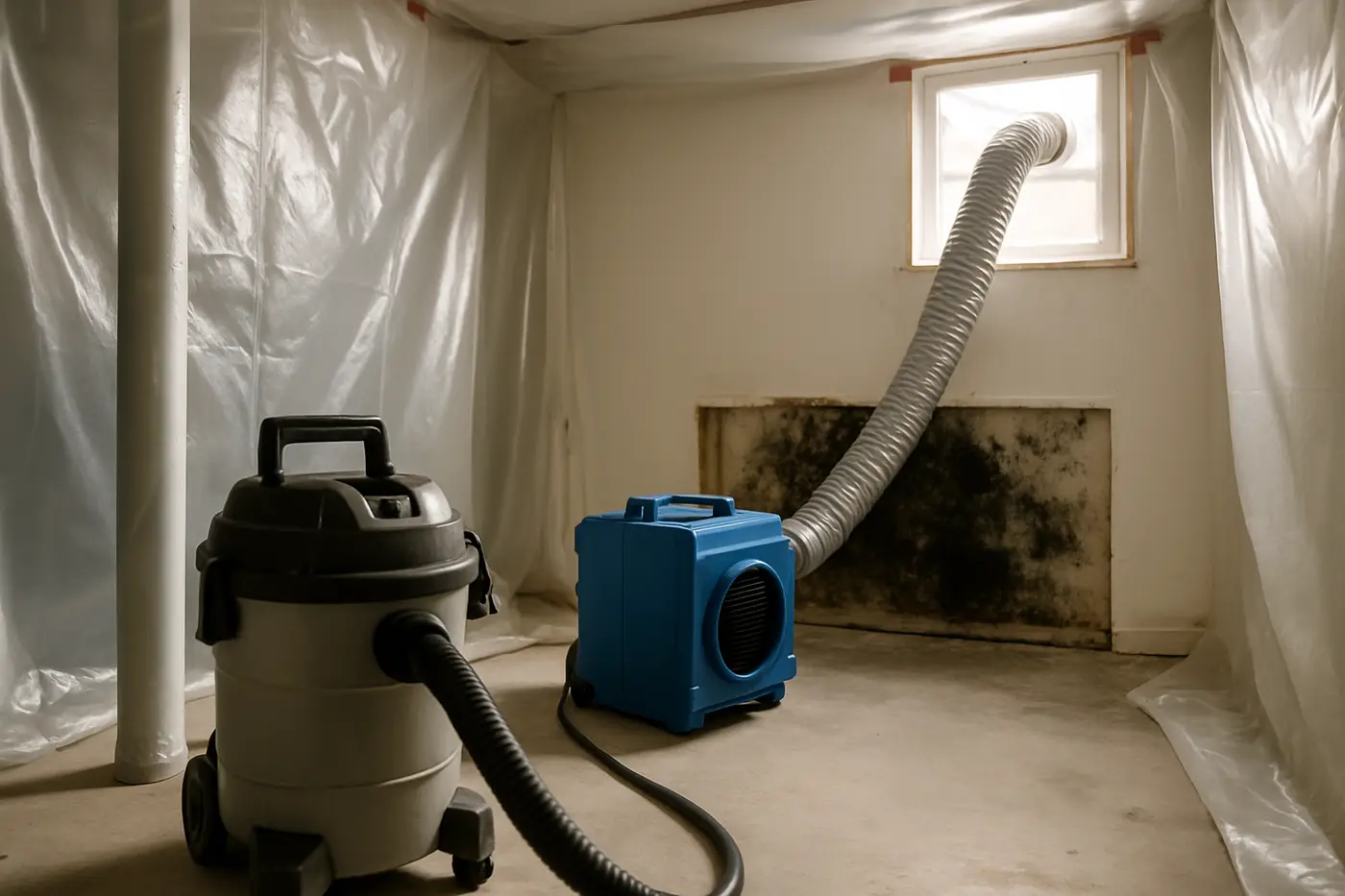
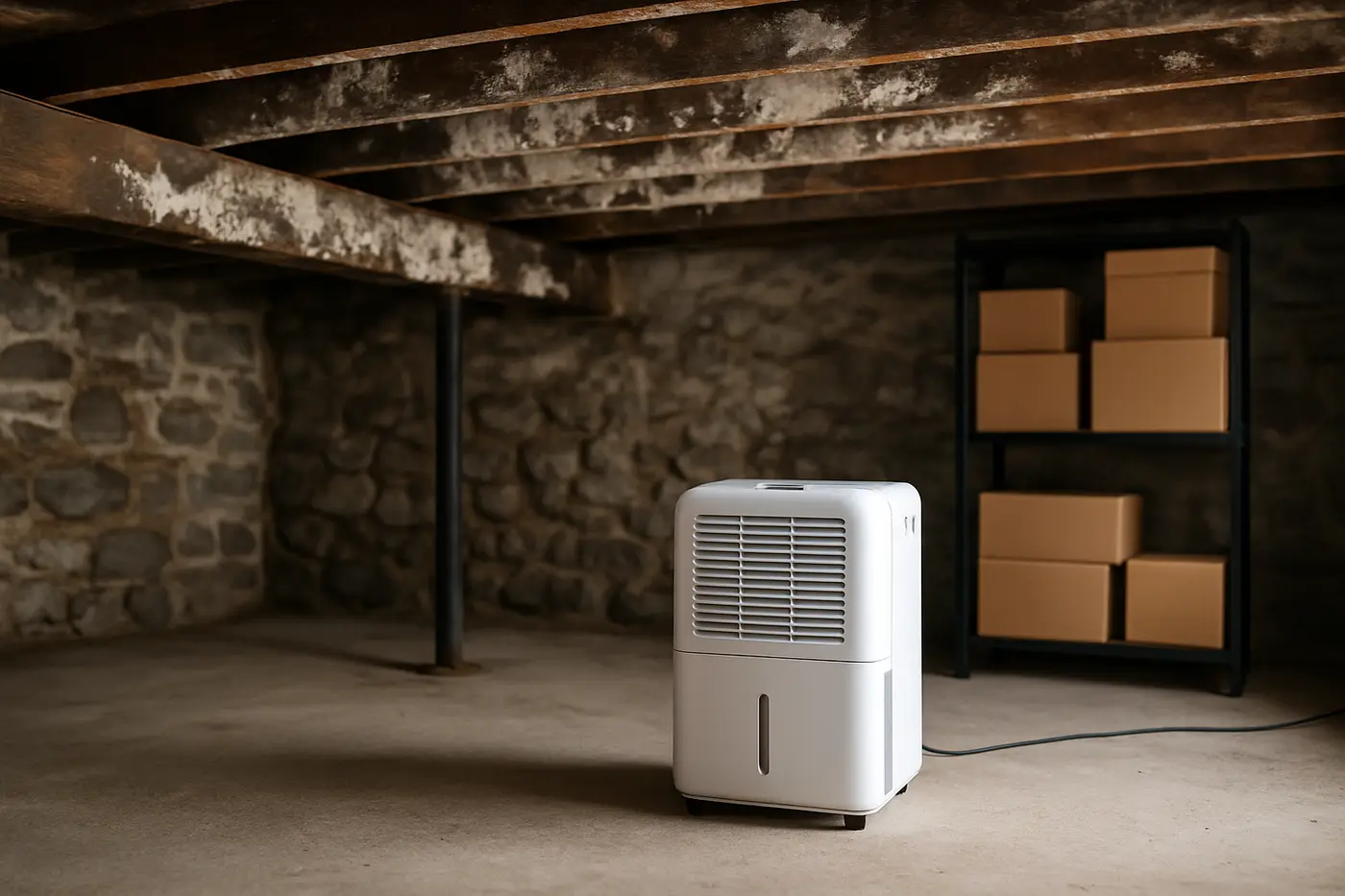
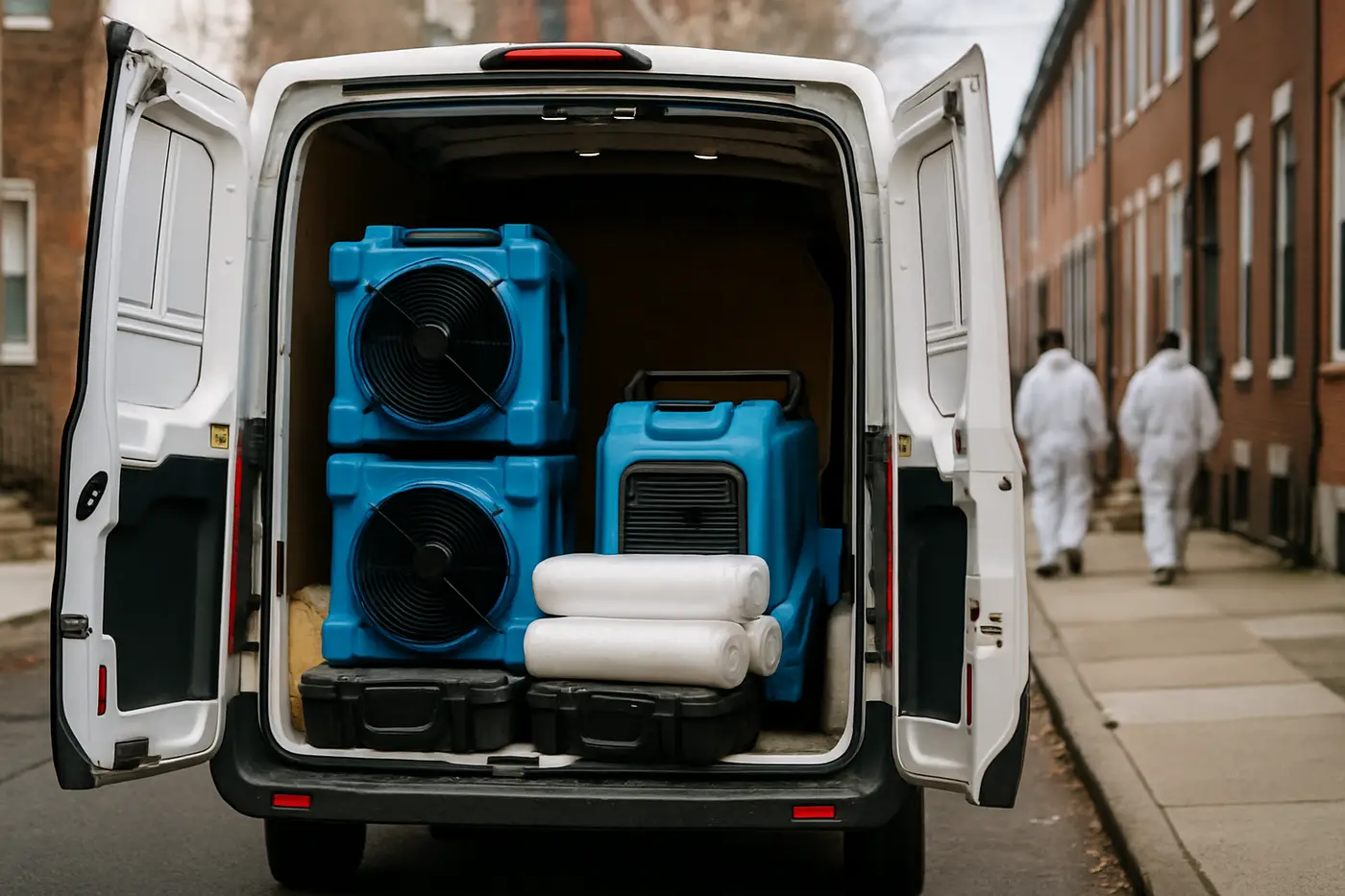
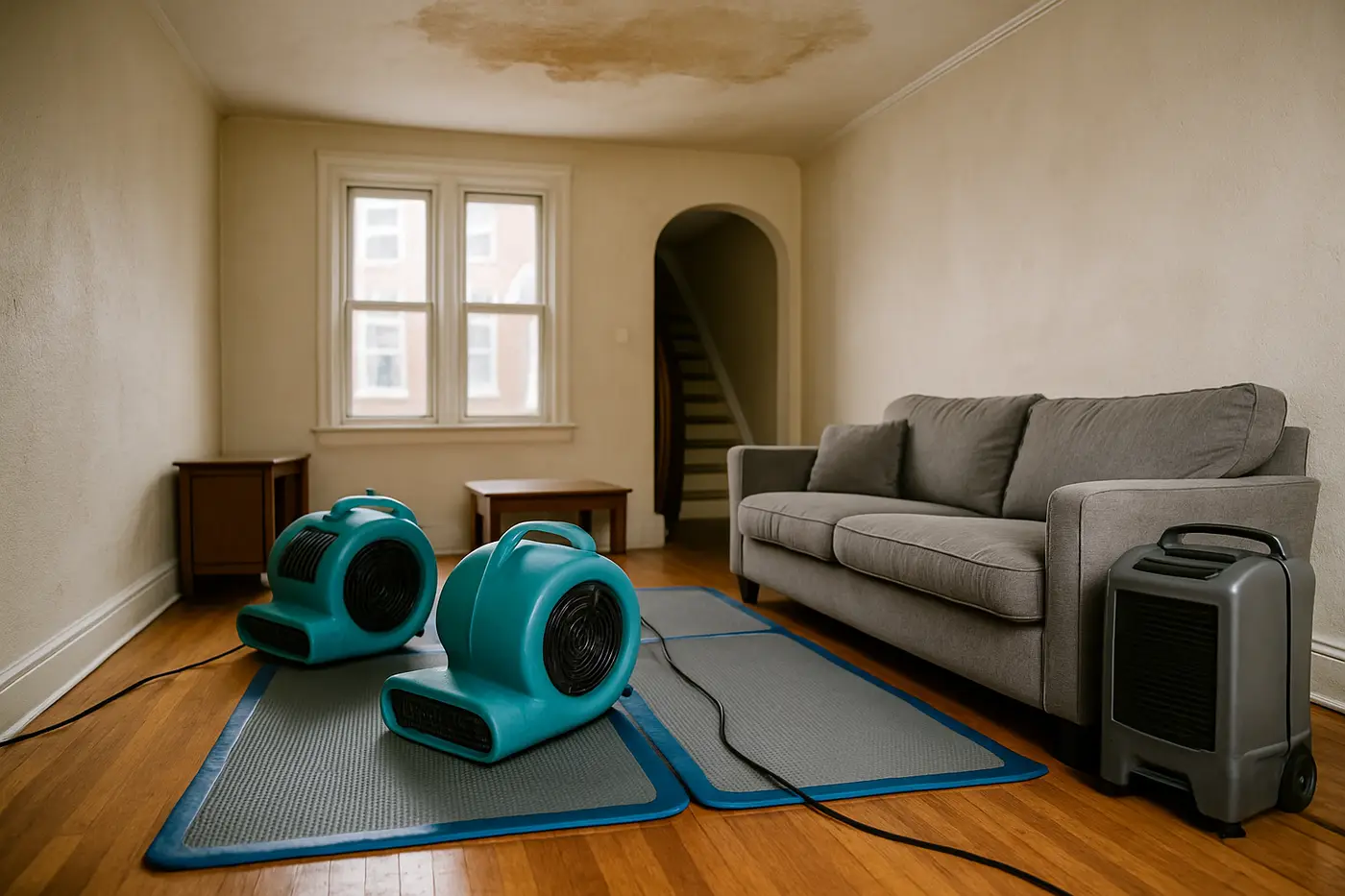
Structural drying. Air movers move air across wet surfaces to speed evaporation. Low-grain refrigerant (LGR) dehumidifiers pull that moisture out of the air, and in a sealed drying chamber the two together bring plaster, framing and slab down to dry standard. Equipment is sized to the cubic footage and the class of water loss.
Monitor and document. Readings are logged daily, equipment is moved as areas dry, and the job is finished when every material matches its dry standard against an unaffected reference in the same house, typically 3 to 5 days for clean water and 5 to 10 for a basement.
Water categories 1, 2 and 3
| Category | Source | What it means for materials |
|---|---|---|
| Category 1, clean water | Burst supply line, water heater, rain through a roof seam, tub overflow | Most materials can be dried in place if work starts within 48 hours |
| Category 2, gray water | Washing machine and dishwasher discharge, toilet overflow with urine only, sump failure | Carpet pad and insulation removed; other materials dried and cleaned with antimicrobial |
| Category 3, black water | Combined sewer backup, river or creek flooding, any water that sat more than 48 hours | All porous materials removed regardless of appearance; structure cleaned and disinfected; full PPE |
Category climbs with time. Clean water that sits in a warm basement for three days is treated as Category 3.
Where water gets into Philadelphia rowhomes
- Flat-roof leaks. Seams, parapets, drains and pitch pockets on silver-coated roofs that were never recoated. Freeze-thaw cycles open them in winter and summer thunderstorms find them. Water travels down inside the rear wall or along a joist and shows up two rooms from the leak.
- Party-wall leaks. The neighbor’s roof drain, their bathroom or their radiator line leaks into the shared wall, and your plaster is what gets wet. The moisture map is often the only way to prove where it started.
- Burst pipes. Radiator lines and supply lines in exterior walls and unheated basements freeze in January cold snaps. Upper-unit leaks in converted rowhomes and condo buildings in Old City and Fairmount travel down every wall cavity to the basement, and the association or landlord needs one report covering every affected unit.
- Sewer backups. The Philadelphia Water Department’s combined sewer serves roughly the older two thirds of the city. Heavy rain pushes sewer water up through basement floor drains. It is Category 3, and PWD’s Basement Backup Protection Program installs backwater valves for eligible properties. Call 311 to report a backup.
- Appliance and fixture failures. Water heaters, washing machine hoses, AC condensate lines, dishwashers and shower pans in 1950s bathrooms.
- Window and bay-window flashing. Wind-driven rain enters at the head of a bay window and wets the wall below.
Flooding in Philadelphia
On September 1 and 2, 2021, the remnants of Hurricane Ida pushed the Schuylkill River to a record crest at Philadelphia of about 16.4 feet. Main Street in Manayunk went under, the Vine Street Expressway filled, and low ground along the river in Roxborough and East Falls flooded. A federal disaster declaration followed for Philadelphia County. Tropical Storm Isaias in August 2020 flooded Eastwick and other low areas along Cobbs and Darby Creeks, and Eastwick remains the city’s most flood-prone neighborhood. Tacony-Frankford and Pennypack Creeks affect the Northeast; Wissahickon Creek and the Schuylkill affect the Northwest.
River and creek water is Category 3. Everything porous it touched comes out, and the job is a sewage cleanup as much as a drying job. Overland and river flooding is not covered by a homeowners policy; it needs a separate flood policy through NFIP or a private carrier.
Drying a rowhome is different
A rowhome shares walls with two neighbors, has plaster on brick instead of drywall on studs in many rooms, and has a basement that never fully dries on its own. That changes the drying plan. Plaster on brick dries slowly and needs air movement across the whole wall, not one fan in the corner. Party walls need readings on both sides where the neighbor allows it. Basements with stone foundations need LGR dehumidifiers sized for the constant moisture load from the walls and slab, and the drying chamber usually includes the whole basement, not the wet corner. In a converted rowhome in University City or Northern Liberties, the chamber may run through three units.
Insurance documentation
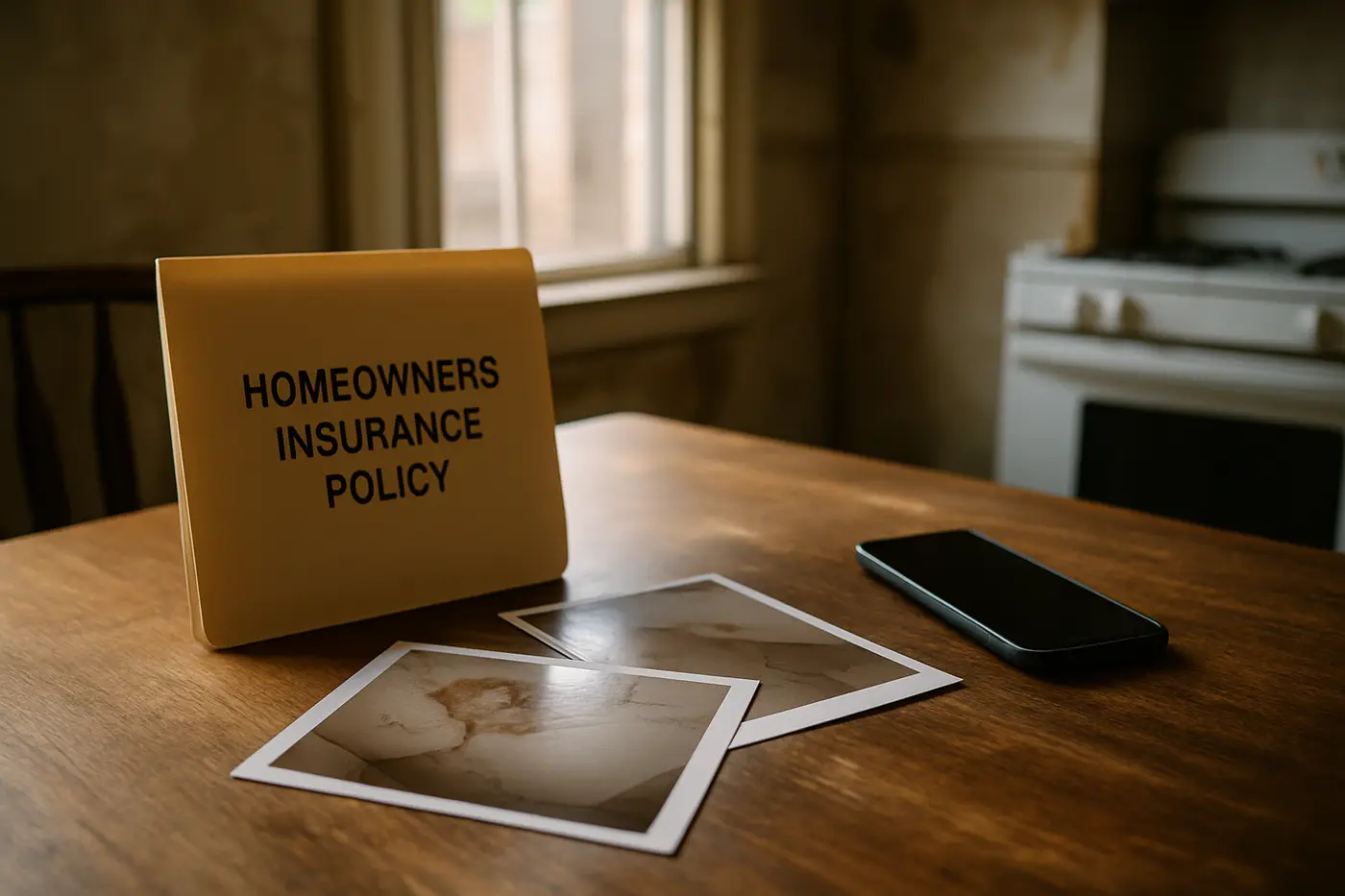
Standard HO-3 policies cover sudden and accidental water losses: burst pipes, water heater failures, appliance supply lines, storm damage that opens the roof. Sewer backup requires a water backup endorsement; flooding requires a flood policy. Mold that follows a covered loss is usually paid under a mold sublimit, commonly $5,000 to $10,000, and fast, documented drying is what keeps the loss from reaching that sublimit at all. Adjusters expect dated photos, a moisture map, daily drying logs, an equipment log, a scope of work and, for larger losses, an Xactimate estimate. We produce all of it and bill the carrier directly where they approve. Read does homeowners insurance cover mold in Pennsylvania.
When water damage becomes a mold job
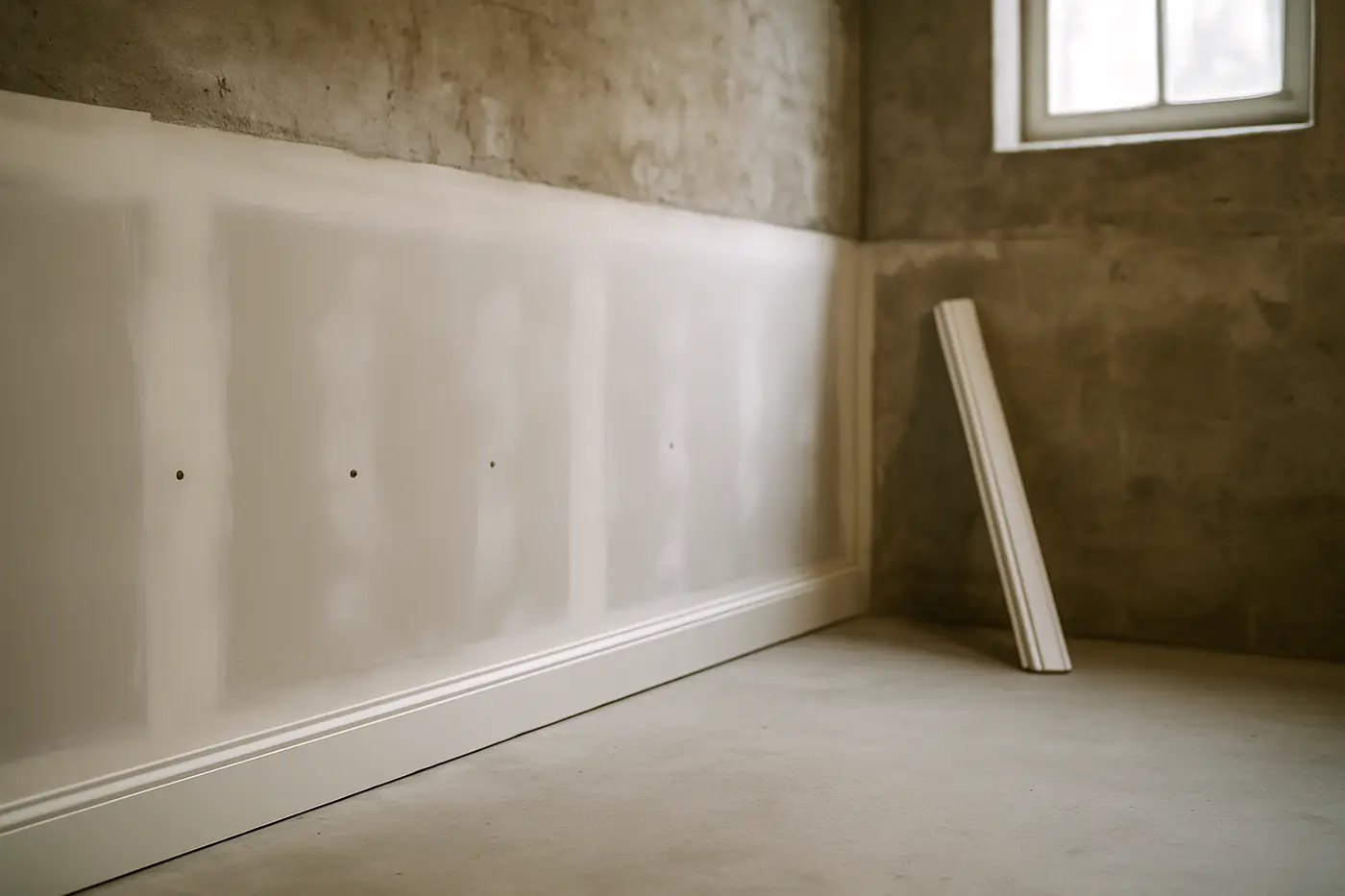
If the water sat more than 48 hours, if there is already a musty smell, or if drywall shows spotting when it is opened, the drying job becomes a mold remediation job with containment and negative air. A wet rowhome basement is the most common place that happens, and heavy growth after sewer water is priced as black mold removal. Rebuild of what was removed is scoped separately under mold damage repair and rebuild.
What water damage restoration costs in Philadelphia
Extraction and drying for 2 to 3 rooms runs $2,000 to $6,500. Drying equipment is $50 to $125 per unit per day; a typical room needs 3 to 5 days and a basement 5 to 10. Inspection with moisture mapping is $250 to $500, credited against the work. Contents pack-out is $1,000 to $5,000, rebuild is $1,000 to $5,000 per room, and heavy growth after Category 3 water is $2,500 to $10,000 as a contained remediation. The full table is on the pricing page. If there is water in your Philadelphia home right now, shut the source, move what you can off the floor, do not run the furnace fan, and call us or send the form. The first 48 hours decide the size of the job.
Last updated September 18, 2026