In depth
Residential Mold Remediation in Philadelphia: how the job actually runs.
Philadelphia is a rowhome city, and a rowhome is a good place for mold to hide. Brick party walls carry the neighbor’s roof leak into your bedroom. A basement with a stone foundation and a concrete floor breathes ground moisture all summer. A flat roof that was silver-coated decades ago leaks at the seams. Residential mold remediation is the work of finding the water, containing the affected rooms, removing the growth to the IICRC S520 standard, drying the structure and proving it is clean, whether you own the house, rent it, rent it out, or are trying to buy or sell it.
What residential mold remediation involves
The IICRC S520 standard sets the order, and the order matters.
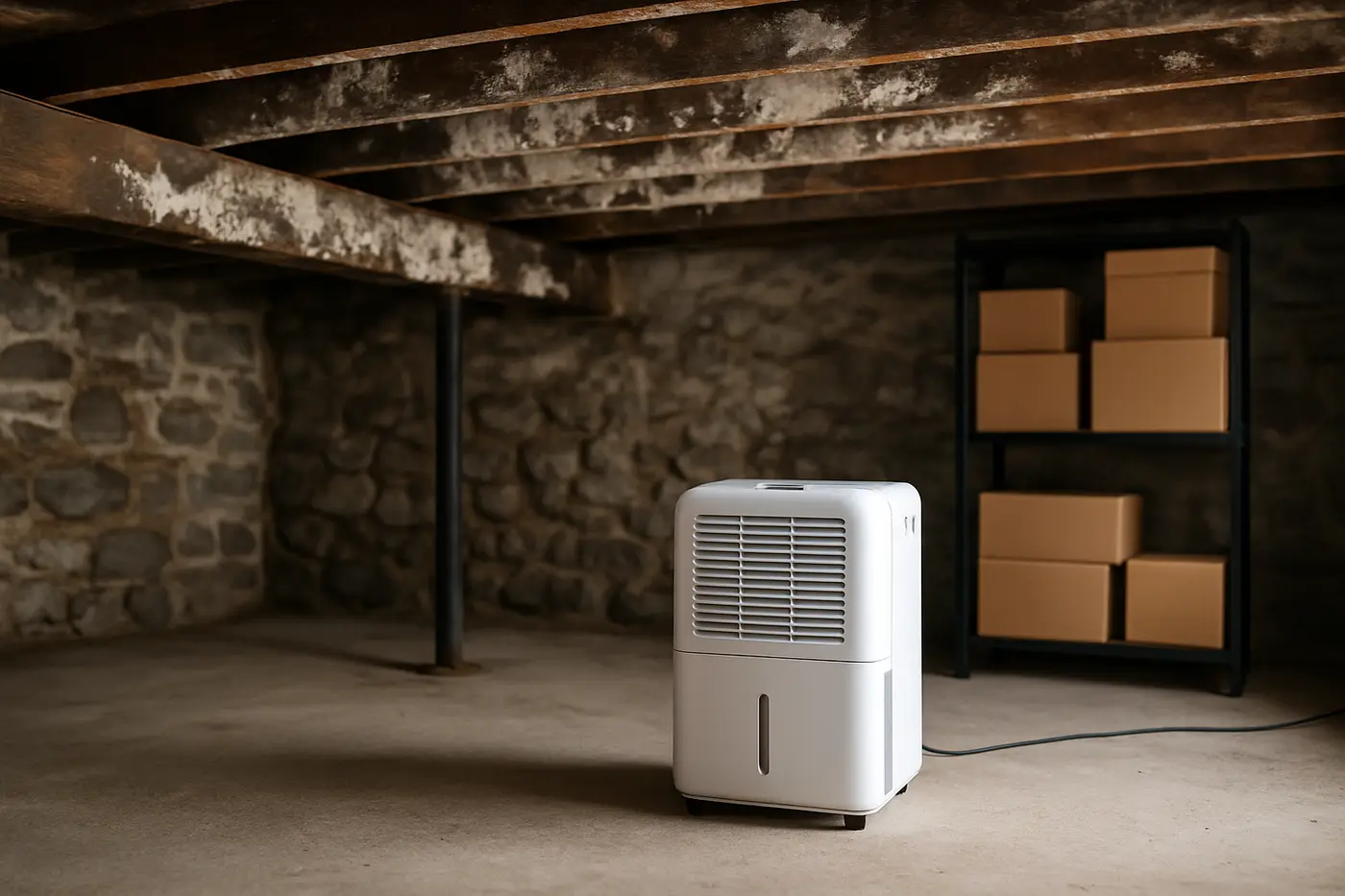
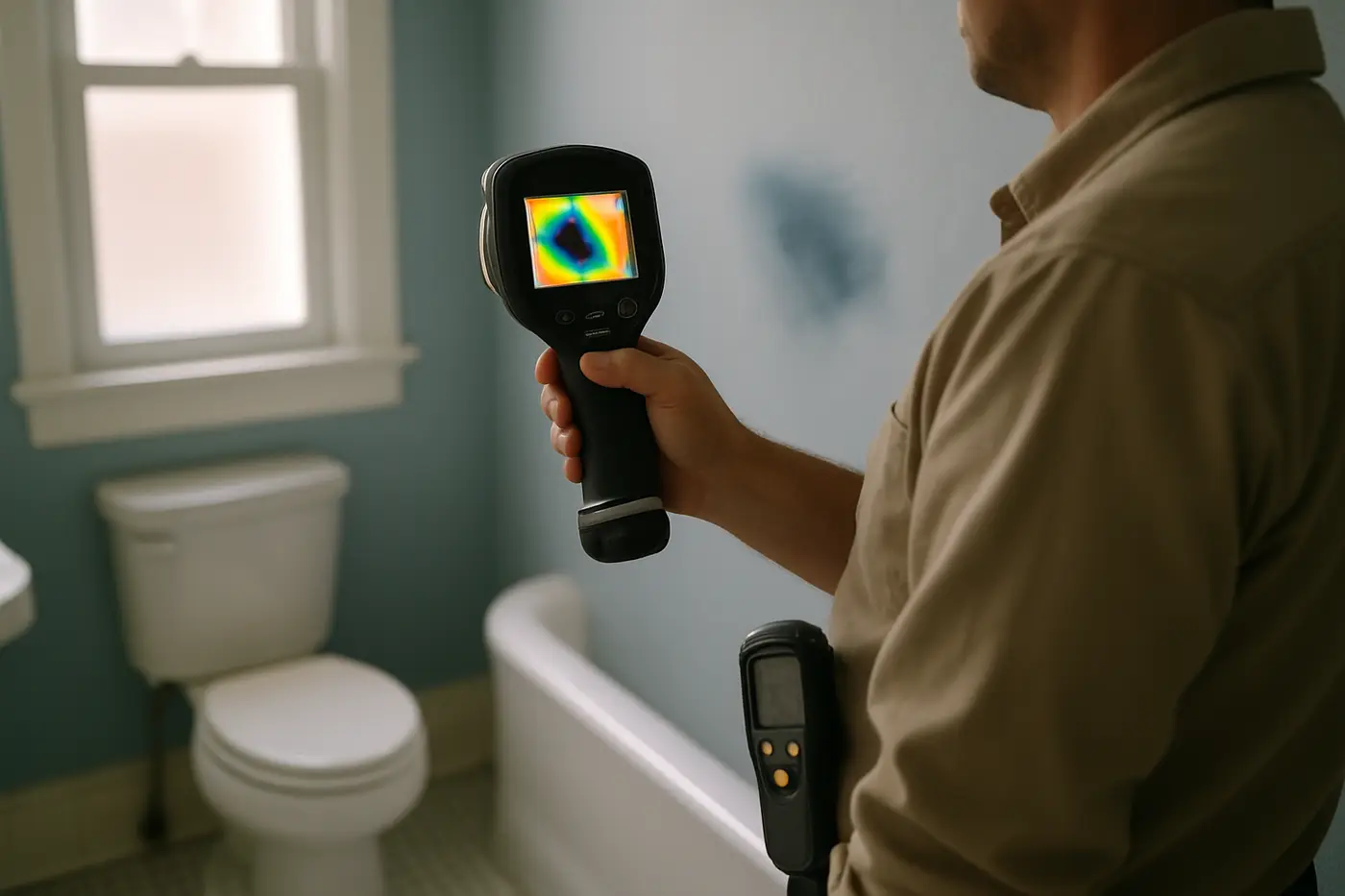
Moisture correction first. Mold is a moisture problem with a biological symptom. We meter the walls, floors and framing, check the roof, plumbing, basement and party walls, and measure relative humidity. The leak is fixed, the wet structure is dried, and a damp basement gets dehumidification. Remediation without moisture correction is a repeat visit.
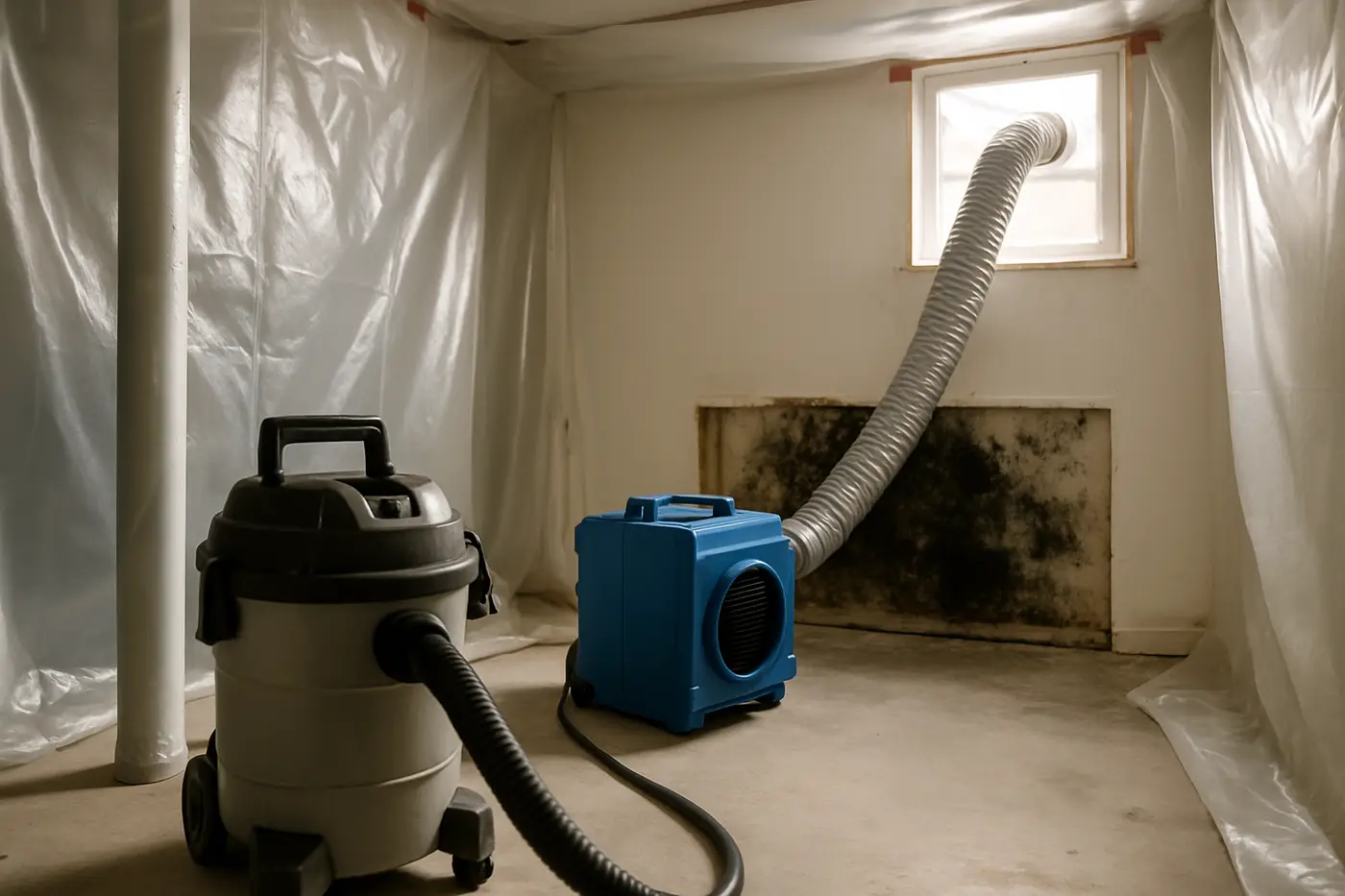
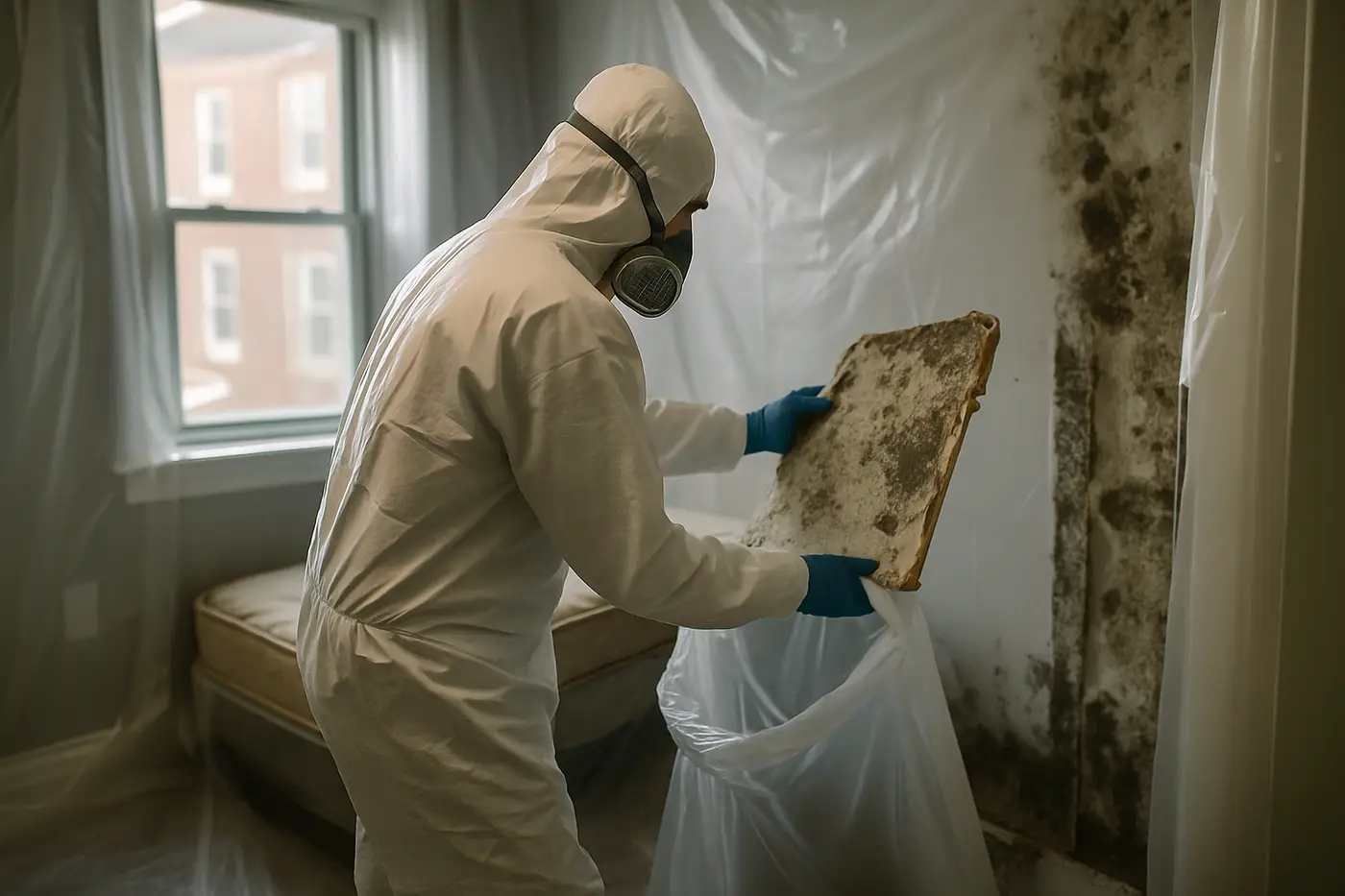
Containment. The affected rooms are sealed with poly sheeting and a zippered entry.
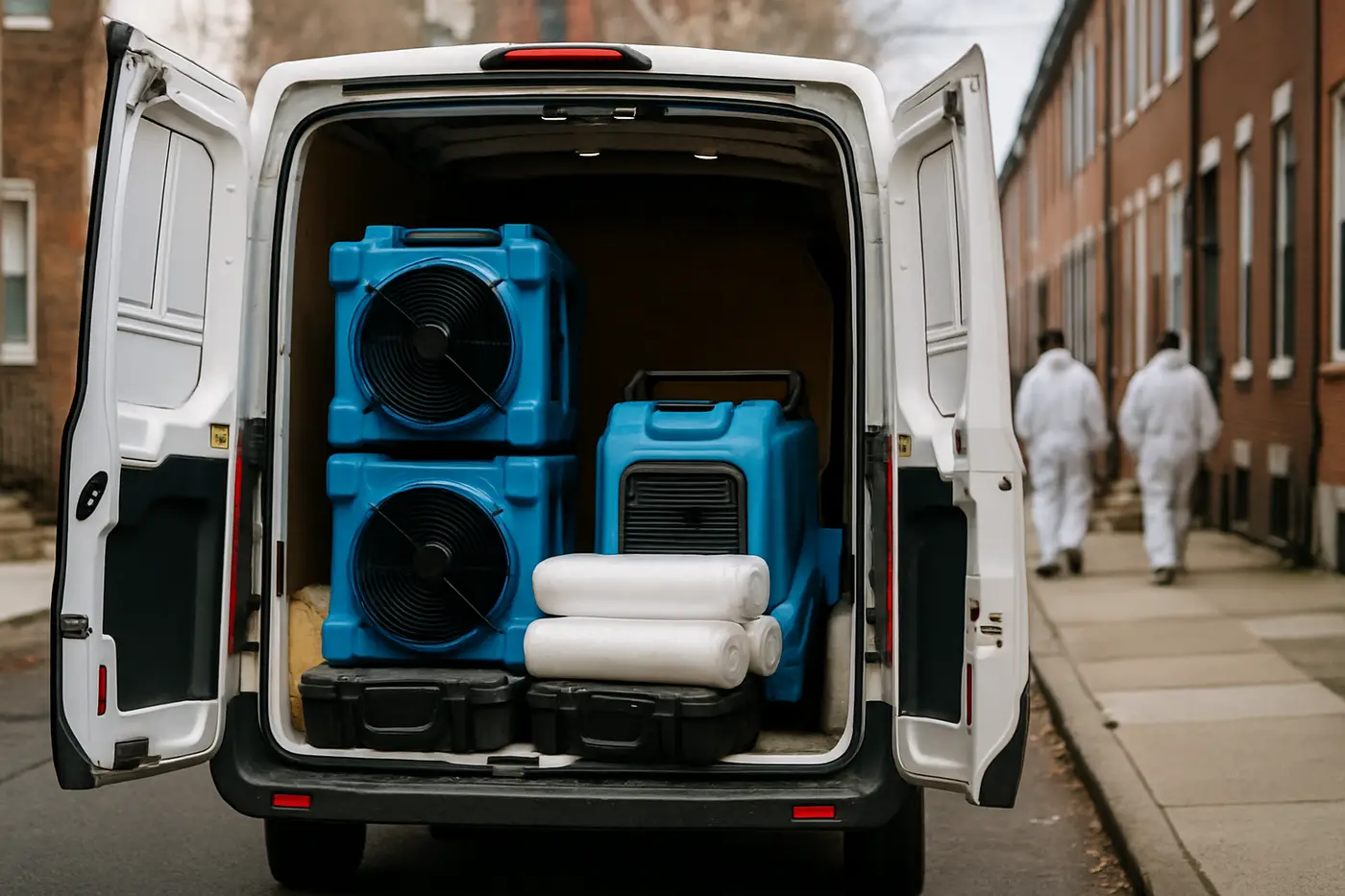
Negative air. HEPA-filtered air scrubbers pull air out of the containment so air moves from the clean side of the house into the work area, never the other way.
Removal. Porous materials that grew mold come out in sealed bags: drywall, plaster that has gone soft, insulation, carpet and pad, cardboard, trim.
Cleaning. Framing, brick, stone and concrete are HEPA vacuumed, damp wiped and, where growth has worked into the surface, abraded under negative air. An antimicrobial treatment follows.
Drying and verification. Air movers and LGR dehumidifiers run until every material is at dry standard, logged daily. Containment comes down only after the area passes inspection.
From the first call to clearance
Here is the sequence.
- The call. You tell us what you see and smell, where, and for how long. We ask about recent leaks, the roof, the basement and anyone in the home with asthma or allergies.
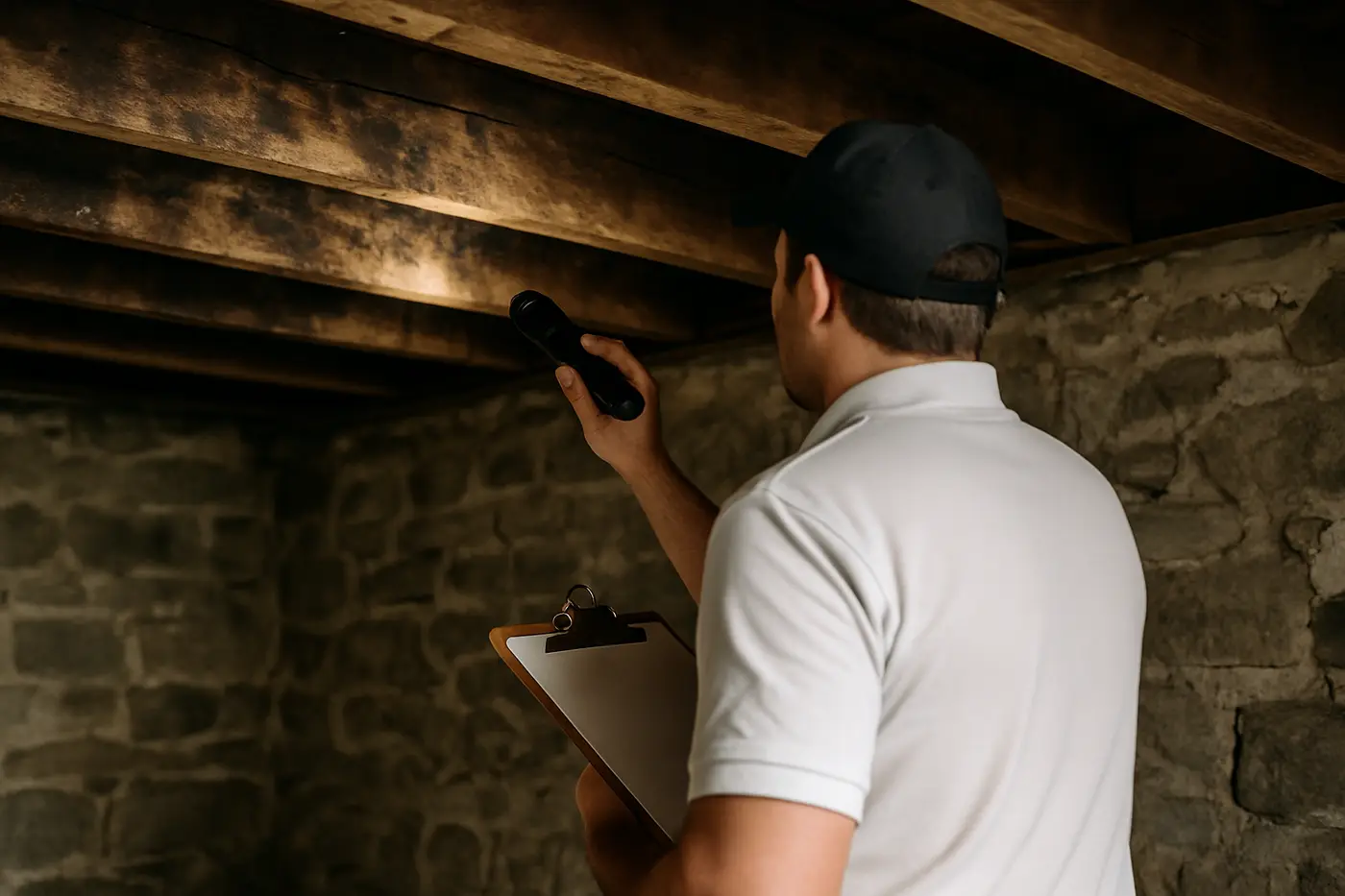
- The inspection. A scheduled visual inspection with a written estimate is free. Full moisture mapping with a written report, which you want for a rental, a sale or an insurance claim, is $250 to $500 and is credited against the work.
- The written scope. What is being removed, what is being cleaned, how the moisture is being corrected, how long it takes and what it costs. Nothing starts without it.
- Day one. Containment, negative air, and the start of removal. Most families stay in the house.
- Days two to four. Cleaning, antimicrobial, drying. A basement adds three to six working days and up to five to ten days of drying if the structure is wet.
- Verification. Visual check, moisture readings against a dry reference area in the same house, and, where you want it, independent clearance sampling.
- Hand-over. Photos, moisture logs and a written report. The rooms are ready for rebuild under mold damage repair or your own contractor.
Philadelphia homes: rowhomes, twins, trinities and converted apartments
The housing stock decides where mold shows up and how the job is scoped.
- Brick rowhomes, 1880s to 1940s. Shared party walls, a flat or low-slope roof and a basement under nearly every one. Leaks travel along the party wall from the neighbor’s roof or plumbing, and the basement is usually the first place the smell appears. See basement mold remediation for the stone-foundation version of the problem.
- Twins and singles, 1920s to 1960s. Northeast Philadelphia stock with finished basements, attics over the second floor and bath fans that vent into them. Finished basements hide growth behind paneling and under carpet until the humidity peaks in August.
- Trinities. Three small floors on a tiny footprint in Center City and South Philadelphia, one room per floor. A leak at the top travels the whole stair.
- Converted apartments and student rentals. Trinities and rowhomes split into units, Victorian twins in West Philadelphia carved into student rentals, condo conversions in Old City and Northern Liberties. An upper-unit leak runs down the shared wall cavities, and the landlord or association needs one report covering every affected unit.
- Stone houses. Wissahickon schist in Northwest Philadelphia and large stone houses in West Philadelphia. Thick walls hold moisture, and basements are cool enough to condense summer air on the stone every day.
We work across the city, including University City, Fishtown, East Passyunk and Germantown.
What stays and what goes
| Material | Usually cleaned and kept | Usually removed |
|---|---|---|
| Drywall | Only when growth is on the paint film and the back is dry | Growth through the paper facing, or wet more than 48 hours |
| Plaster on wood lath | Yes, if sound and dry | Crumbling, soft or wet through |
| Carpet and pad | Carpet only if clean water and dried within 48 hours | Any visible growth, any Category 3 water |
| Batt and blown insulation | No | Always when wet or moldy |
| Framing lumber and subfloor | Yes: HEPA vacuum, damp wipe, abrade, antimicrobial | Only when rotted |
| Brick, stone and concrete | Always cleaned in place | Never |
| Cardboard, paper and fabric | No | Any growth or musty odor |
| Solid wood furniture | Yes, cleaned outside the containment | Only if growth is deep in the grain |
Homeowners
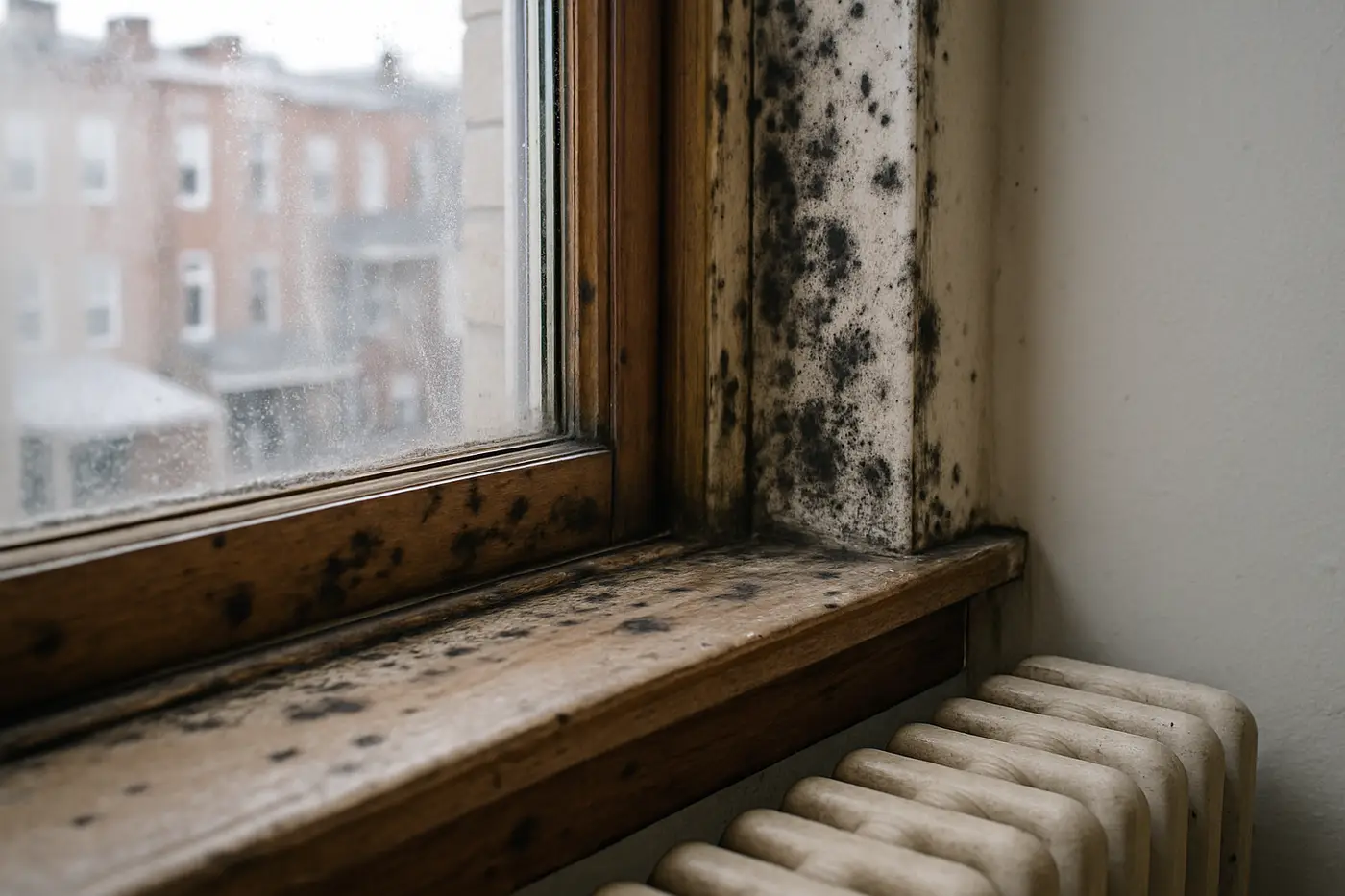
Most calls are from owners who found growth in a basement, behind a bed on an exterior wall, or on a ceiling under a flat roof or a bathroom. The inspection tells you whether it is a small contained job or the tail end of a long-term leak, and the scope tells you the price before anyone touches a wall.
Landlords and tenants
Persistent dampness and mold are conditions Philadelphia’s property maintenance code lets L&I inspect, tenants can report through 311, and Pennsylvania landlords owe an implied warranty of habitability. For a landlord that means: document from the first complaint, fix the moisture, remediate under containment and keep the report. For a tenant it means: photograph what you see, notify the landlord in writing, and, if nothing happens, report it. We inspect and write reports for either side, and remediation is normally ordered by the owner. Our guide to mold in a Philadelphia rental covers the steps in order.
Home buyers and sellers
Mold found during a home inspection stops a sale until someone answers two questions: how big is it, and what did the water do. A mold inspection with moisture mapping answers both and gives the buyer a scope and price to negotiate with. For sellers, Pennsylvania’s Seller Disclosure Law requires disclosure of known material defects, which can include water intrusion and mold history, so a documented remediation with independent clearance testing is worth more than a quiet paint job. Our post on mold found during a Philadelphia home inspection covers both sides.
Testing and verification
The EPA’s guidance is direct: if you can see or smell mold, sampling is usually unnecessary. Testing earns its place when mold is suspected but hidden, when a physician wants documentation, when a landlord, tenant, buyer or seller disputes the scope, and for post-remediation verification. Independent lab sampling runs $75 to $150 per sample and clearance testing is $300 to $700. We recommend a third-party hygienist for clearance so the tester has no stake in the result.
Insurance and documentation in Pennsylvania
Standard HO-3 policies cover sudden and accidental water losses: burst pipes, water heater failures, appliance supply lines, storm damage that opens the roof. Mold that follows one of those is usually paid under a mold sublimit, commonly $5,000 to $10,000. Mold from long-term leaks, seepage, humidity or neglected maintenance is generally excluded. Sewer backup needs a water backup endorsement, and river or overland flooding needs a separate flood policy. Fast, documented drying after a covered loss is what keeps the mold inside the claim. Adjusters expect dated photos, moisture readings, a scope of work and, for larger losses, an Xactimate estimate.
What drives the cost of residential mold remediation
A small contained area runs $500 to $1,500. A single room runs $1,500 to $4,000. A rowhome basement runs $2,000 to $8,000. Whole-house or multi-room remediation runs $10,000 to $30,000 and up. Inspection with moisture mapping is $250 to $500, credited against the work. Rebuild is separate at $1,000 to $5,000 per room. The full table is on our pricing page.
The drivers are the size of the affected area, how far growth has penetrated the materials, whether the water was clean or Category 3, and how much rebuild follows. The one you control is time. A leak dried within 48 hours is a drying job; the same leak found in August is a remediation job. If you can see or smell mold in your Philadelphia home, call us or send the form for a written scope before any work starts.
Last updated September 15, 2026