In depth
Commercial Mold Remediation in Philadelphia: how the job actually runs.
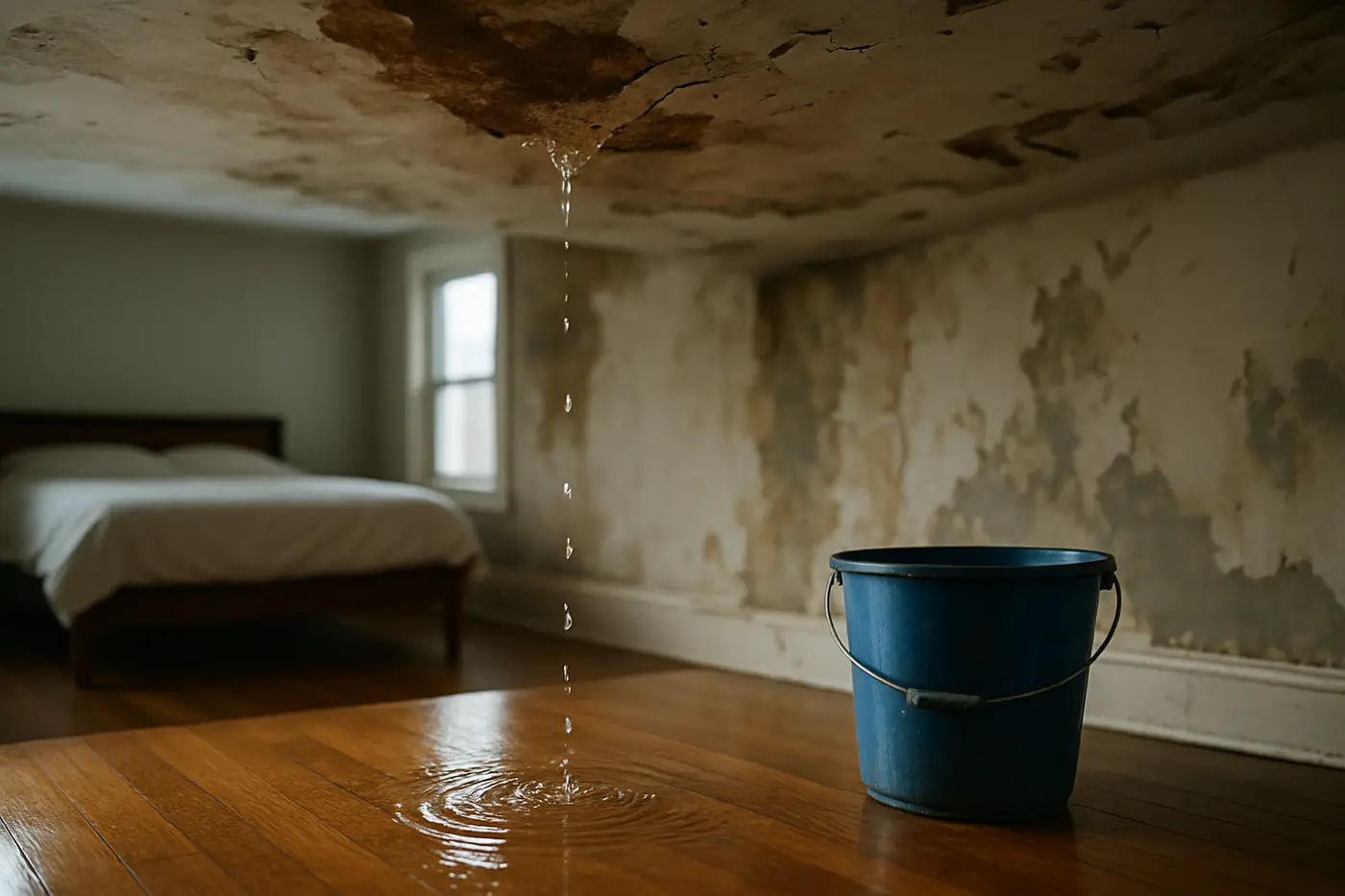
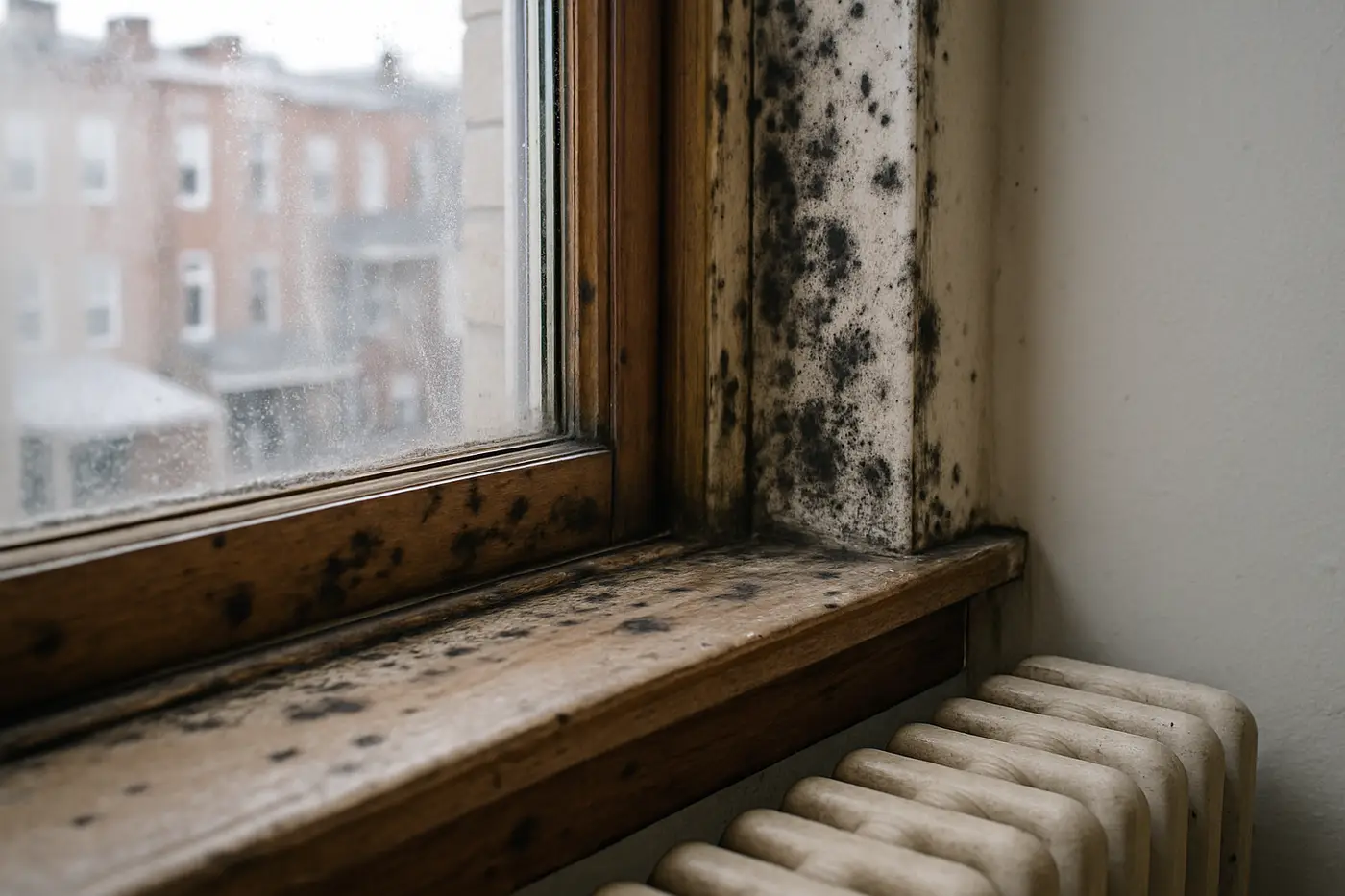
Mold in a commercial building rarely gets found early. It shows up as a stained ceiling tile in a Center City office, a musty smell in a restaurant walk-in, a tenant complaint in an Old City apartment building, or a wet corner of a warehouse that nobody walks past. By then the water has usually been there for weeks. Commercial mold remediation is the work of finding the moisture source, containing the affected zone so the rest of the building keeps operating, removing the growth to the IICRC S520 standard and handing over documentation that satisfies tenants, insurers and inspectors.
What commercial mold remediation involves in Philadelphia
The steps are the same as in a house. The logistics are not. A commercial job has a lease, employees, customers, an HVAC system that ties every floor together and a property manager who needs an answer in writing.
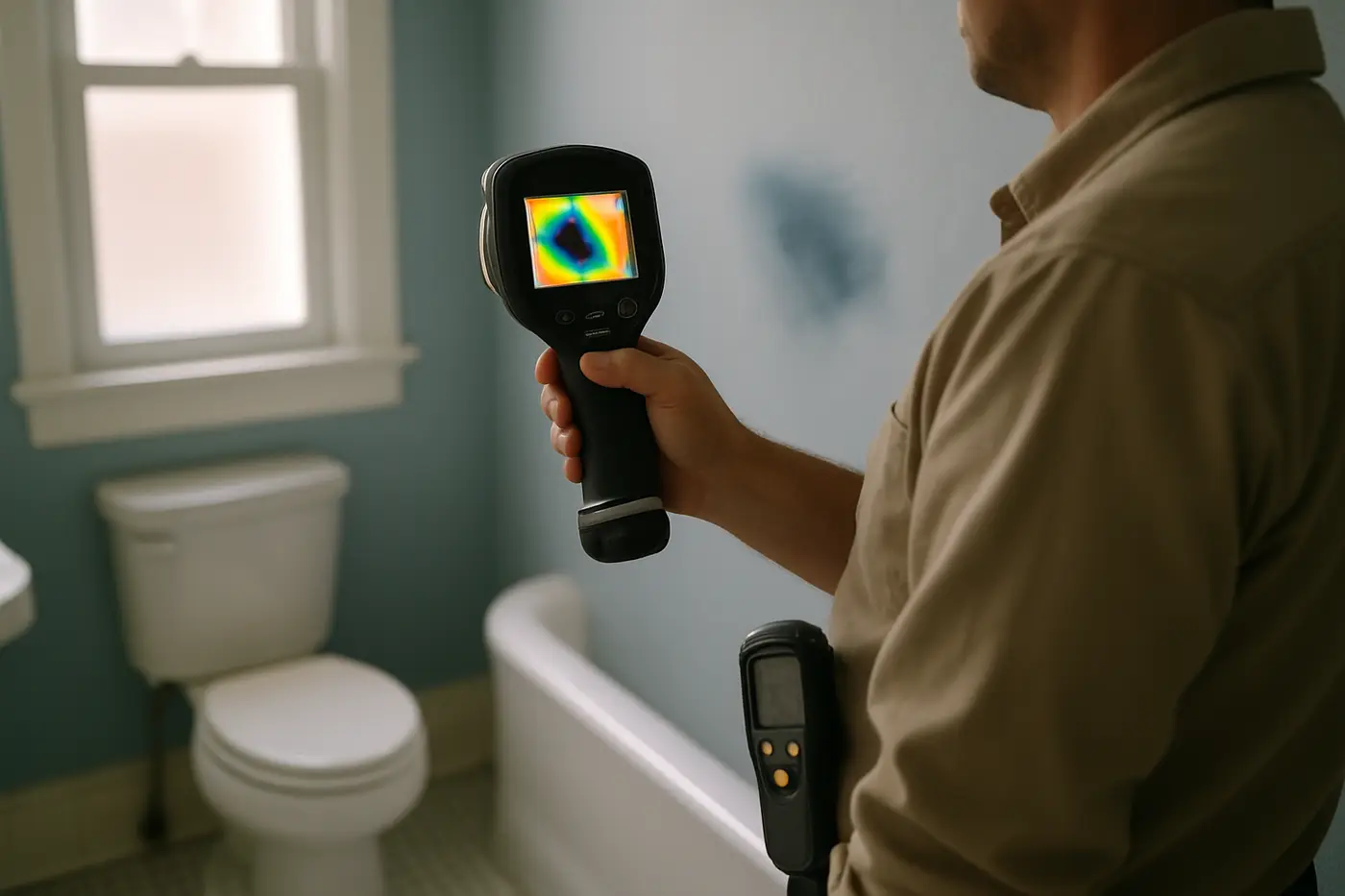
Site walk and moisture mapping. We meter walls, ceilings, slabs and framing, trace the water back to its source (roof, plumbing, HVAC condensate, the tenant upstairs) and measure relative humidity in the affected zone. The map sets the scope, the containment boundary and the schedule.
Written scope and price. Nothing starts until the owner or manager has scope, price and schedule on paper.
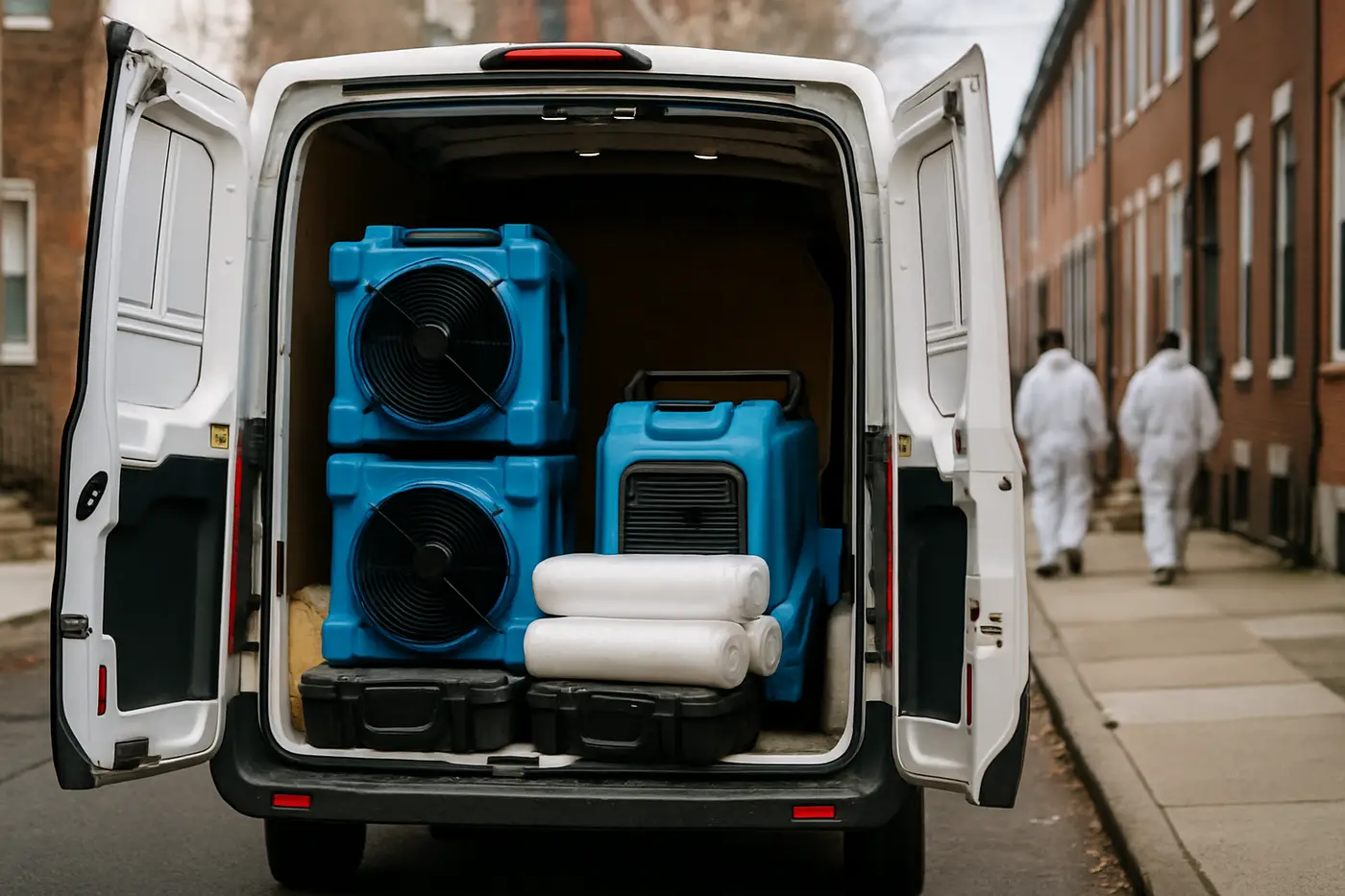
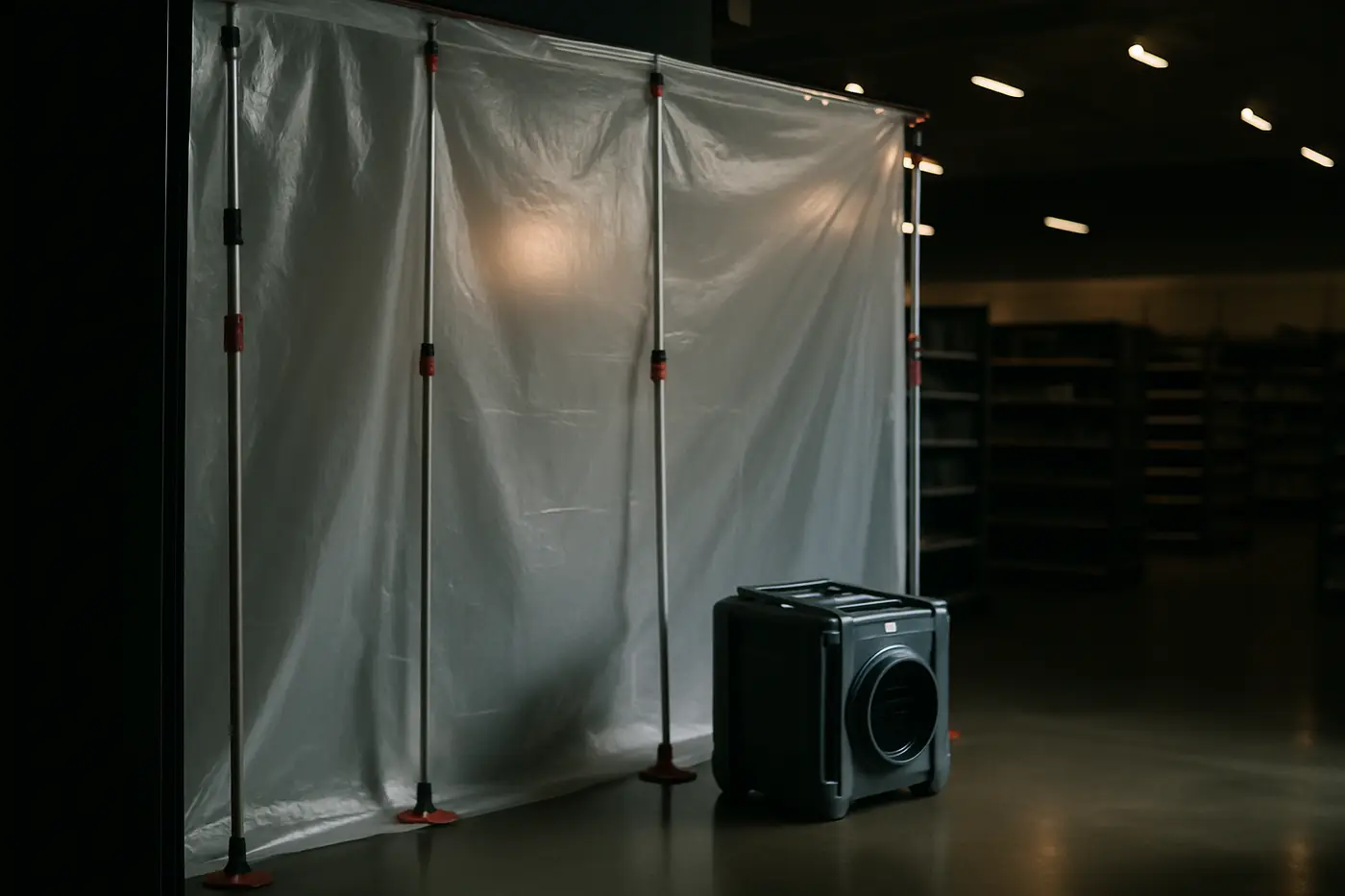
Containment and negative air. The affected suite, room or section is sealed with poly sheeting and put under negative pressure with HEPA-filtered air scrubbers, exhausted to the outside or to an unoccupied zone. Air moves into the containment, never out of it.
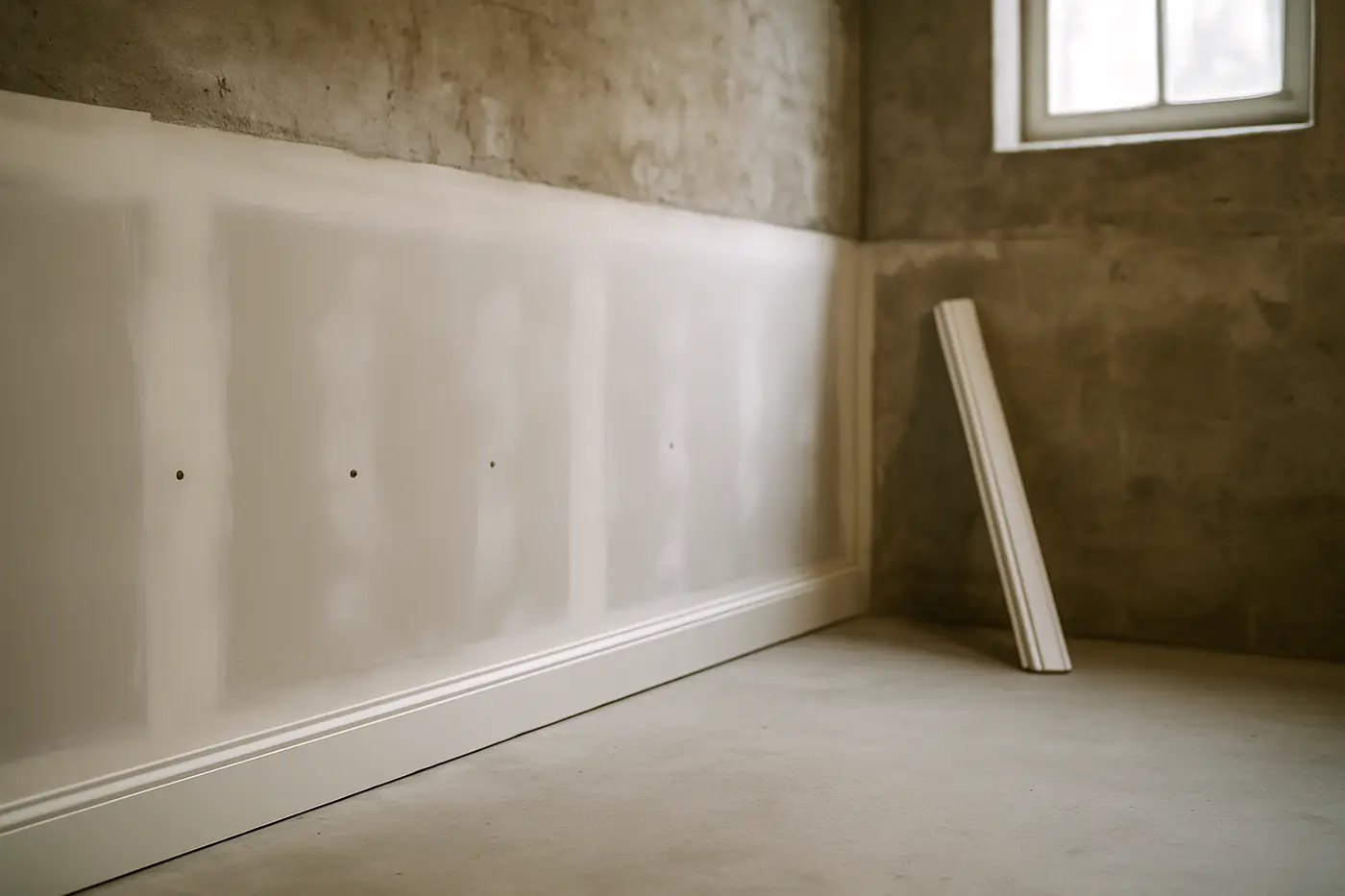
Removal and cleaning. Porous materials with growth come out bagged: drywall, ceiling tile, carpet and pad, insulation, cardboard inventory. Metal studs, concrete, block and metal deck are HEPA vacuumed, damp wiped, abraded where needed and treated with antimicrobial.
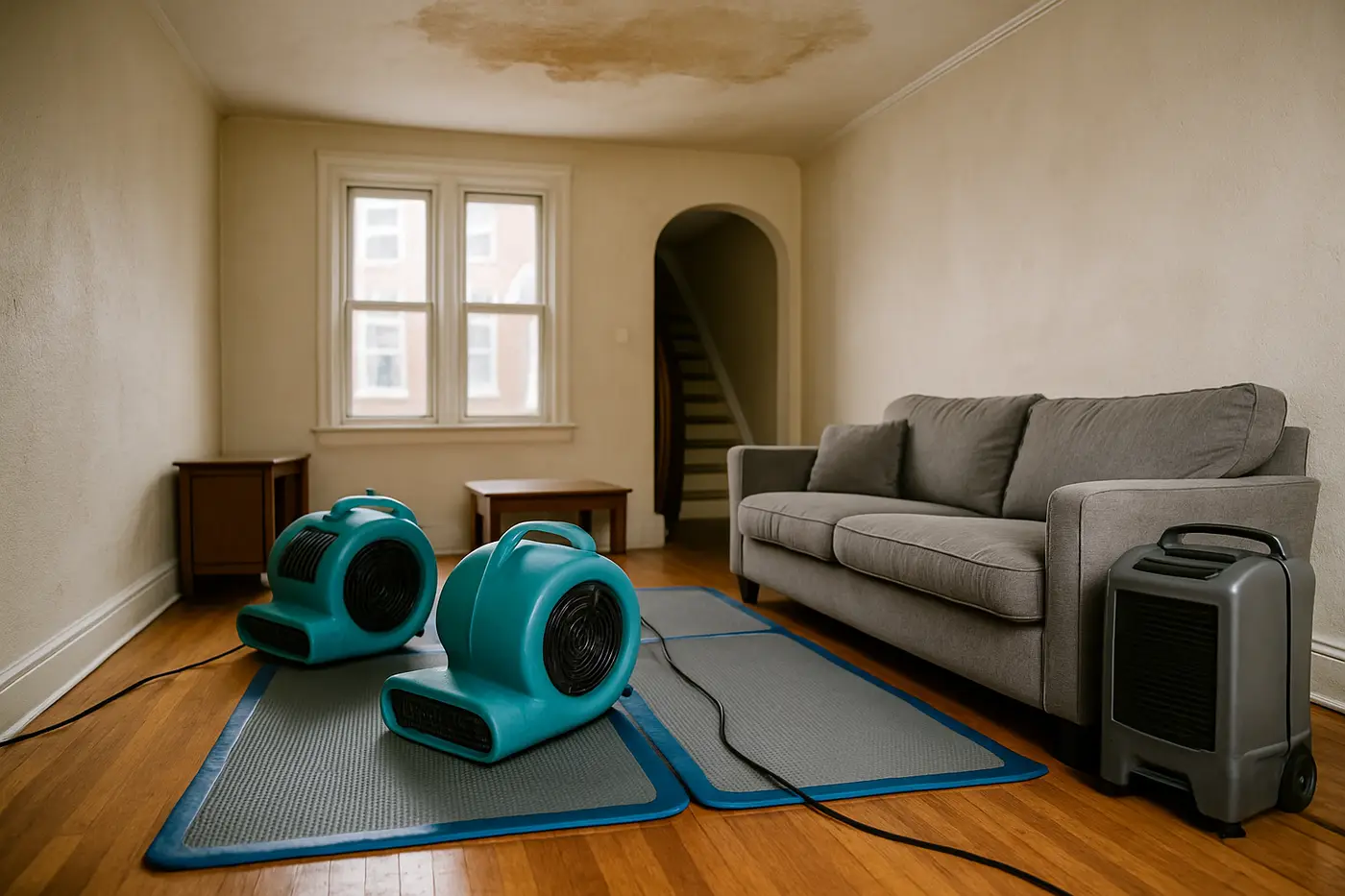
Drying and verification. Air movers and LGR dehumidifiers run until every material is at dry standard. Containment stays up until a visual inspection, moisture readings and, where required, independent clearance sampling confirm the zone is clean.
Keeping the business open
Most commercial clients cannot close, so the job is planned around that.
- Zoned containment. Instead of sealing a floor, we seal the affected rooms and build a decontamination entry. A store keeps its sales floor open while the stockroom is remediated.
- After-hours and weekend work. Demolition, the noisiest and dustiest phase, runs after closing. Air scrubbers run overnight under negative pressure. By opening time the containment is sealed and quiet.
- Phased scheduling. A large apartment building or school is broken into phases so only one section is out of service at a time. Each phase is verified before the next opens.
- Plain-language notices. Tenants and staff get one page: what is happening, where, for how long and who to call. That page prevents most complaints.
Property types we work in
Offices and retail
Flat-roof leaks over drop ceilings are the most common source. Water pools on the tile, the tile sags, and growth spreads along the insulation and the drywall above the ceiling grid before anyone sees it. Retail adds inventory: cardboard and fabric on a damp stockroom floor grow mold within days.
Restaurants and food service
Dishwashing and cooking humidity, floor drains, walk-in cooler condensation and grease-trap leaks keep back-of-house areas damp. Growth behind wall panels and under floor mats is dealt with between services and before the health inspector finds it.
Schools and daycares
Children, staff and parents mean containment is non-negotiable and clearance sampling is usually expected. Work is scheduled for evenings, weekends and breaks, and the written report goes to the administrator, the board or the licensing agency.
Medical and dental offices
Patients with asthma, allergies or suppressed immune systems are the people the EPA guidance says need professional remediation. Containment is tighter, HVAC isolation is standard, and the schedule follows the practice’s hours.
Warehouses and light industrial
Roof leaks at seams and drains, winter condensation on cold metal decking, and damp slab corners. Growth on racking, pallets and stored goods makes it a contents job as well as a building job.
Apartment buildings and property managers
A leak in one unit travels down the shared wall cavities to the units below. A property manager needs one inspection, one report covering every affected unit and one contractor coordinating access with tenants. See our guide to mold in a Philadelphia rental.
HVAC contamination
The inspection checks supply and return grilles, the interior of air handlers and fan coil units, condensate pans and drain lines, and duct lining near the affected zone. If growth is inside the system, the units and duct runs serving that zone are isolated, cleaned or replaced, and the system is not restarted in the containment zone until clearance. Every commercial mold inspection includes this check.
What stays and what goes
Under S520, porous materials with growth are removed and non-porous materials are cleaned.
| Material | Usually cleaned and kept | Usually removed |
|---|---|---|
| Drop ceiling tile | Never | Any staining or growth |
| Drywall on metal studs | Studs are cleaned in place | Drywall with growth or wet more than 48 hours |
| Carpet tile and pad | Carpet tile only if clean water and dried within 48 hours | Growth, odor or Category 3 water |
| Duct lining and flex duct | Rarely | Any visible growth |
| Metal deck, concrete slab and block | Always cleaned in place | Never |
| Cardboard inventory and paper records | No | Any contact with wet or moldy surfaces |
| Wood shelving and fixtures | Solid wood, cleaned outside containment | Particleboard or MDF with growth |
Center City and Old City commercial buildings
Philadelphia’s commercial stock is old and mixed. Center City has 1900s-1920s buildings with ground-floor retail under apartments and offices, plus converted lofts and condo towers. Old City and Northern Liberties add condo conversions and converted factories with brick walls, heavy timber and flat roofs that were silver-coated decades ago and never recoated. Those roofs leak at seams, parapets and drains, and the water lands on drop ceilings and inside brick-and-timber wall cavities that hold moisture for weeks. Party walls carry the neighbor’s roof and plumbing leaks into your space.
July and August dew points of 65 to 75 degrees F push relative humidity above 60 percent in any space without steady air conditioning: basements, stairwells, back-of-house storage. Combined sewer backups after heavy rain put Category 3 water into ground-floor and basement spaces across the older two thirds of the city. Everything that water touched is removed, not dried.
We work across the city, including Old City, Rittenhouse Square, Washington Square West and Northern Liberties.
Testing and verification
The EPA’s position is that mold you can see or smell does not need sampling to justify removal. Commercial jobs are the exception more often: a landlord-tenant dispute, a school board, a health department, a lease clause or an insurer may want lab numbers. Air or surface sampling by an independent lab runs $75 to $150 per sample, typically $300 to $700 for a set. Post-remediation verification by an independent hygienist is $300 to $700 and is the document that closes the file. We recommend a third party for clearance so the tester has no stake in the result.
Documentation for tenants, insurers and inspectors
Every commercial job produces one package: dated photos before, during and after; moisture readings by location; the containment plan; the scope of work; disposal records; equipment logs; and the clearance report. Commercial property policies generally treat mold the way homeowners policies do: sudden and accidental water losses are covered, mold that follows may fall under a sublimit, and long-term leaks or humidity are excluded. Check the policy and the lease. Adjusters expect an itemized scope and, for larger losses, an Xactimate estimate. Philadelphia’s property maintenance code treats persistent dampness and mold as a condition L&I can inspect, so a documented fix protects the owner as well as the occupants.
What drives the cost of commercial mold remediation
Commercial mold remediation in Philadelphia runs $3,000 to $25,000 and up depending on scope. An inspection with moisture mapping and a written report is $250 to $500, credited against remediation. If the building is still wet, water damage restoration for two to three rooms is $2,000 to $6,500 first, with drying equipment at $50 to $125 per unit per day. Rebuilding after remediation is scoped separately under mold damage repair. The full price table is on our pricing page.
The drivers are square footage, ceiling height, whether the HVAC system is involved, after-hours work, the number of phases, and whether the water was clean or Category 3. The one you control is time. A roof leak dried within 48 hours is a drying job; the same leak found a month later is a remediation job. If you own or manage a commercial property in Philadelphia and can see or smell mold, call us or send the form for a written scope. For the timeline behind that, read why you have 24 to 48 hours.
Last updated September 08, 2026