In depth
Bathroom & Kitchen Mold Removal in Philadelphia: how the job actually runs.
Bathrooms and kitchens are the two rooms in a house that get wet on purpose every day, and in a Philadelphia rowhome they are often stacked on the same plumbing wall, one above the other, backing onto the neighbor’s party wall. Most bathroom mold is a small surface problem you can clean yourself. Some of it is a wall that has been wet for years behind the tile. Bathroom and kitchen mold removal is the work of telling the difference honestly, fixing the water, and removing what has to go under containment to the IICRC S520 standard.
Where bathroom and kitchen mold hides
Behind tile and tub surrounds
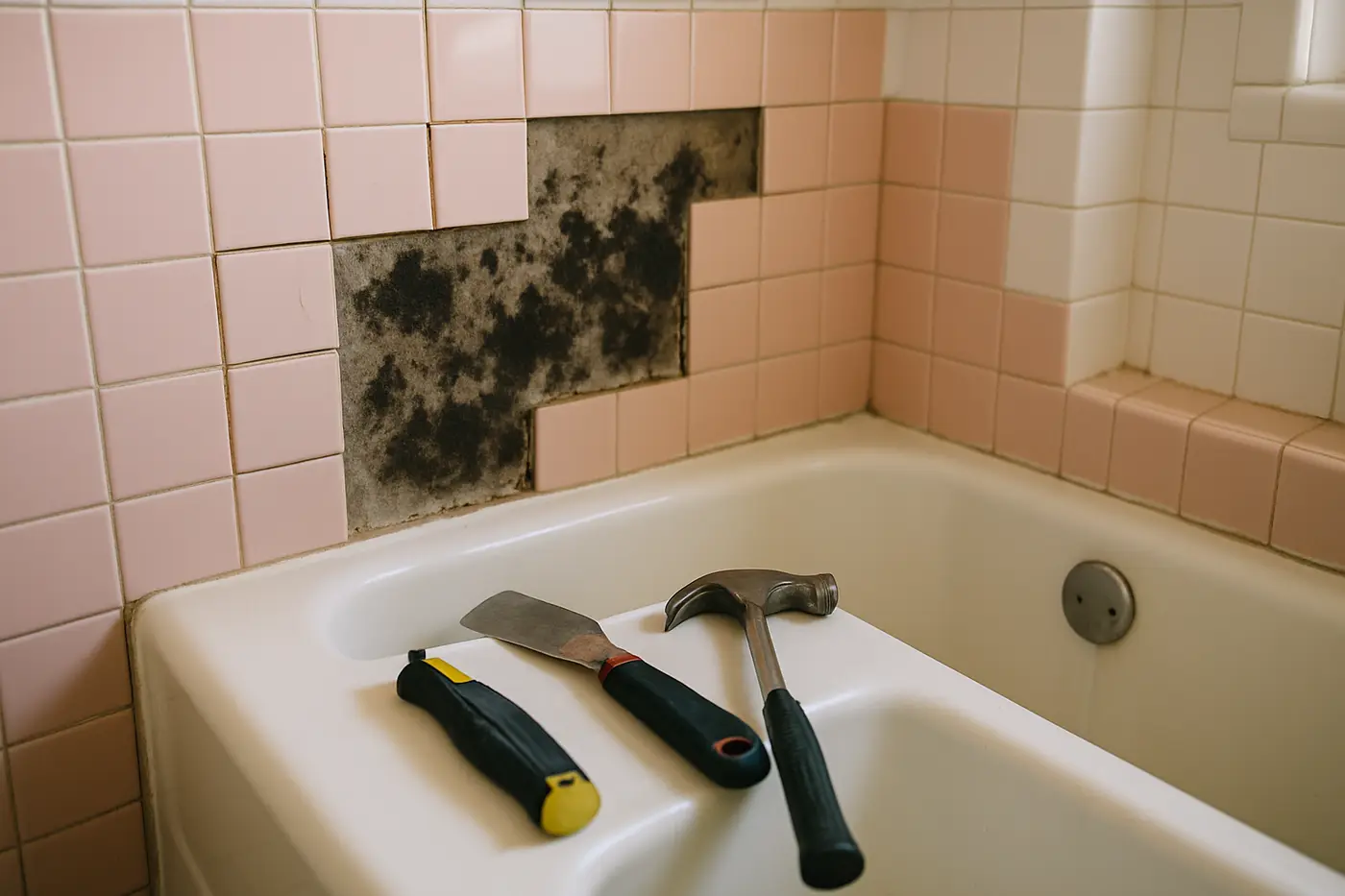
Grout is porous and caulk fails. Water works through the tile into the drywall or backer board behind it, and the wall stays wet because the tile will not let it dry back into the room. The first signs are dark grout lines that stay dark after cleaning, tile that flexes or sounds hollow, and a soft feel at the tub apron.
Shower pans
A cracked or poorly sloped pan sends water under the tile floor and into the subfloor and the ceiling below. The bathroom itself may look fine while the dining room ceiling under it stains and sags.
Under sinks
A slow drip at the supply valve, the trap or the faucet base soaks the cabinet floor, which is particleboard and swells, stains and grows mold within days. The leak continues into the subfloor and the wall behind the cabinet.
Around windows
Bathroom and kitchen windows are the coldest surfaces in the wettest rooms. Condensation runs down the glass onto the sill and into the frame and the drywall return.
The ceiling above the shower
Steam condenses on the ceiling, especially under a flat roof or an unconditioned attic, and if the fan is weak the paint never dries. Gray spotting and peeling paint follow.
Exhaust fans
A fan that is undersized, clogged, vented into the attic or never switched on leaves the room at 80 to 90 percent relative humidity after every shower. It is the root cause behind most of the items above.
Wipe-down or strip-out: the 10 square foot rule
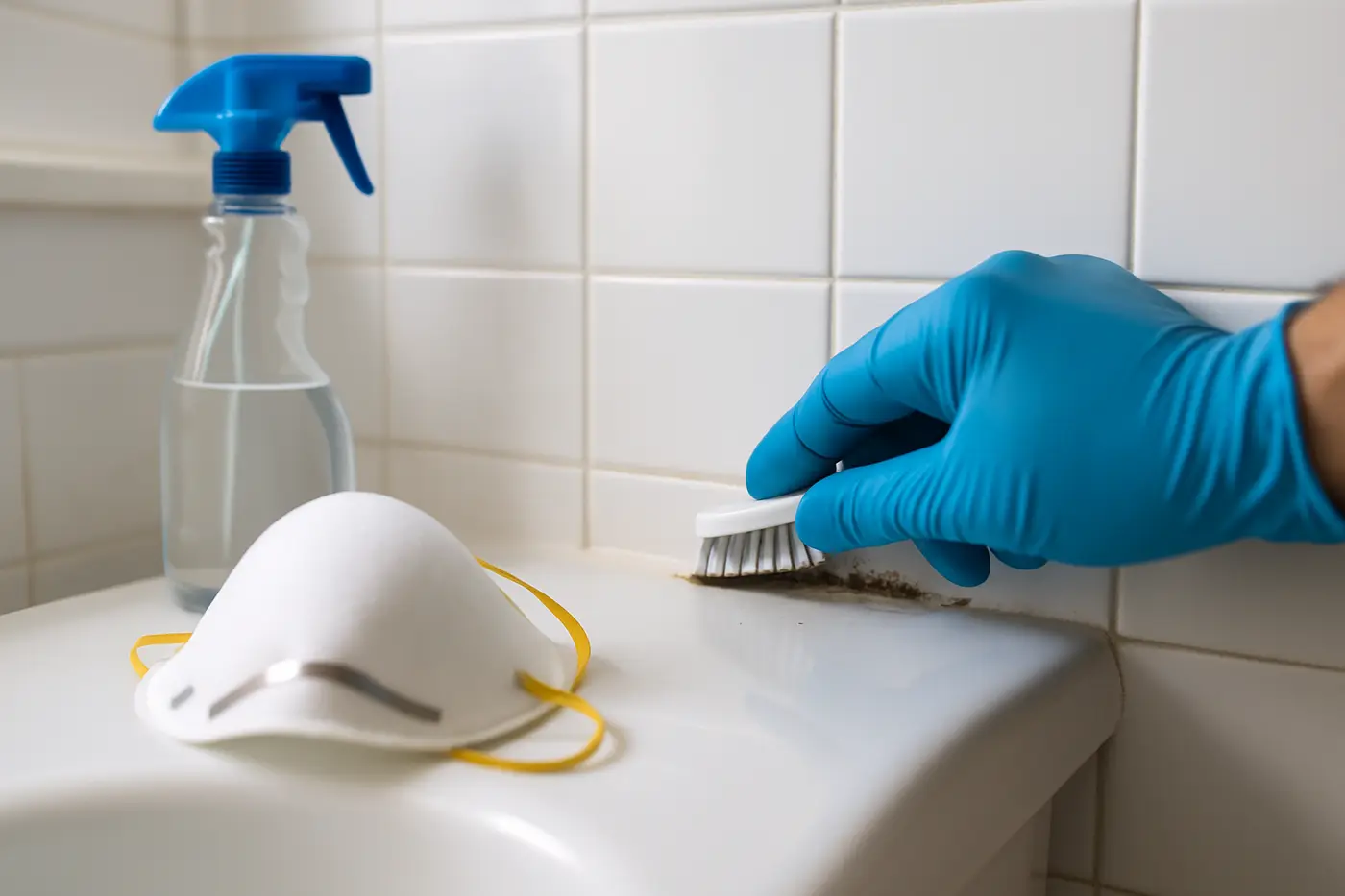
The EPA’s guidance for homes is practical. If the moldy area is under about 10 square feet, roughly a 3 by 3 foot patch, on a hard or painted surface, and the moisture problem is fixed, an occupant can usually clean it with detergent and water, dry the surface and keep the room ventilated. That covers most grout, caulk, painted ceilings and window sills.
A strip-out is the answer when:
- The growth is on or in drywall, backer board, a cabinet floor or plaster that reads wet.
- The area is larger than about 10 square feet, or it keeps coming back after cleaning.
- There is a leak into the room below or a soft spot in the floor.
- Someone in the home has asthma, allergies or a weakened immune system.
- The water was Category 3, such as a toilet overflow or a sewer backup.
Our post on DIY mold removal and when to call a pro walks through the cleaning method for the small cases.
What stays and what goes
| Material | Usually cleaned and kept | Usually removed |
|---|---|---|
| Ceramic tile, grout and caulk | Surface growth only, wall behind reads dry | Caulk is always recut; tile comes out when the wall behind is wet |
| Drywall and greenboard behind tile | Rarely | Any growth or moisture reading above dry standard |
| Cement backer board | If dry and growth is only on the tile face | When saturated or growth is on the back |
| Plaster on wood lath | Yes, if sound and dry: HEPA vacuum, damp wipe, antimicrobial | When crumbling, soft or wet through |
| Sink cabinet floor (particleboard) | No | Any swelling, staining or growth |
| Subfloor under tub, toilet or sink | Plywood that reads dry after drying | Rotted, delaminated or wet more than 48 hours |
| Studs and joists | Always cleaned in place | Only when rotted |
| Window frame and sill | Solid wood, cleaned and repainted | MDF or drywall returns with growth |
How a bathroom strip-out is done
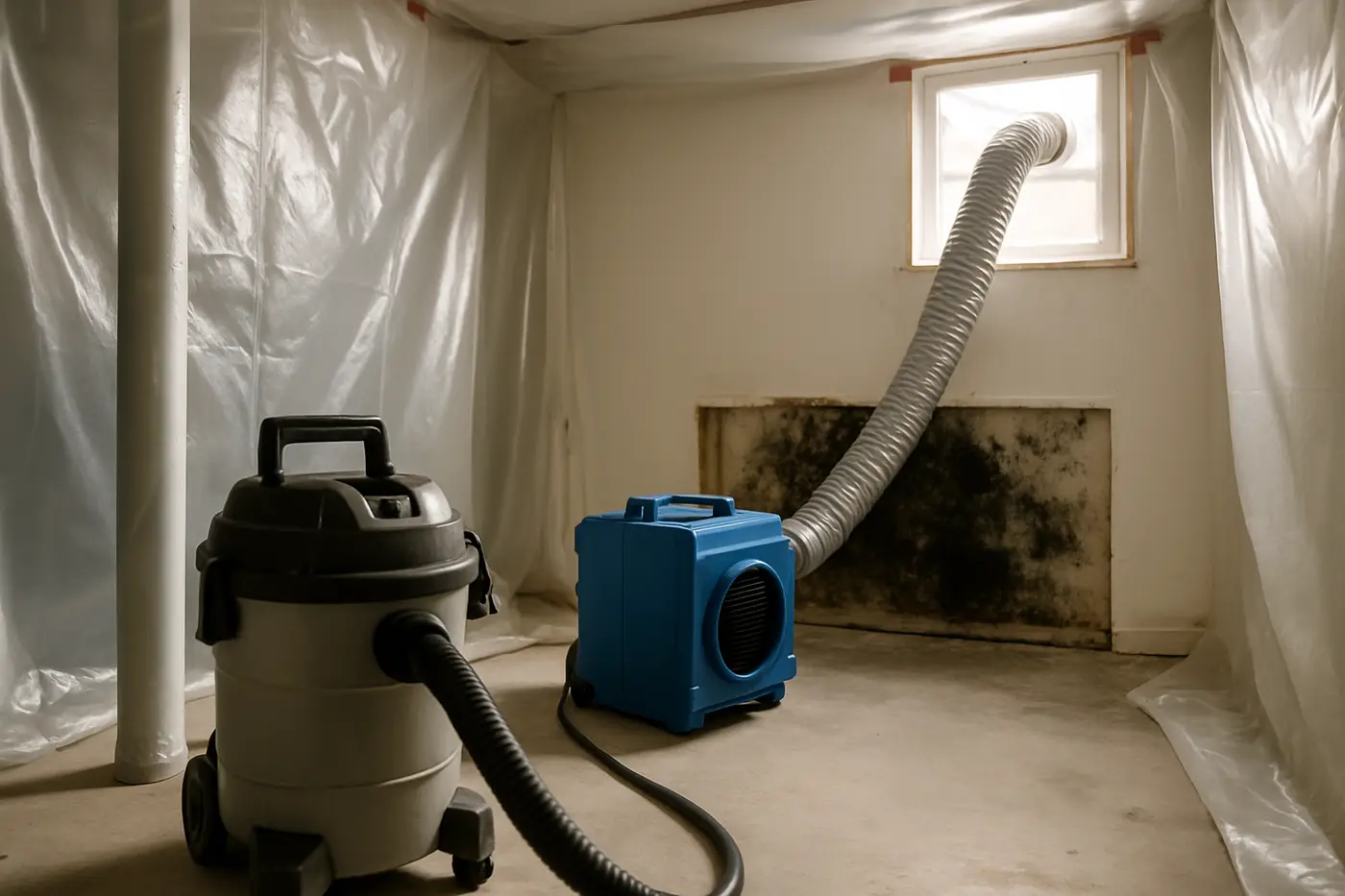
- Containment. The door is sealed with poly and a zippered entry, registers are covered, and a HEPA-filtered air scrubber puts the room under negative pressure.
- Lead and asbestos check. In a pre-1978 home the paint is tested; in a pre-1980 home the floor tile, mastic and plaster are tested. Where required, a licensed abatement contractor handles those materials before we open the wall.
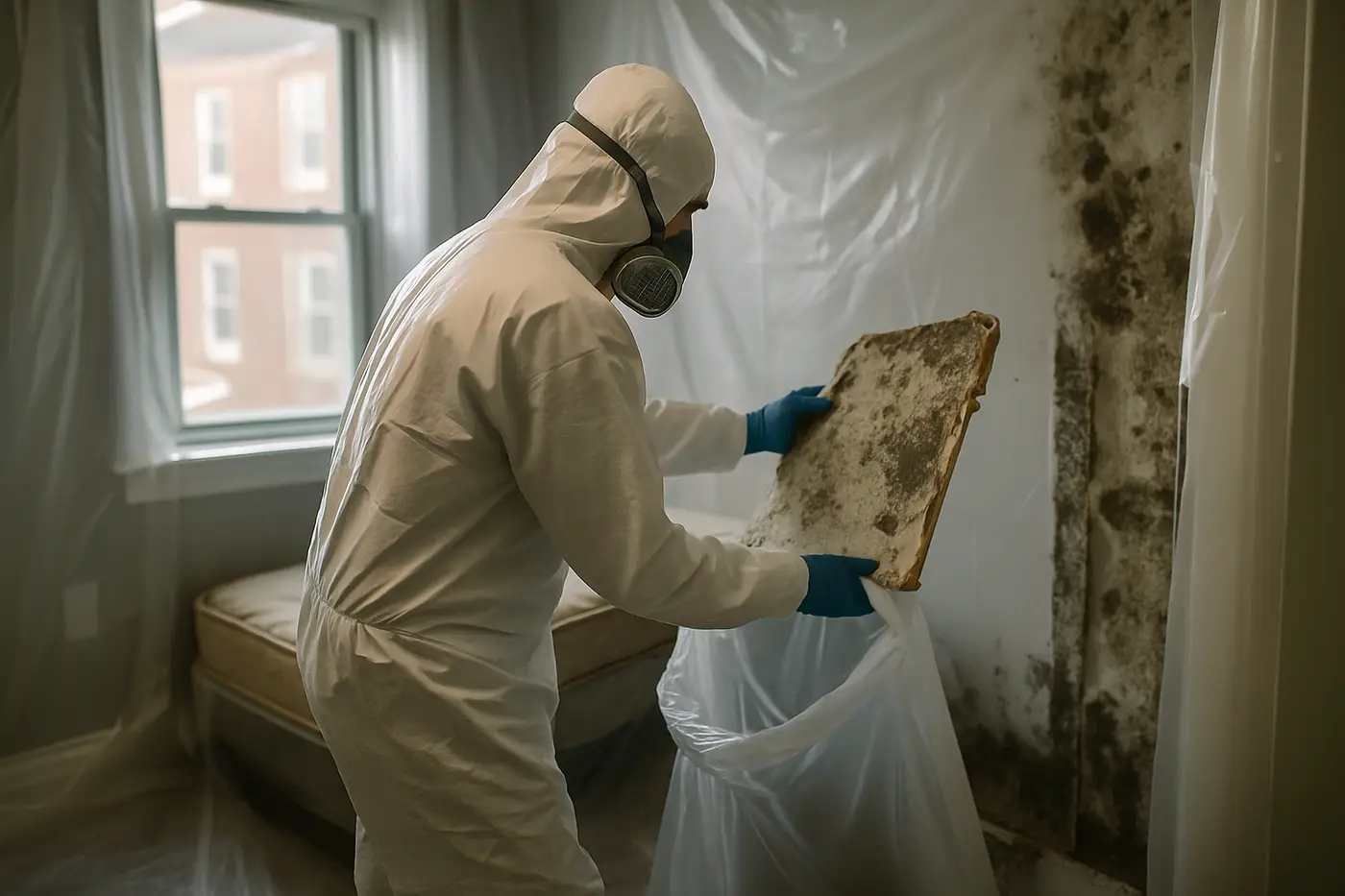
- Removal. The surround, tile, backer board, drywall, cabinet bottoms or trim with growth come out in sealed bags. The cut runs at least a foot past the last wet reading.
- Cleaning. Studs, plates, subfloor and plaster that stay are HEPA vacuumed, damp wiped, abraded where growth is in the surface and treated with antimicrobial.
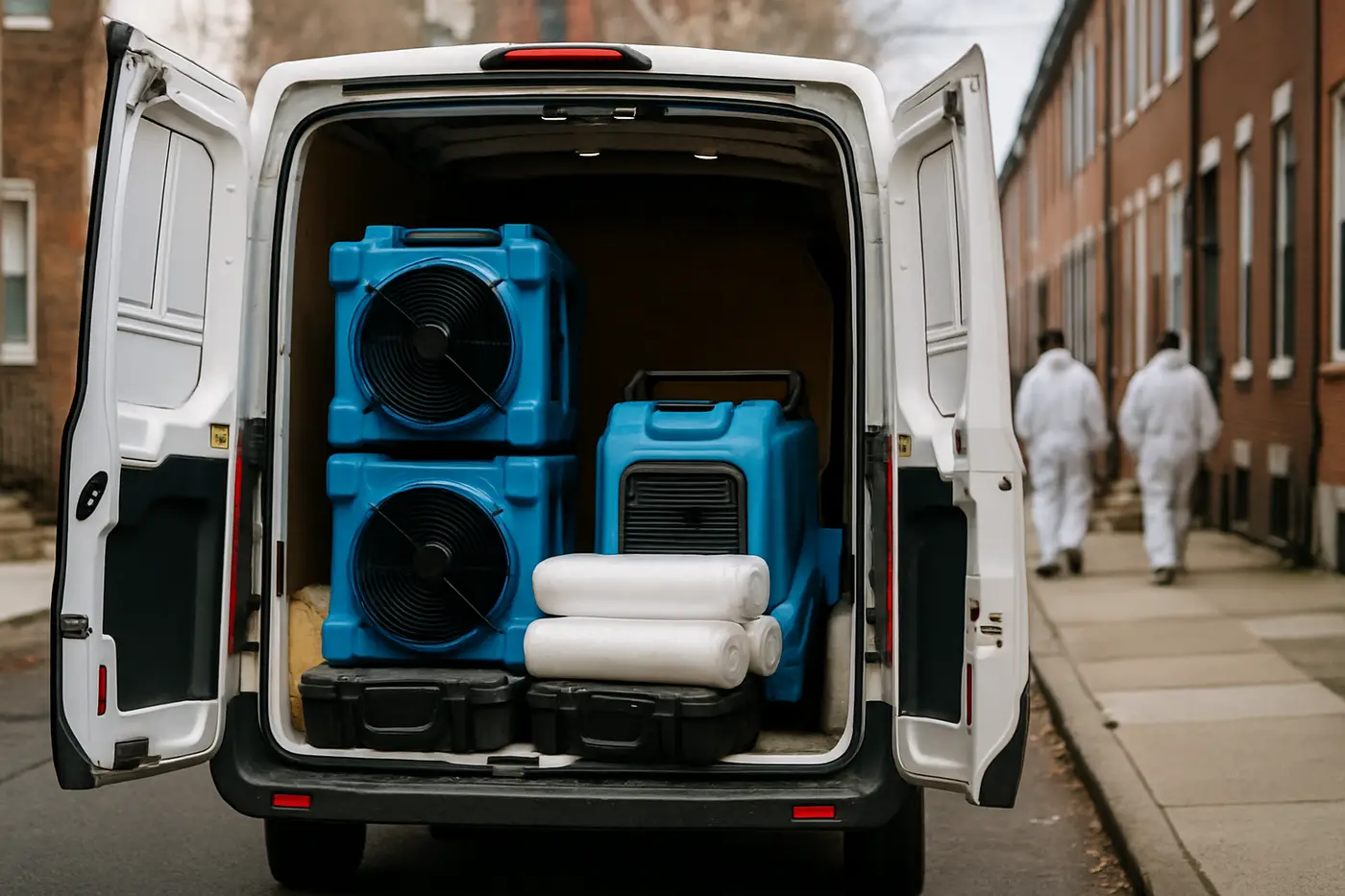
- Drying. Air movers and a dehumidifier run until the framing and subfloor read dry, logged daily.
- Source correction. The pan is replaced, the valve is fixed, the caulk is recut or the fan is rerouted outside. Plumbing repairs are coordinated with your plumber.
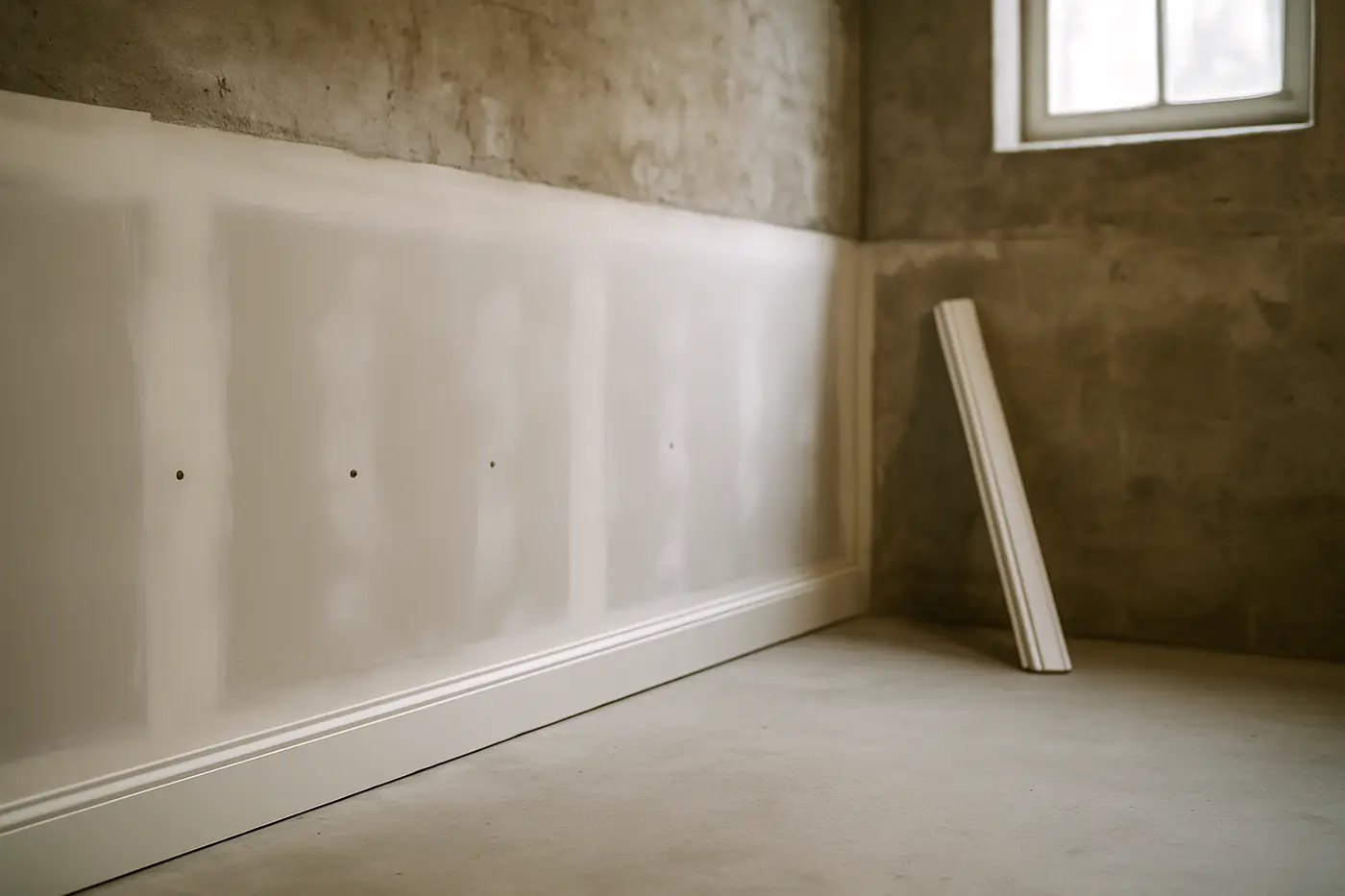
- Verification. Visual check and moisture readings pass before the containment comes down. Then the room goes to mold damage repair for backer board, tile, drywall and paint.
1950s bathrooms in Northeast rowhomes
The 1920s to 1960s brick rowhomes and twins of Mayfair, Bustleton and Frankford have bathrooms that were built well and then left alone. A mortar bed under the floor tile, plaster or early drywall behind a tile or steel surround, a cast iron tub and a fan that was added later and vents into the attic. Seventy years on, the grout, the tub-lip caulk and the pan have failed and water has been running into the wall and the floor every day. The floor tile, mastic and plaster may contain asbestos and the paint may contain lead, which is why the test comes before the demolition.
South Philadelphia rowhomes around Queen Village show the same failures in bathrooms added to rear additions, stacked over a kitchen, with a party wall that leaks into the neighbor’s house as readily as your own.
Kitchen mold
Kitchen mold follows the same logic. Under the sink, behind the dishwasher, behind the refrigerator where the ice maker line drips, and on the exterior wall behind the base cabinets where winter condensation collects. The cabinet floor comes out, the wall behind is opened to the last wet reading, the framing is cleaned and dried, and the leak is fixed before anything is rebuilt. A kitchen on the ground floor of a rowhome often sits over the basement stairs or a crawl space under a rear addition, so we check below as well.
Testing and verification
Bathroom and kitchen mold is visible and its cause is obvious, and the EPA’s guidance is that visible mold does not need sampling to justify removal. Testing earns its place when a tenant and landlord disagree about the extent of the problem, when a buyer wants documentation during a sale, or when a physician asks for it. Independent lab sampling is $75 to $150 per sample and post-remediation verification by a third-party hygienist is $300 to $700.
Insurance, rentals and documentation
A standard homeowners policy covers sudden and accidental water losses, such as a supply line that bursts under the sink, and mold that follows may be paid under a mold sublimit. Mold from a tub surround that has been seeping for years, or from a fan that never vented outside, is long-term and generally excluded. Check your policy.
In a rental, persistent dampness and mold are conditions Philadelphia’s property maintenance code lets L&I inspect, and tenants can report through 311. Our written report, with photos and readings, gives a landlord proof the work was done and gives a tenant proof the problem was real.
What drives the cost
A small contained area under 10 square feet runs $500 to $1,500. A single room contained remediation, such as a tub surround strip-out or a kitchen sink wall, runs $1,500 to $4,000. Rebuild is $1,000 to $5,000 per room, tile scoped separately. A scheduled visual inspection with a written estimate is free; full moisture mapping with a report is $250 to $500, credited against the work. If the mold has spread from the bathroom into the ceiling below or the bedroom next door, the job becomes residential mold remediation and is scoped room by room.
The drivers are how far the water traveled beyond the visible growth, whether the subfloor is involved, whether lead or asbestos testing comes back positive, and how much plumbing repair is needed. Call us or send the form and describe what you see; we will tell you whether it sounds like a wipe-down or a strip-out. Full ranges are on our pricing page.
Last updated August 27, 2026