In depth
Basement Mold Remediation in Philadelphia: how the job actually runs.
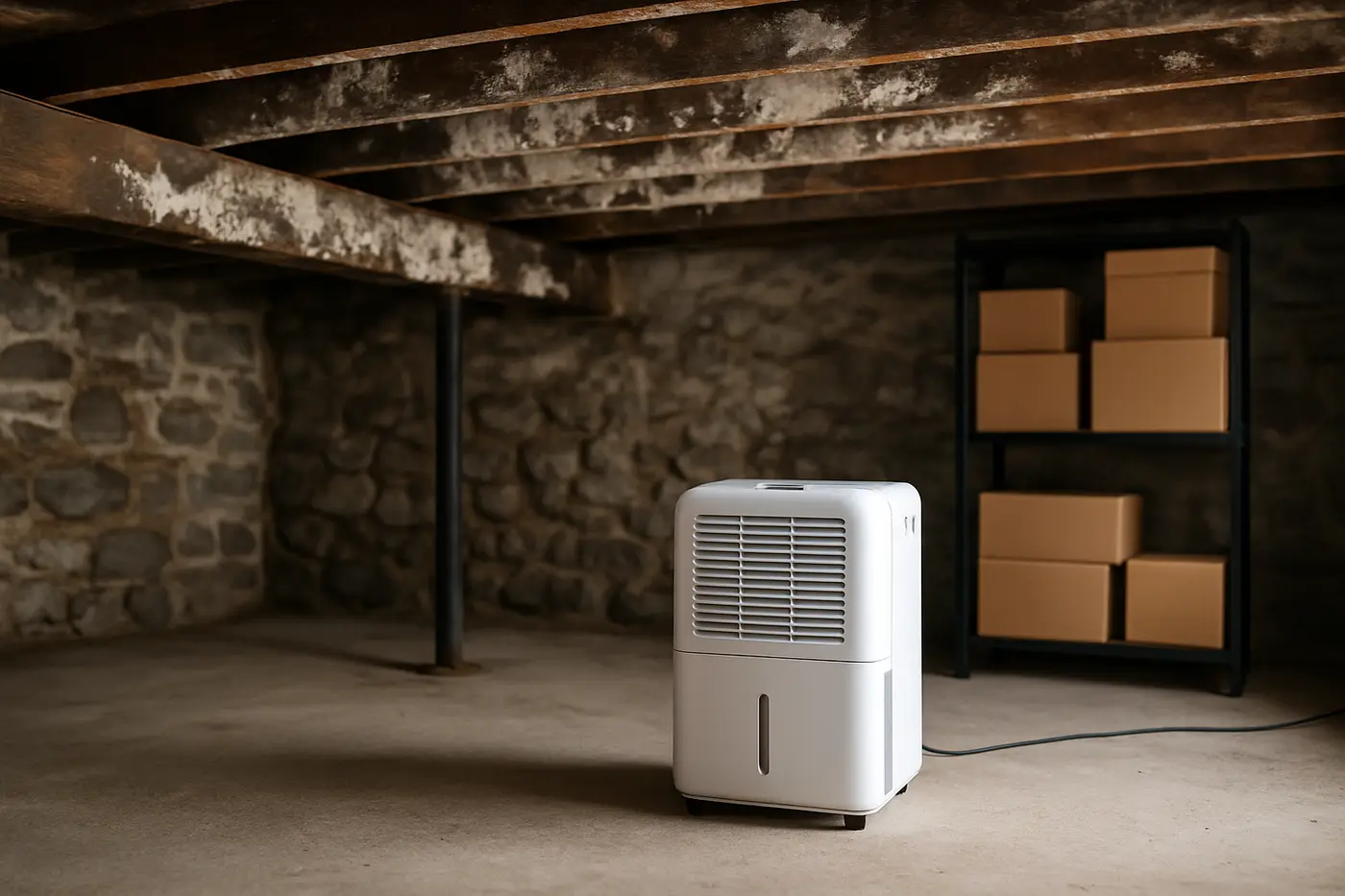
Nearly every Philadelphia rowhome has a basement, and most of the mold we remediate is in one. The reasons are built into the house: a stone or rubble foundation that was never meant to be dry, a concrete or dirt floor that lets ground moisture through, a floor drain tied to a combined sewer, and summer air that sits above 60 percent relative humidity from June to September. Basement mold remediation in Philadelphia is half mold work and half moisture work. If you only do the first half, the growth is back by the next August.
Why Philadelphia rowhome basements grow mold
Most of the city’s rowhomes were built between the 1880s and 1940s. Their basements share a few traits.
- Stone and rubble foundations. Fieldstone and rubble walls in Queen Village, Pennsport, Germantown and the older River Wards were laid with lime mortar and never waterproofed. They breathe, and after a heavy rain they weep.
- Unsealed concrete and dirt floors. Many slabs were poured decades after the house was built, thin and without a vapor barrier. Dirt floors are still common under rear kitchens and in older Germantown and Manayunk houses. Ground moisture rises through both.
- Seepage. Water enters at the floor-wall joint and through cracks after intense summer thunderstorms, especially where downspouts dump next to the foundation or the rear yard slopes toward the house.
- Combined sewer backups. The Philadelphia Water Department’s combined system covers roughly the older two thirds of the city. Heavy rain can push sewer water up through the floor drain, the laundry standpipe or a basement toilet.
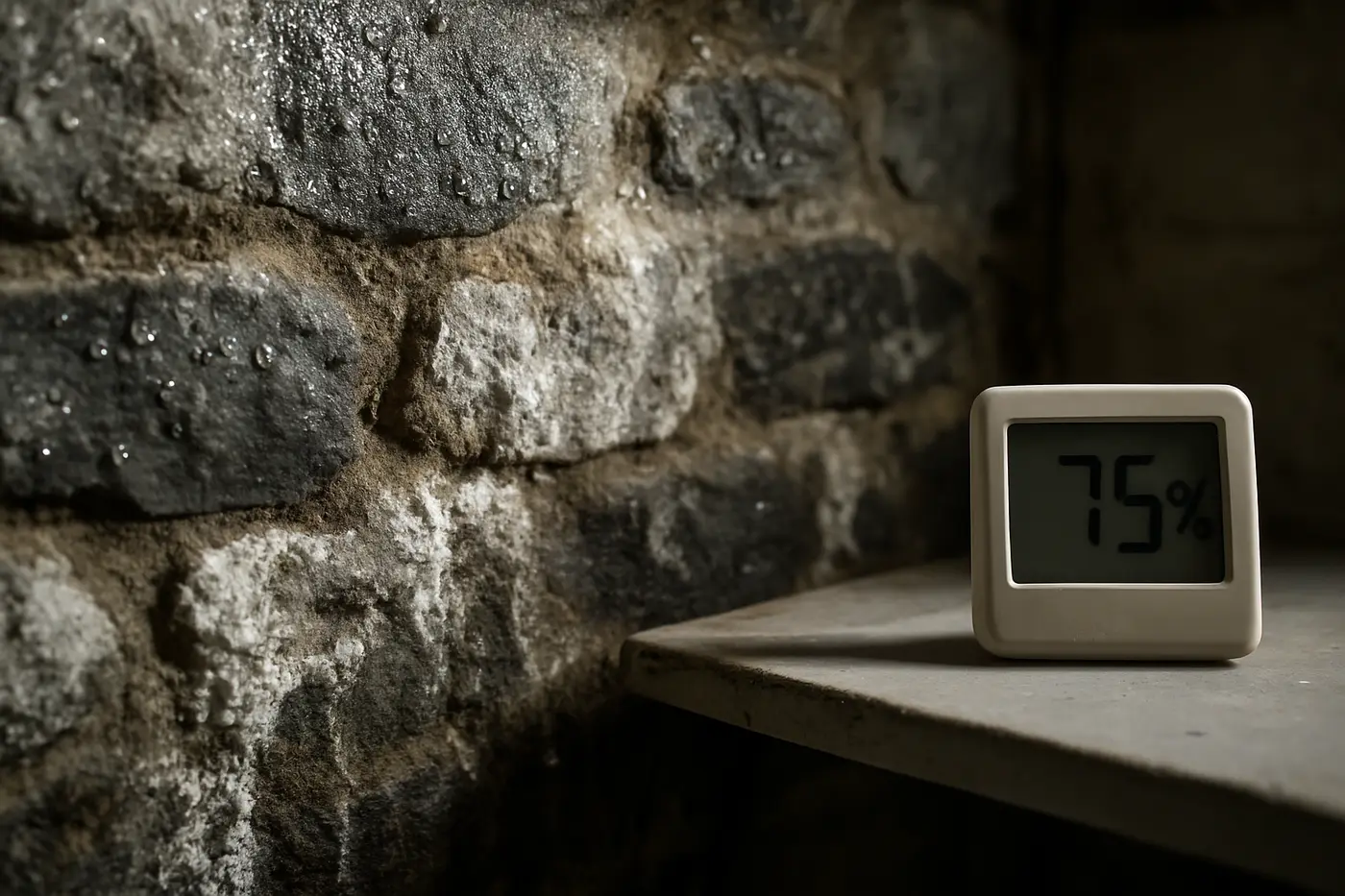
- Humidity. July and August dew points of 65 to 75 degrees F meet stone and concrete that sit around 55 to 60 degrees. The air condenses on the walls and the floor. An unconditioned rowhome basement routinely reads above 60 percent relative humidity all summer, and mold grows on any surface that stays above that.
- How the basement is used. Laundry, cardboard storage, an old couch, a workbench: cellulose and fabric at floor level, right where the moisture is. In Fox Chase, Mayfair and East Passyunk, finished basements add paper-faced drywall and carpet against the foundation.
Our post on why rowhome basements grow mold covers the building science.
Moisture first: what gets fixed before any mold comes out
A moldy basement wall that is still wet will grow again. So the inspection maps the moisture and the plan fixes the source before containment goes up.
Liquid water. Downspouts extended away from the foundation, the floor-wall joint sealed where practical, cracks addressed, a sump where the water table demands it. For sewer backups, PWD’s Basement Backup Protection Program installs backwater valves for eligible properties; call 311 to report a backup.
Vapor. A dirt floor gets a sealed polyethylene vapor barrier. A bare concrete slab that reads wet gets a moisture test and, if needed, a sealer or a barrier under any finished floor.
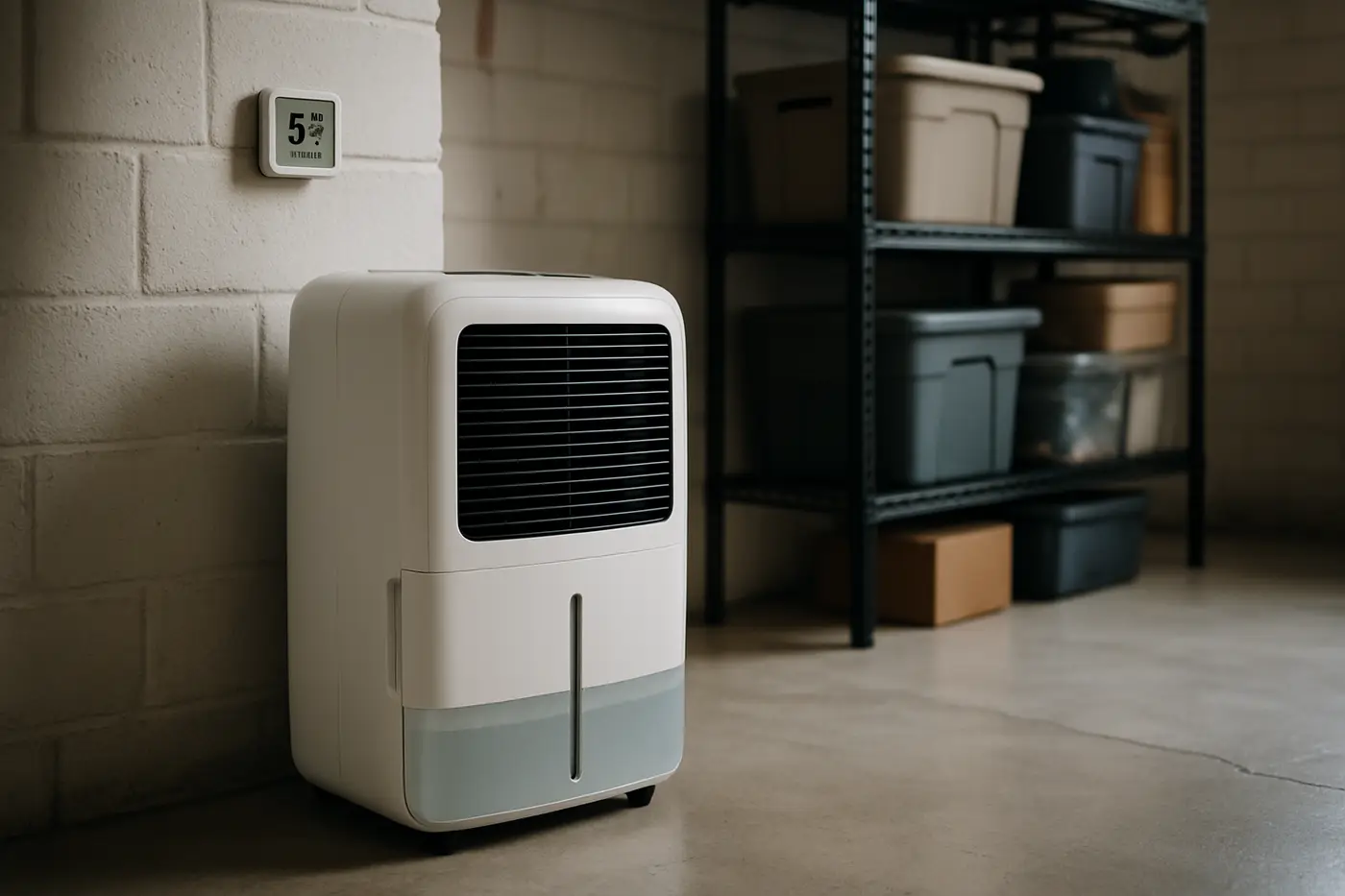
Humidity. A dedicated basement dehumidifier sized for the space, typically 50 to 70 pints per day for a rowhome basement, draining to the floor drain or a condensate pump, set to hold about 50 percent relative humidity. This is the single change that keeps most Philadelphia basements mold-free.
The remediation itself
With the moisture plan in place, the basement is remediated to the IICRC S520 standard.
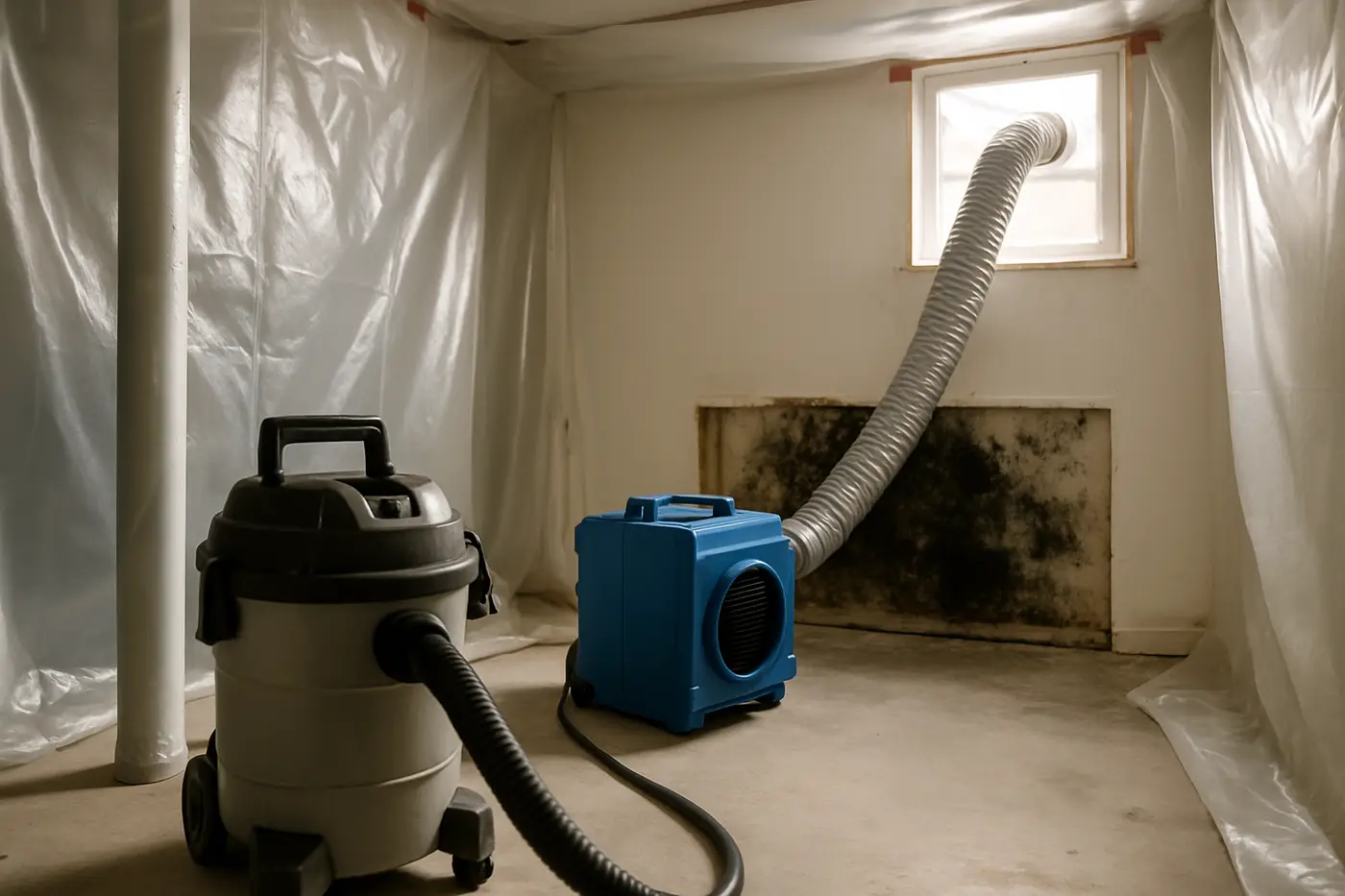
- Containment. Poly sheeting from the bottom of the stairs, a zippered entry, and the first-floor door sealed so spores do not travel up.
- Negative air. HEPA-filtered air scrubbers run the whole time, exhausting through a basement window where possible.
- Removal. Moldy drywall, paneling, carpet, pad, insulation and cardboard are bagged inside the containment. In a finished basement the lower two to four feet of drywall usually comes out along the exterior walls.
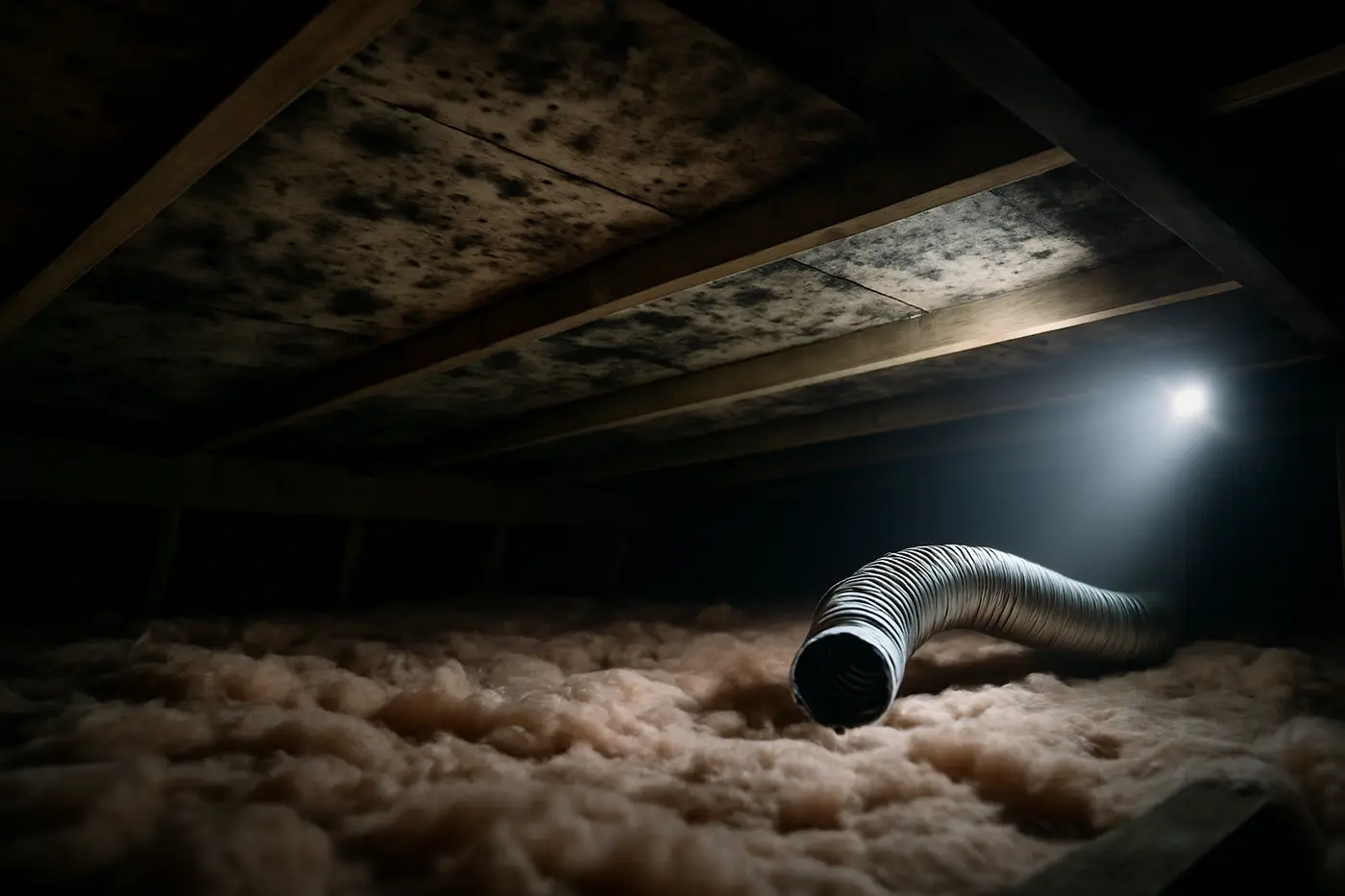
- Cleaning. Joists, the underside of the subfloor, stone, brick and concrete are HEPA vacuumed, damp wiped, abraded where growth has penetrated, and treated with an antimicrobial. Stone walls are cleaned, not sealed over; sealing a wet stone wall traps water in the mortar.
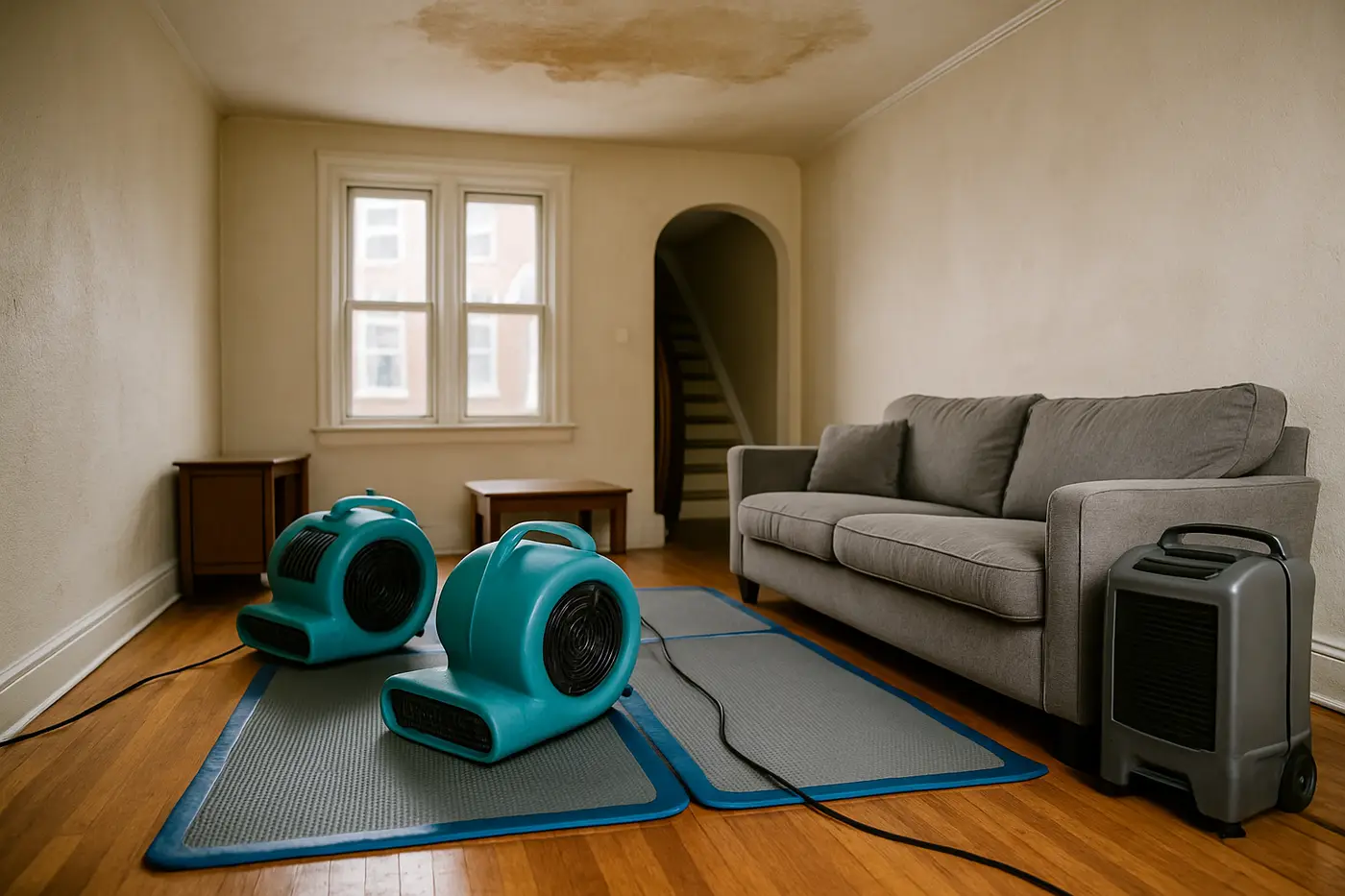
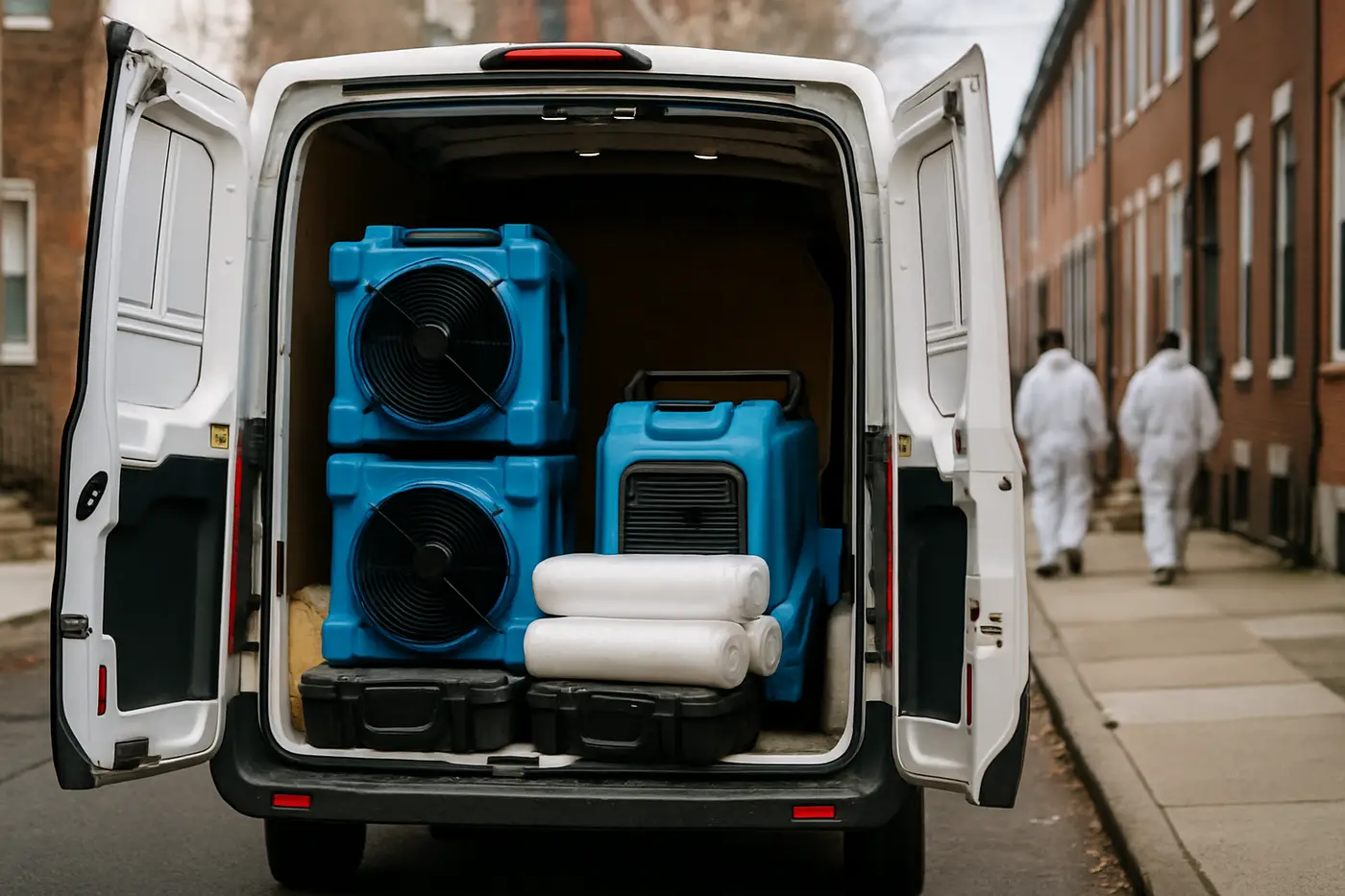
- Drying. Air movers and LGR dehumidifiers run until the joists and slab read at dry standard, usually 5 to 10 days for a basement that was wet.
- Verification. Visual, moisture and odor checks, and independent clearance sampling where you want it, before the containment comes down.
What stays and what goes in a rowhome basement
| Item | Usually cleaned and kept | Usually removed |
|---|---|---|
| Stone, brick and concrete walls | Always cleaned in place | Never |
| Floor joists and subfloor underside | Yes: HEPA vacuum, damp wipe, abrade, antimicrobial | Only when rotted |
| Drywall and paneling | Only when growth is on the paint film and the back is dry | Any growth through the paper, or any contact with sewer water |
| Carpet and pad | Rarely | Any visible growth, any sewer backup |
| Batt insulation between joists | No | Always when wet or moldy |
| Washer, dryer, water heater, furnace | Yes, exterior wiped and HEPA vacuumed | Only if flooded above the burner or motor |
| Cardboard boxes and paper | No | Always |
| Plastic bins and metal shelving | Yes, washed | Never |
| Wood furniture | Yes, cleaned outside the containment | Only when growth is deep in the grain |
Rebuilding a finished basement afterward is scoped under mold damage repair and rebuild.
Sewer backups are a different job
If the basement mold followed a combined sewer backup, the water was Category 3 under IICRC S500. Every porous material it touched is removed whether or not it shows growth, the slab and walls are cleaned and disinfected, and the crew works in full PPE. This is scoped as water damage restoration first and then remediation, and heavy growth after sewage falls under black mold removal pricing.
Keeping it from coming back
- Run the dehumidifier from May through October and check the reading; about 50 percent relative humidity is the target.
- Store on metal or plastic shelving, 6 inches off the floor, in plastic bins. No cardboard on the slab.
- Keep the dryer vent connected and ducted outside, not into the basement.
- Extend downspouts at least 4 feet from the foundation.
- After any water event, dry within 48 hours. Read keeping mold out of your rowhome in summer humidity for the seasonal routine.
Crawl spaces under rear additions get the same treatment with a vapor barrier; see attic and crawl space mold removal.
Testing and verification
If you can see or smell the mold, testing before the work is usually unnecessary under EPA guidance. After the work, we recommend an independent hygienist for clearance sampling so the tester has no stake in the result. That report is what a buyer, a landlord or an adjuster wants to see. Details are on the mold inspection and testing page.
Insurance and documentation in Pennsylvania
Basement mold from seepage or humidity is generally excluded from a standard HO-3 homeowners policy. Mold after a sudden and accidental loss, such as a burst supply line or a failed water heater, is usually paid under a mold sublimit, commonly $5,000 to $10,000. Sewer backup requires a water backup endorsement, and river or overland flooding needs a separate flood policy. We document every job with dated photos, moisture logs and a written scope so you have what the adjuster needs. Pennsylvania has no statewide mold license, so that documentation, and the standard the work follows, is your protection.
What basement mold remediation costs in Philadelphia
Basement mold remediation in a rowhome basement runs $2,000 to $8,000 depending on whether it is finished, how much drywall and carpet come out, and whether sewer water was involved. Inspection with moisture mapping is $250 to $500, credited against the work. Drying equipment is $50 to $125 per unit per day; a wet basement usually needs 5 to 10 days. Contents pack-out, cleaning and storage is $1,000 to $5,000 if you want stored belongings handled. A crawl space with a vapor barrier is $1,500 to $6,000. The timeline is 3 to 6 working days plus drying. See the pricing page, or call us or send the form for a written scope after a visit.
Last updated September 15, 2026