In depth
Attic & Crawl Space Mold Removal in Philadelphia: how the job actually runs.
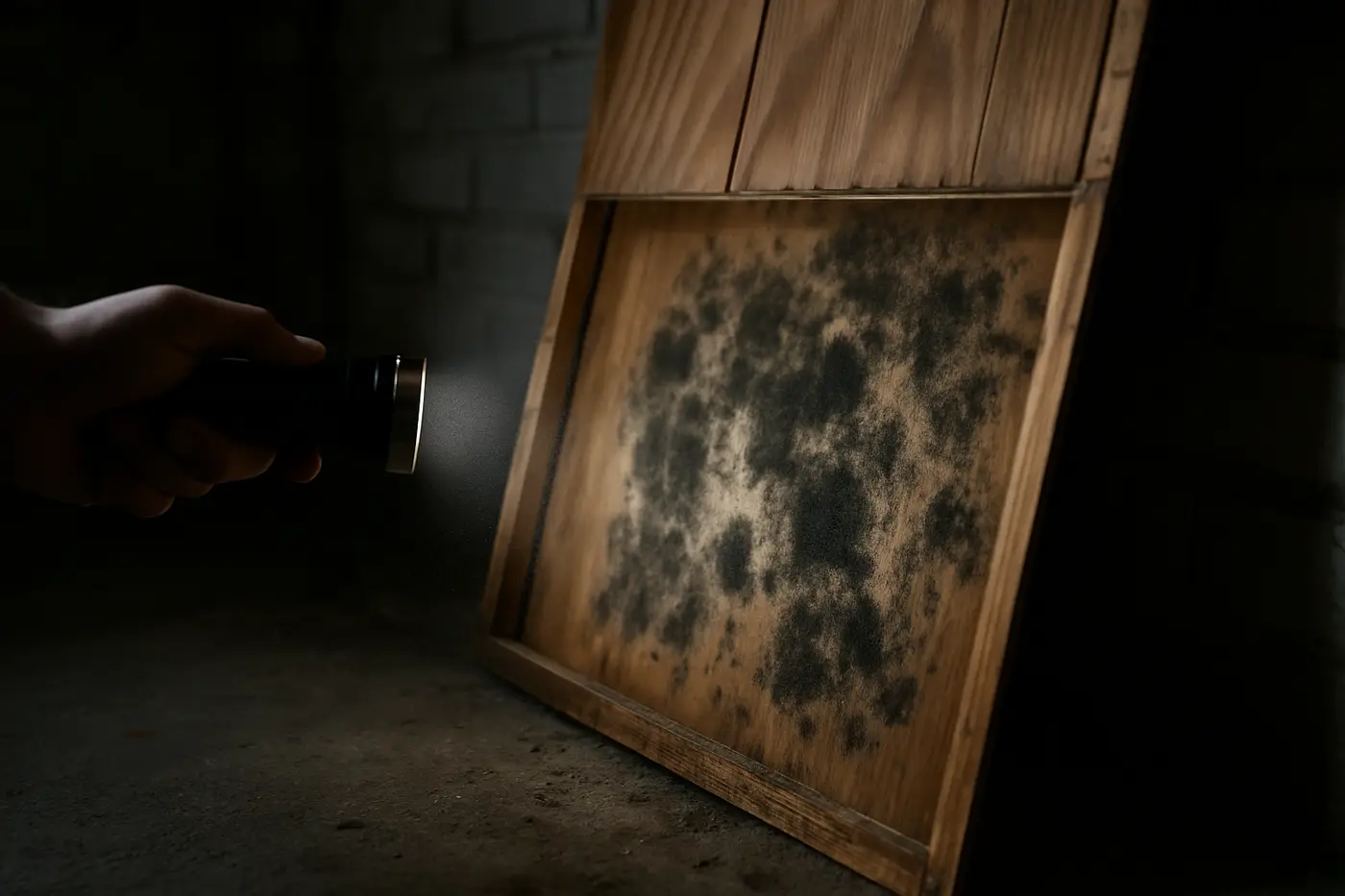
Attic mold in Philadelphia is a ventilation and roofing problem that shows up as black or gray staining on the underside of the roof sheathing. Crawl space mold is a ground moisture problem that shows up as a musty smell in the kitchen above. Both are hidden, both are usually found during a home sale or a roof replacement, and both come back if the moisture is not fixed. Attic and crawl space mold removal is the work of correcting the moisture, cleaning or removing the affected material under containment to the IICRC S520 standard, and leaving the space dry enough that it stays clean.
Why Philadelphia attics grow mold
Most Philadelphia rowhomes have a flat or low-slope roof over a shallow attic or a joist cavity, not the tall gable attic of a suburban house. That geometry matters: there is little air volume, little ventilation and often no easy access, so moisture that gets in stays in.
Flat and low-slope roof leaks
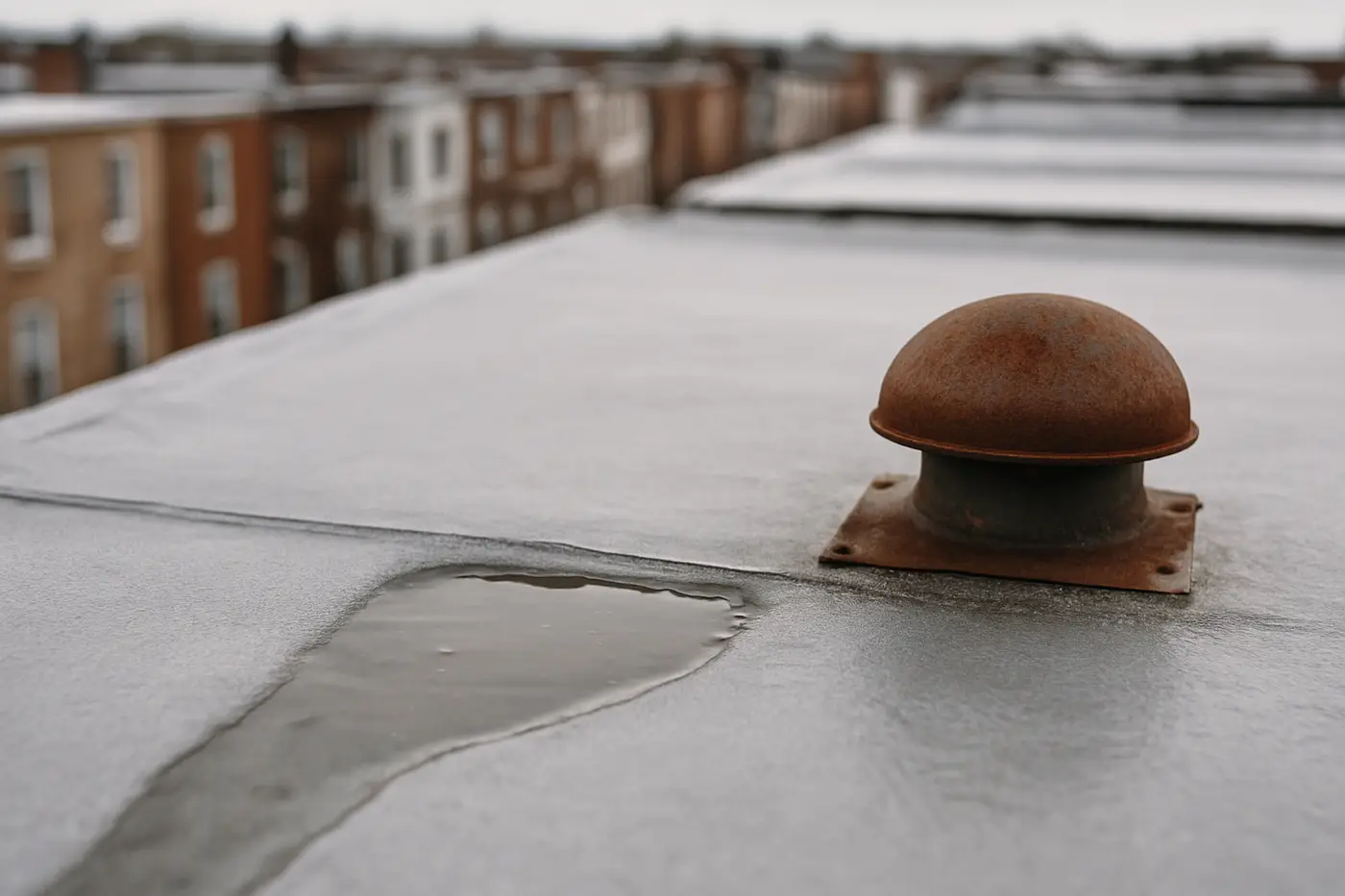
Flat roofs leak at seams, at the parapet walls shared with the neighbor, and at drains and scuppers. Silver-coated roofs that were never recoated crack at the laps. Winter freeze-thaw cycles open the seams a little more every year. Water lands on the top of the ceiling joists and the back of the plaster or drywall, and the first sign inside is a brown ring on the bedroom ceiling. By then the sheathing and joists above it have been wet for a season.
Bath fans venting into the attic
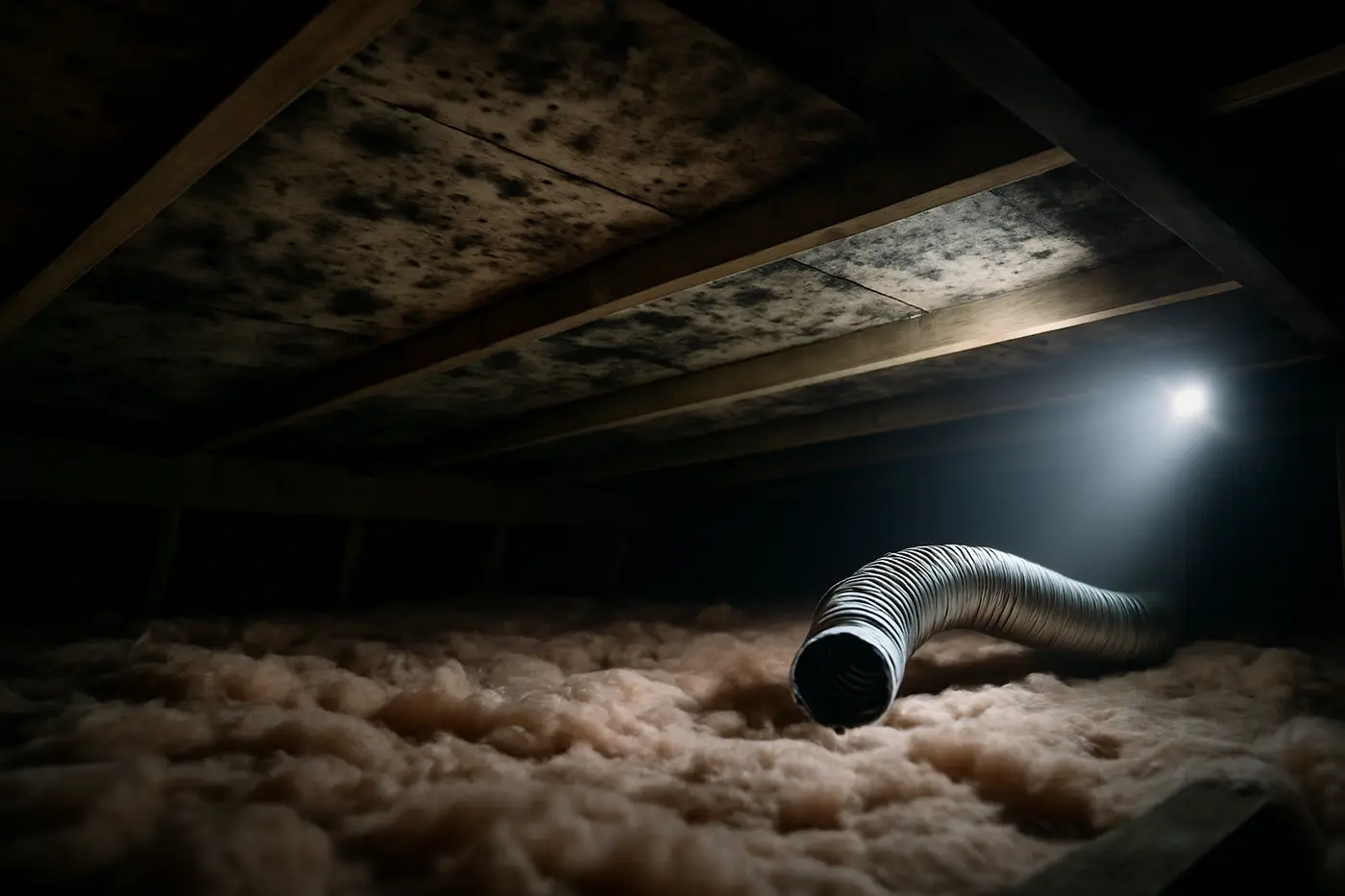
This is the most common cause we find in Northeast Philadelphia twins and singles and in West Philadelphia porch-front rowhomes. A bathroom exhaust fan was installed and the duct ends in the attic, or was never connected at all. Every shower pushes warm, saturated air into a cold attic. In January that air condenses on the underside of the sheathing and on the nails, drips back onto the insulation and grows mold in a fan-shaped stain above the bathroom.
Condensation on roof sheathing
Even without a fan, warm house air leaks into the attic through recessed lights, the attic hatch, plumbing chases and top plates. In winter the sheathing sits near outdoor temperature, the attic air hits its dew point against it, and frost forms, melts and grows mold. A north-facing slope often shows growth while the south slope stays clean.
Crawl spaces under rear additions
Many rowhomes have a rear kitchen or bathroom addition built over a crawl space rather than the full basement. Those crawl spaces are typically dirt floored, vented to the outside or not vented at all, and sit a few inches above ground that stays wet after every heavy rain. Summer air with a dew point of 65 to 75 degrees F enters through the vents, meets a cool joist and condenses. Ground moisture rises through the dirt all year. The joists and subfloor grow mold, the kitchen floor feels soft, and the smell comes up through the cabinet toe kicks.
The moisture source is fixed first
Cleaning mold off sheathing while the bath fan still blows into the attic guarantees a repeat visit. Before any cleaning:
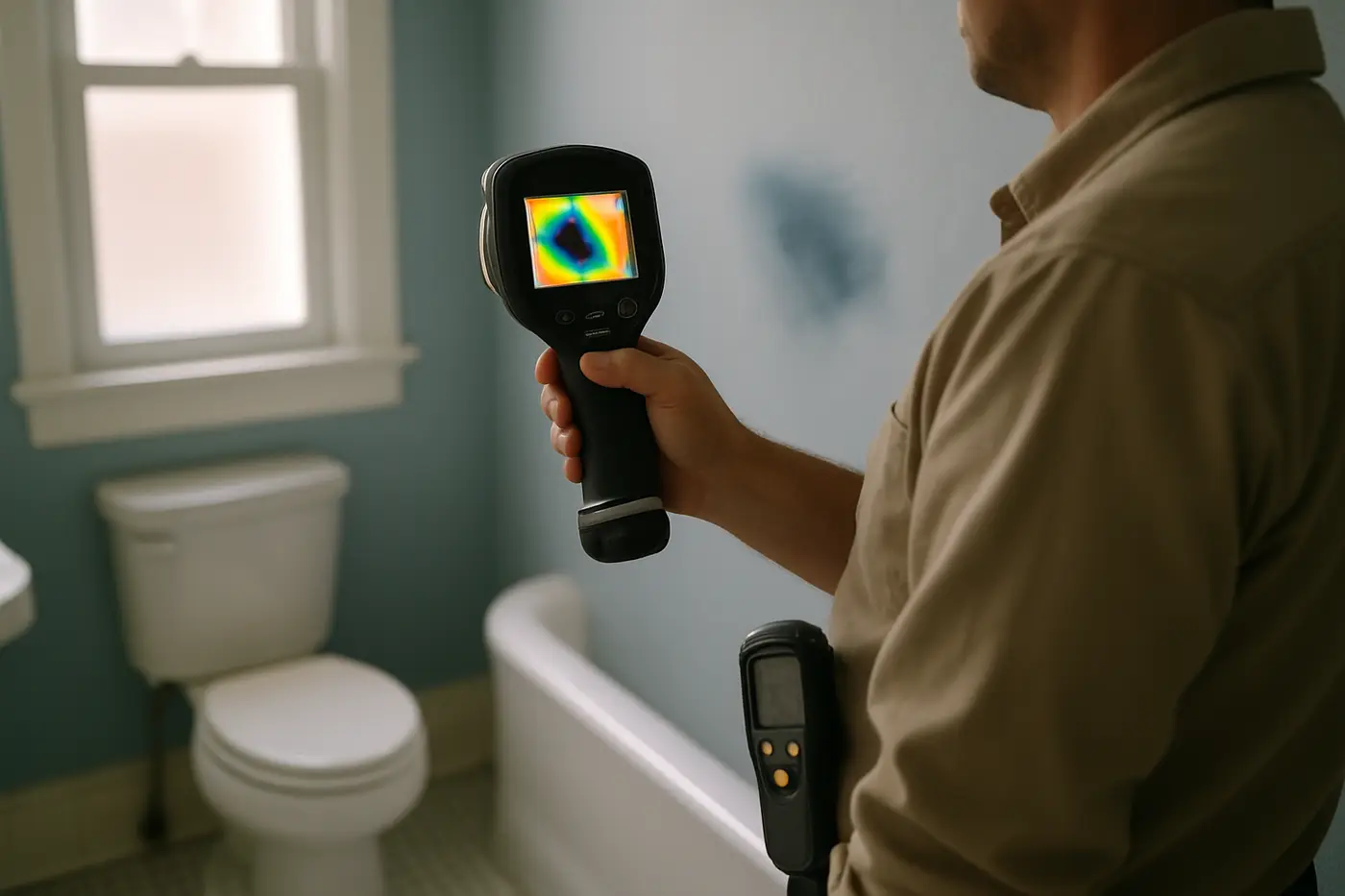
- The roof is inspected and the leak point identified. We coordinate with your roofer; we do not roof.
- Every bath and kitchen fan is traced to a roof or wall cap with a backdraft damper, or rerouted. Dryer vents go outside.
- Air leaks from the house into the attic are sealed: hatch, recessed lights, chases, top plates.
- Where the roof allows, intake and exhaust ventilation is balanced. On most flat roofs it does not, and the answer is air sealing and keeping house moisture out of the cavity.
- In the crawl space, ground moisture is addressed with a vapor barrier, grading or drainage, and the vents become part of an encapsulation plan rather than being left half open.
What stays and what goes
| Material | Usually cleaned and kept | Usually removed |
|---|---|---|
| Plywood or plank roof sheathing | Yes: HEPA vacuum, abrade or media blast, antimicrobial | Only if delaminated, soft or rotted |
| Rafters, joists and trusses | Yes, cleaned in place | Only if structurally compromised |
| Batt and blown insulation | No | When wet, moldy or holding debris from cleaning |
| Bath fan ducting | Rigid metal duct can be cleaned | Flex duct with growth or crushed sections |
| Crawl space joists and subfloor | Yes, cleaned in place | Subfloor that is rotted or delaminated |
| Old vapor barrier and ground debris | No | Always |
| Stored boxes and fabric | Solid items cleaned outside containment | Cardboard and fabric with growth |
How attic mold removal is done
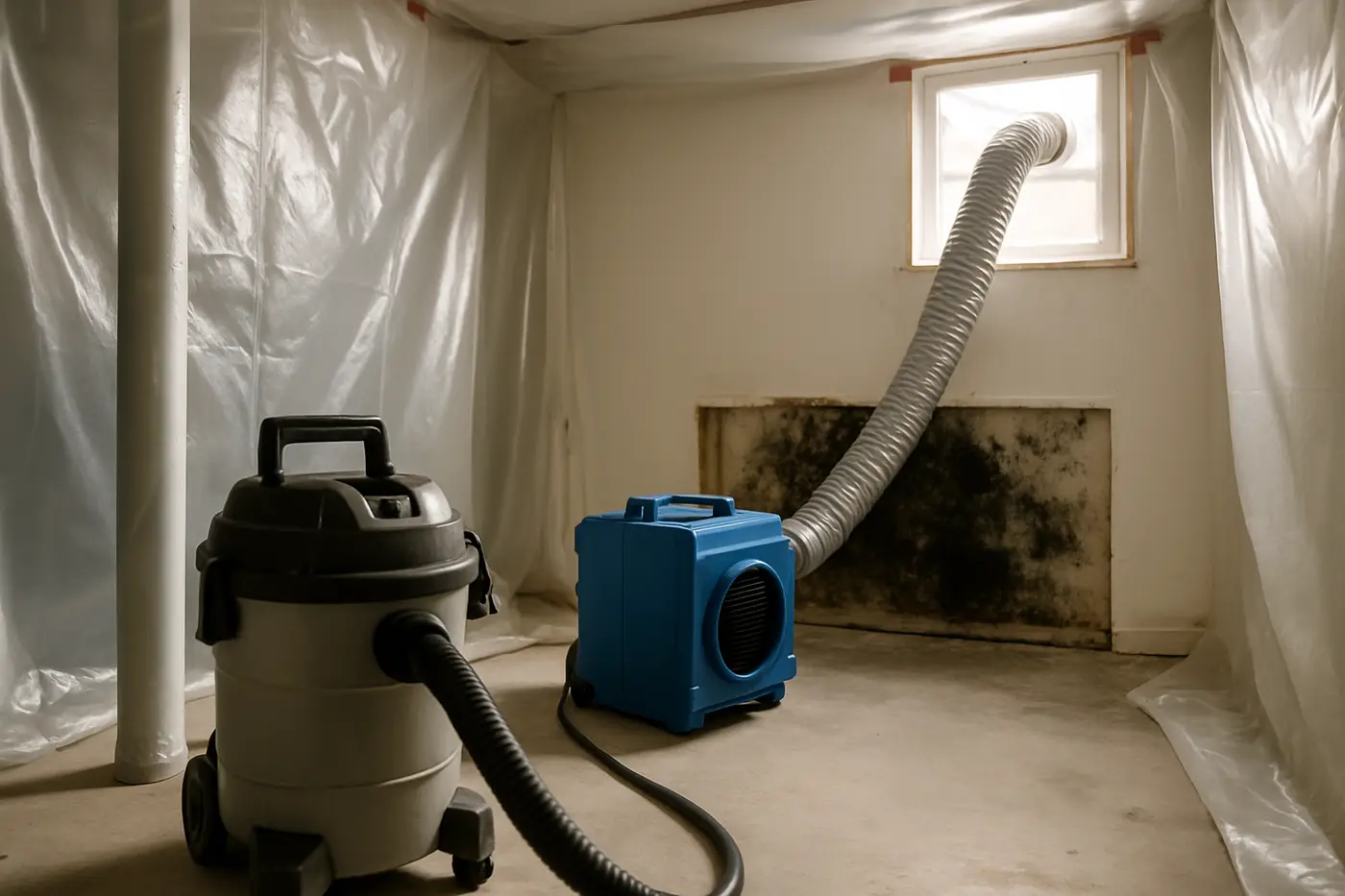
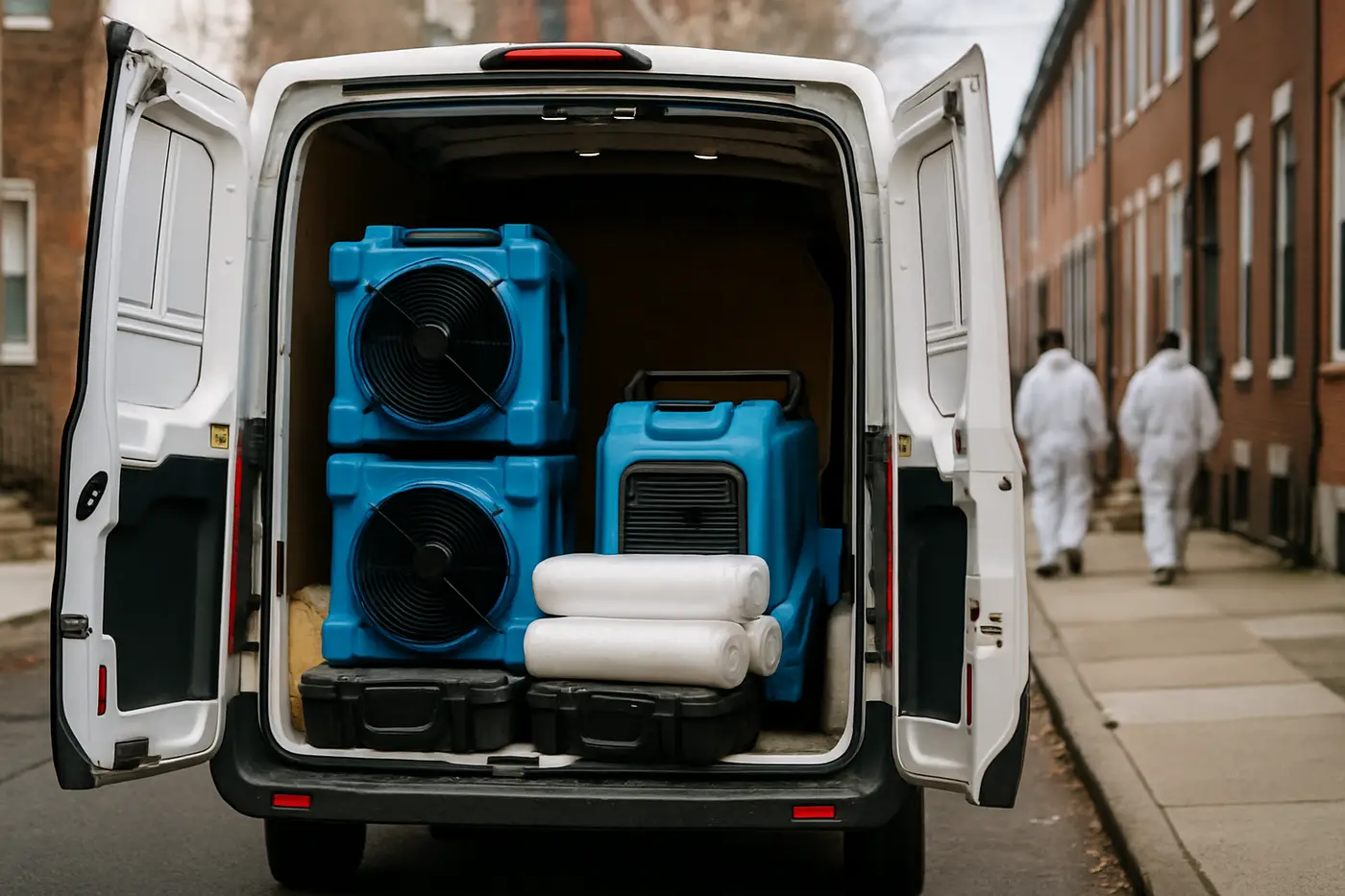
- Containment. The attic access is sealed with poly and a zippered entry, and the room below is protected. A HEPA-filtered air scrubber puts the attic under negative pressure so dust and spores do not fall into the living space.
- Insulation removal. Wet, moldy or debris-covered insulation is bagged and removed. In a low rowhome attic this is most of the labor.
- Cleaning the wood. Sheathing, rafters and joists are HEPA vacuumed, then abraded or media blasted where growth is in the surface, then HEPA vacuumed again. An antimicrobial treatment follows. Staining may remain; growth does not.
- Ventilation and air sealing. Fans are terminated outside, bypasses are sealed, and soffit, ridge or roof vents are added or cleared where the roof design allows.
- New insulation and verification. After the moisture readings in the sheathing reach dry standard and a visual check passes, new insulation goes in and the containment comes down.
Crawl space remediation, vapor barriers and encapsulation
A crawl space job follows the same S520 sequence with containment at the access hatch and negative air. After the joists and subfloor are cleaned, the space gets a vapor barrier: heavy polyethylene over the dirt, lapped and taped at the seams and sealed to the foundation walls. Full encapsulation goes further: the walls are covered, the vents are sealed, and a small dehumidifier holds the space below 60 percent relative humidity. A basic vapor barrier is included in the crawl space range; full encapsulation is scoped after the inspection.
Where we see attic and crawl space mold in Philadelphia
Bath fan attics are common in the 1920s to 1960s twins and singles of Mayfair and Fox Chase. Flat-roof seam and parapet leaks are the rule in South Philadelphia’s two-story brick rowhomes around East Passyunk. Crawl spaces under rear additions turn up across the city, and the hillside rowhomes and older frame houses of Roxborough add sloped lots that push ground water toward the low side of the house. Our post on attic mold, flat roofs and bath fans covers what to fix first, and how to spot hidden mold in a rowhome covers the signs from inside the living space.
Testing and verification
The EPA’s guidance is that visible mold does not need sampling to justify removal. Attic and crawl space jobs are usually visual: you can see the staining on the wood. Testing is useful when a buyer and seller disagree over whether the staining is active growth or old, dried stain, or when a lender wants a clearance letter. An independent lab runs $75 to $150 per sample, and post-remediation verification by an independent hygienist is $300 to $700.
Insurance and documentation
A standard homeowners policy covers sudden and accidental losses such as storm damage that opens the roof. Mold that follows may be paid under a mold sublimit. Mold from a bath fan that has vented into the attic for ten years, or from crawl space ground moisture, is long-term and is generally excluded. Check your policy. If you are selling, Pennsylvania’s Seller Disclosure Law requires disclosure of known material defects, which can include water intrusion and mold, so a remediation report with clearance is worth having on file.
What drives the cost
Attic mold remediation runs $2,000 to $7,000. Crawl space mold remediation with a vapor barrier runs $1,500 to $6,000. An inspection with moisture mapping is $250 to $500, credited against the work. A small contained area under 10 square feet, such as a single stain above the bathroom with the fan already fixed, is $500 to $1,500. Rebuilding a ceiling below a bad leak falls under mold damage repair at $1,000 to $5,000 per room, and a larger job that has spread into the rooms below is scoped as mold remediation.
The drivers are access, the square footage of sheathing to clean, how much insulation comes out, whether the roof needs work first, and whether the crawl space needs full encapsulation. Call us or send the form for a scheduled visual inspection and a written estimate. Full ranges are on our pricing page.
Last updated September 02, 2026