- #basement-mold
- #rowhome
- #humidity
- #dew-point
- #seepage
- #philadelphia
Philadelphia rowhome basements grow mold because humid summer air condenses on cool stone and concrete, groundwater seeps through unsealed foundations and floors after heavy rain, and the combined sewer backs up through floor drains. The fix, in order: grading and downspouts, sealing the slab, a dehumidifier holding the basement under 60 percent humidity, and a backwater valve for sewer backup.
This guide covers each cause and the order to fix them in, with the costs from our pricing page where they apply.
The basement you are working with
Most of the city’s rowhomes went up between the 1880s and the 1940s, and nearly every one has a basement. Older ones have stone or rubble foundations laid in lime mortar, with a concrete floor that was poured later over dirt, or in some cases still a dirt floor under a thin slab. The walls are cold, porous and in contact with wet ground. The floor has no vapor barrier under it. The space is unconditioned, with the furnace, the water heater, the laundry and everything the family did not want upstairs.
Newer basements in the Northeast, in the 1920s to 1960s twins and singles in Mayfair, Fox Chase and Bustleton, are usually block or poured concrete and more often finished. They have the same summer humidity problem and an added one: paneling, drywall and carpet against a wall that is never fully dry.
The point is that a rowhome basement is not a room. It is a cool, damp masonry box with a house on top, and everything that follows comes from that.
Cause 1: summer air condensing on cool masonry
Philadelphia has a humid subtropical climate. In July and August the outdoor dew point often sits between 65 and 75 degrees Fahrenheit. Dew point is the temperature at which air gives up its water. A stone or concrete basement wall a few feet below grade sits at 55 to 65 degrees most of the summer.
When 72 degree dew point air reaches a 60 degree wall, water condenses on it. It is the same physics as a cold drink sweating on a porch table. It happens on the stone, on the concrete floor, on cold water pipes, on the metal jacket of the water heater and on the back of anything leaning against the wall.
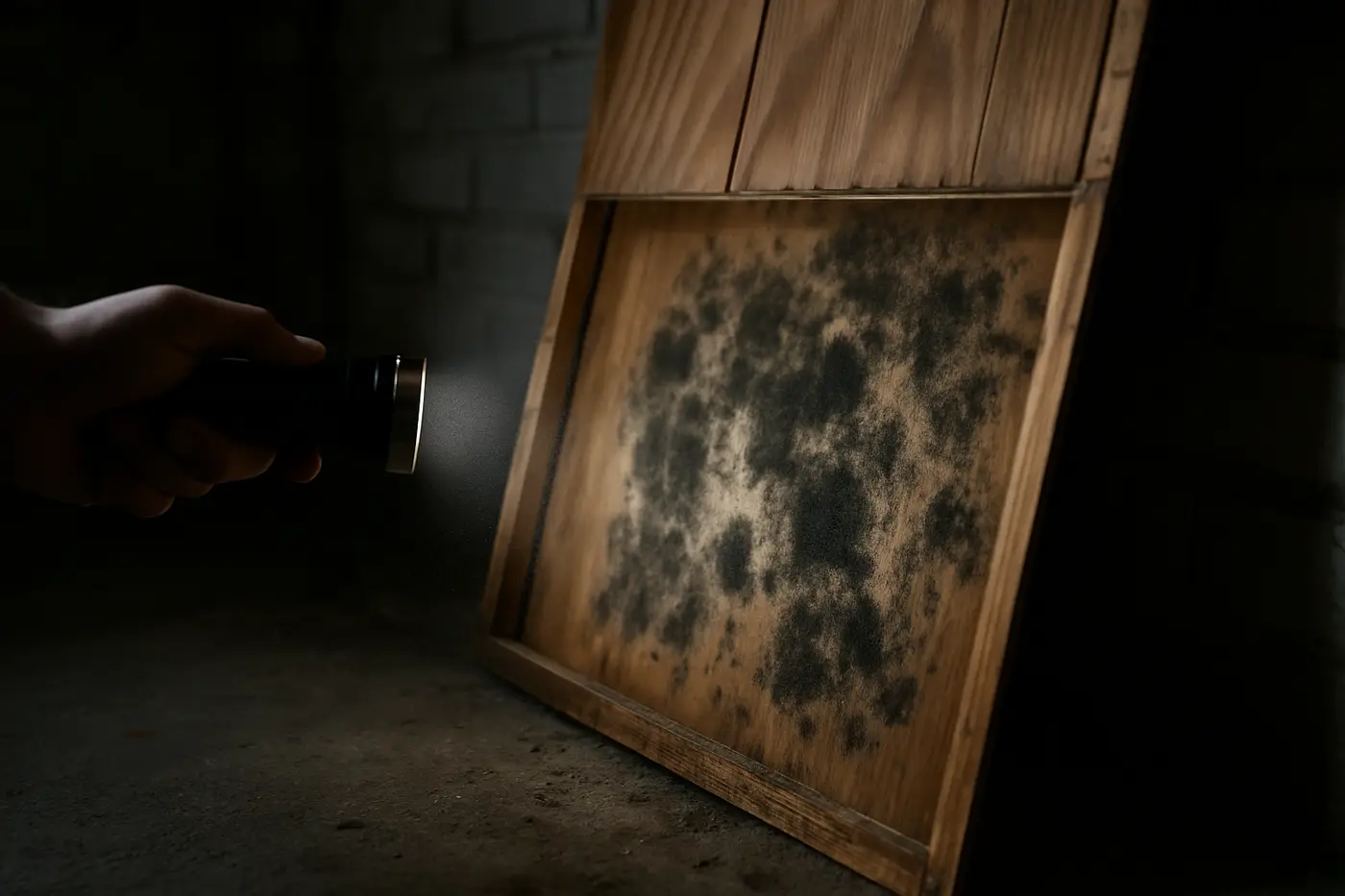
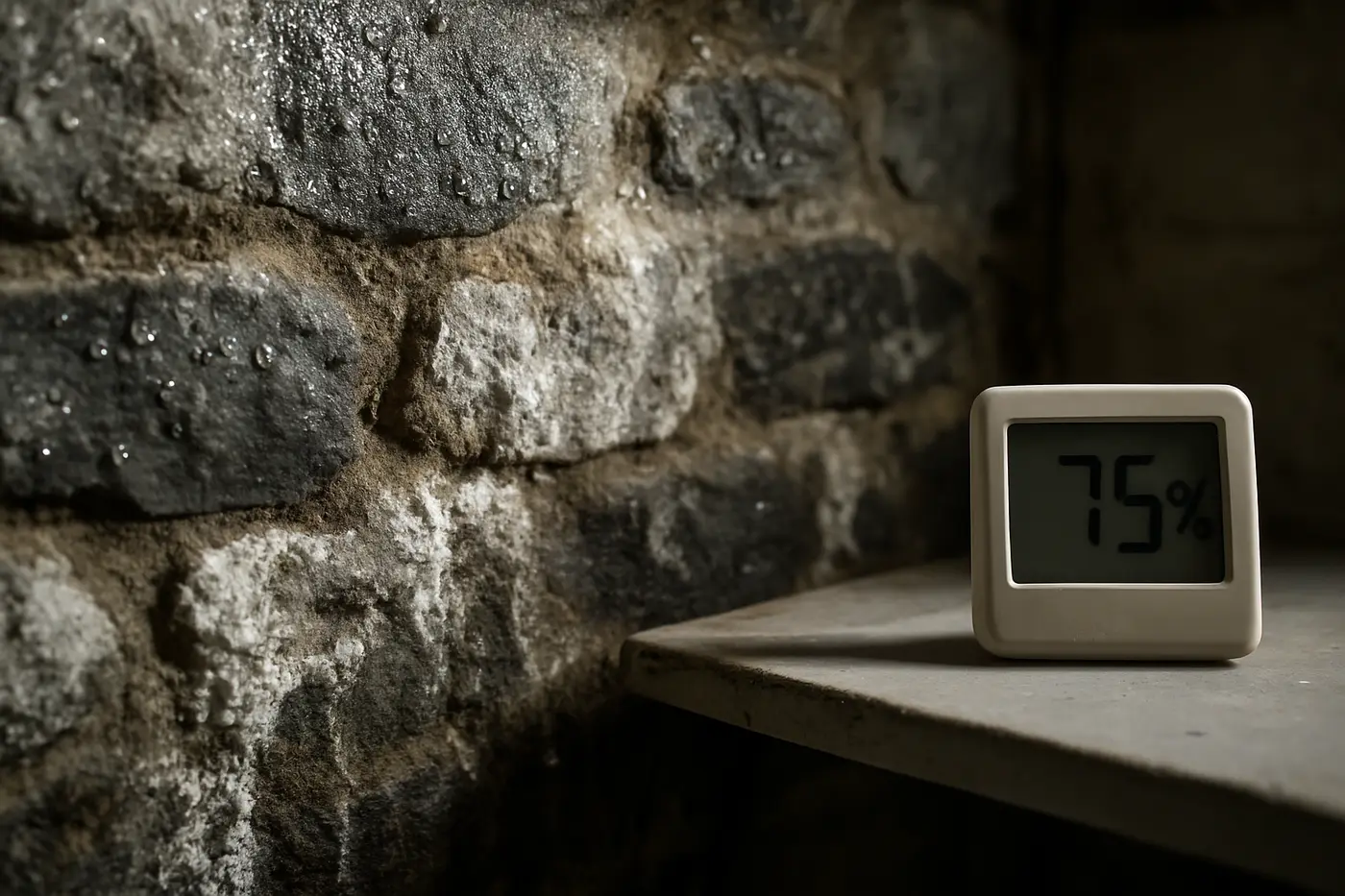
Relative humidity in an unconditioned rowhome basement routinely sits above 60 percent from June through September. Mold grows on wood, paper and dust once a surface stays above that level for days, and a basement holds it for months. The joists, the subfloor above, the paneling, the cardboard boxes and the back of the sofa that went down there in 2019 all become food.
This cause has nothing to do with a leak. Basements with no water intrusion at all grow mold on humidity alone. Our summer humidity guide goes deeper on the numbers.
Cause 2: seepage after heavy rain
The city gets about 42 to 47 inches of rain a year, a lot of it in intense summer thunderstorms and the remnants of tropical storms in late summer. After an inch or two in an hour, the ground beside a rowhome is saturated and water finds the path of least resistance, which is the stone foundation.
Typical entry points:
- The joint where the wall meets the floor slab, which shows as a wet line along the base of the wall.
- Mortar joints in a rubble wall, which show as damp patches and white efflorescence.
- Cracks in the slab, which show as a damp area in the middle of the floor.
- The base of the front wall, fed by a downspout that discharges at the foundation or a sidewalk that slopes toward the house.
- The rear wall, fed by a small concrete yard that drains toward the house.
Seepage is intermittent, which makes it easy to ignore. The floor dries in a day, the smell stays, and the growth on the bottom of the paneling keeps spreading.
Cause 3: combined sewer backups
Roughly the older two thirds of Philadelphia is served by a combined sewer, meaning stormwater and sewage share the same pipe. In a heavy rain the pipe surcharges and the water has nowhere to go but back up the house lateral and out of the basement floor drain, the laundry sink or a basement toilet.
That is Category 3 water under the IICRC S500 standard. Any porous material it touched, including drywall, carpet, paneling, cardboard, fiberglass insulation and unsealed wood, is removed rather than dried. Mold follows within days on whatever is left wet. Our water damage restoration page covers the extraction and drying, and remediation after a backup is priced under the black mold and Category 3 row at $2,500 to $10,000.
PWD’s Green City, Clean Waters program has been reducing overflows with green stormwater infrastructure since 2011, but it does not change what happens on your block during a two inch downpour. Call 311 to report a backup.
Cause 4: what you put down there
Three household habits feed basement mold more than any leak.
Cardboard on the floor. Cardboard is cellulose, it wicks water from a damp slab, and it is the preferred food of the mold that turns black and fuzzy. A row of boxes against a stone wall is a mold farm.
Dryer vents. A dryer vent that is disconnected, crushed behind the machine or vented into the basement puts several pints of water into the air with every load. Lint on the floor behind the dryer is the tell.
Blocked airflow. Paneling on furring strips against the stone, a sofa against the wall, shelving packed to the ceiling. Still air against a cold surface stays wet.
What to fix, in what order
People often start with the dehumidifier and stop there. The order below costs less and works better.
| Step | What to do | Why this order |
|---|---|---|
| 1. Grading and downspouts | Slope soil and paving away from the house; extend downspouts 4 to 6 feet or into a drain | Stops the bulk water before it reaches the wall; cheapest fix with the largest effect |
| 2. Gutters, roof drains and yard drains | Clear them; confirm the flat-roof drain and the rear yard drain actually flow | A clogged roof drain dumps a roof’s worth of water at the foundation |
| 3. Seal the slab and the wall-floor joint | Vapor-retarding sealer or epoxy on a dry, clean slab; hydraulic cement in the joint | The floor is the largest vapor source; a sealed slab drops humidity noticeably |
| 4. Wall treatment | Repoint rubble joints; interior coating only after the outside is handled | Coatings over active seepage fail or trap water in the mortar |
| 5. Dehumidification | A 50 to 70 pint per day unit draining to a floor drain or condensate pump; target under 50 percent RH | Handles the summer condensation that no sealing prevents |
| 6. Backwater valve | Through PWD’s Basement Backup Protection Program if eligible, or a plumber | Only step that addresses sewer backup |
| 7. Storage and airflow | Plastic bins on shelving, nothing against the wall, dryer vented outside | Removes the food and the still air |
Grading and downspouts first
Walk the front and back of the house during a rain. If a downspout ends at the foundation, add an extension. If the sidewalk or the rear yard slopes toward the house, that is the single most valuable thing to change. This step often takes a basement from wet every storm to damp only in a deluge.
Sealing the slab
An unsealed concrete slab over dirt passes water vapor continuously, and in an older rowhome it is the biggest source of basement humidity outside the summer air itself. Once the slab is clean and dry, a vapor-retarding sealer or a two-part epoxy makes a measurable difference. Seal the wall-floor joint with hydraulic cement at the same time.
The dehumidifier does the rest
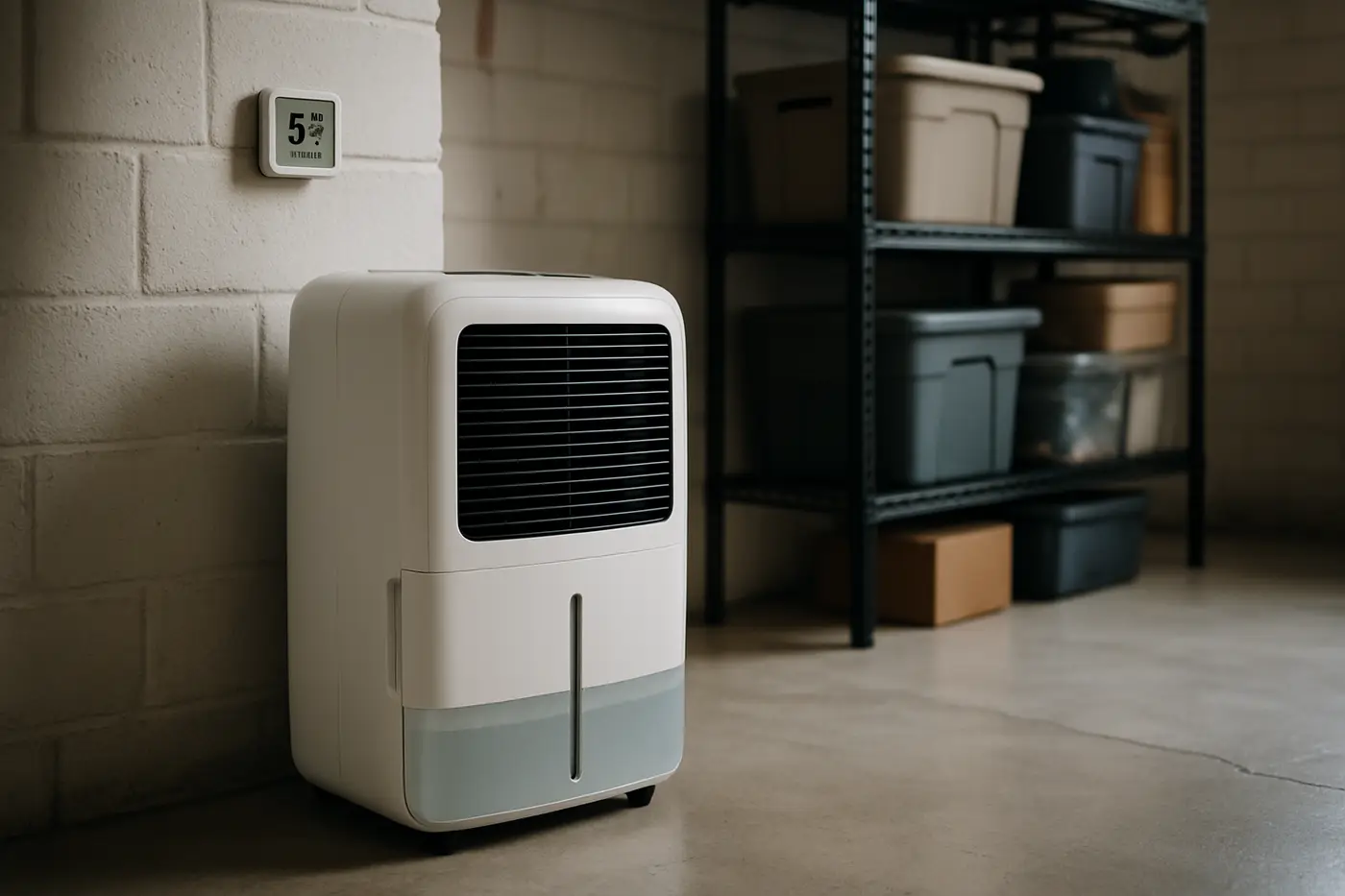
A dehumidifier rated for 50 to 70 pints per day handles a typical rowhome basement. It has to drain by itself, to a floor drain or a small condensate pump, because a bucket that fills in a day gets emptied for two weeks and then ignored. Put a hygrometer on the wall and aim for 50 percent relative humidity in summer. Under 60 percent is the line that matters. Air conditioning upstairs does not do this job; the basement is a separate air mass.
The backwater valve
If your block is on the combined sewer and the basement has ever taken sewer water, a backwater valve on the lateral is the fix. It closes when the main surcharges. PWD’s Basement Backup Protection Program installs them for eligible properties, so ask PWD before paying a plumber.
When the mold is already there
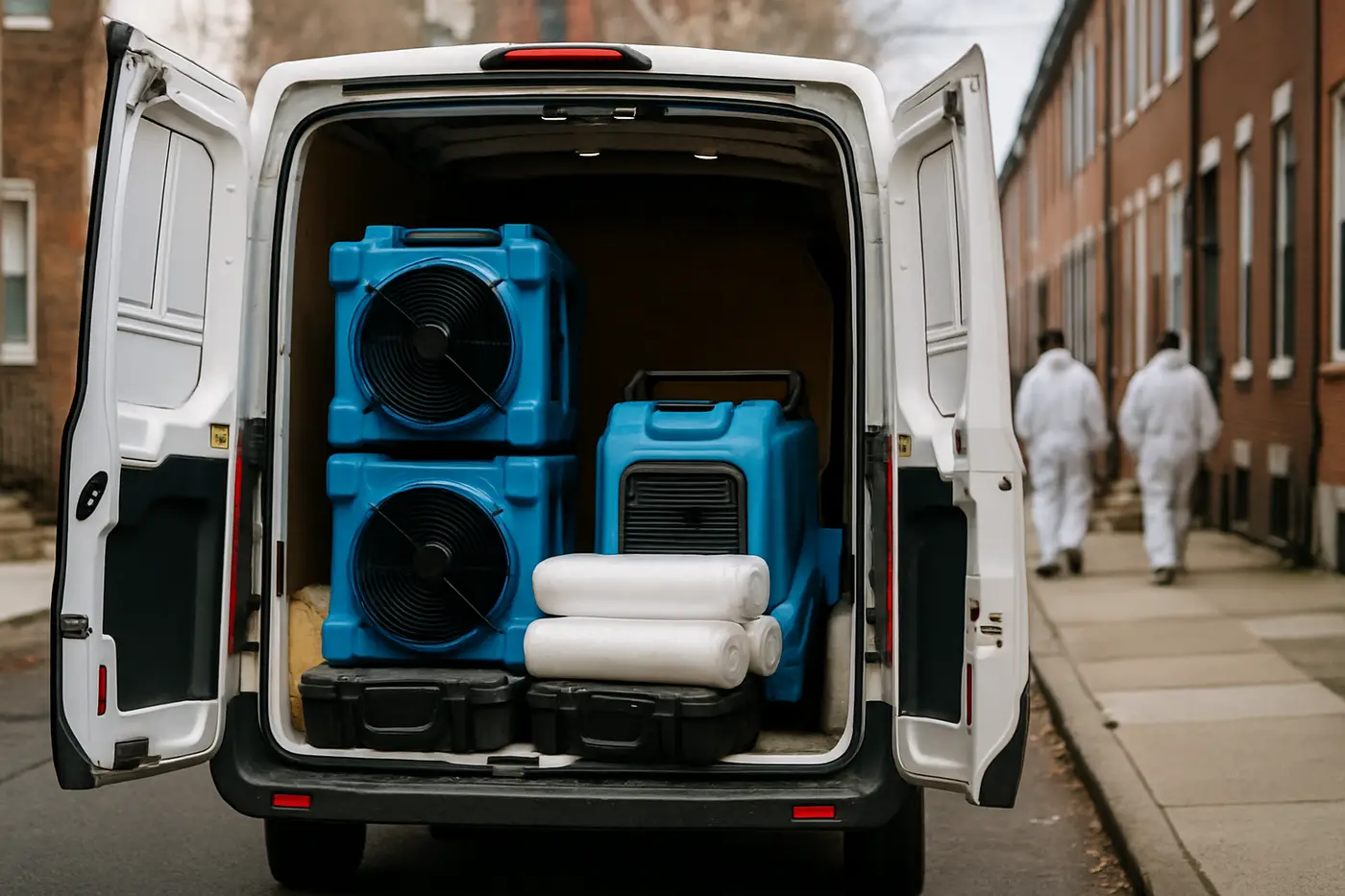
If the joists, paneling or stored contents are already growing, none of the above removes it. Remediation to the IICRC S520 standard means containment, negative air with HEPA scrubbers, removal of the porous materials that cannot be cleaned, HEPA vacuuming and antimicrobial treatment of the framing and masonry, and independent clearance testing at $300 to $700 before anything is rebuilt.
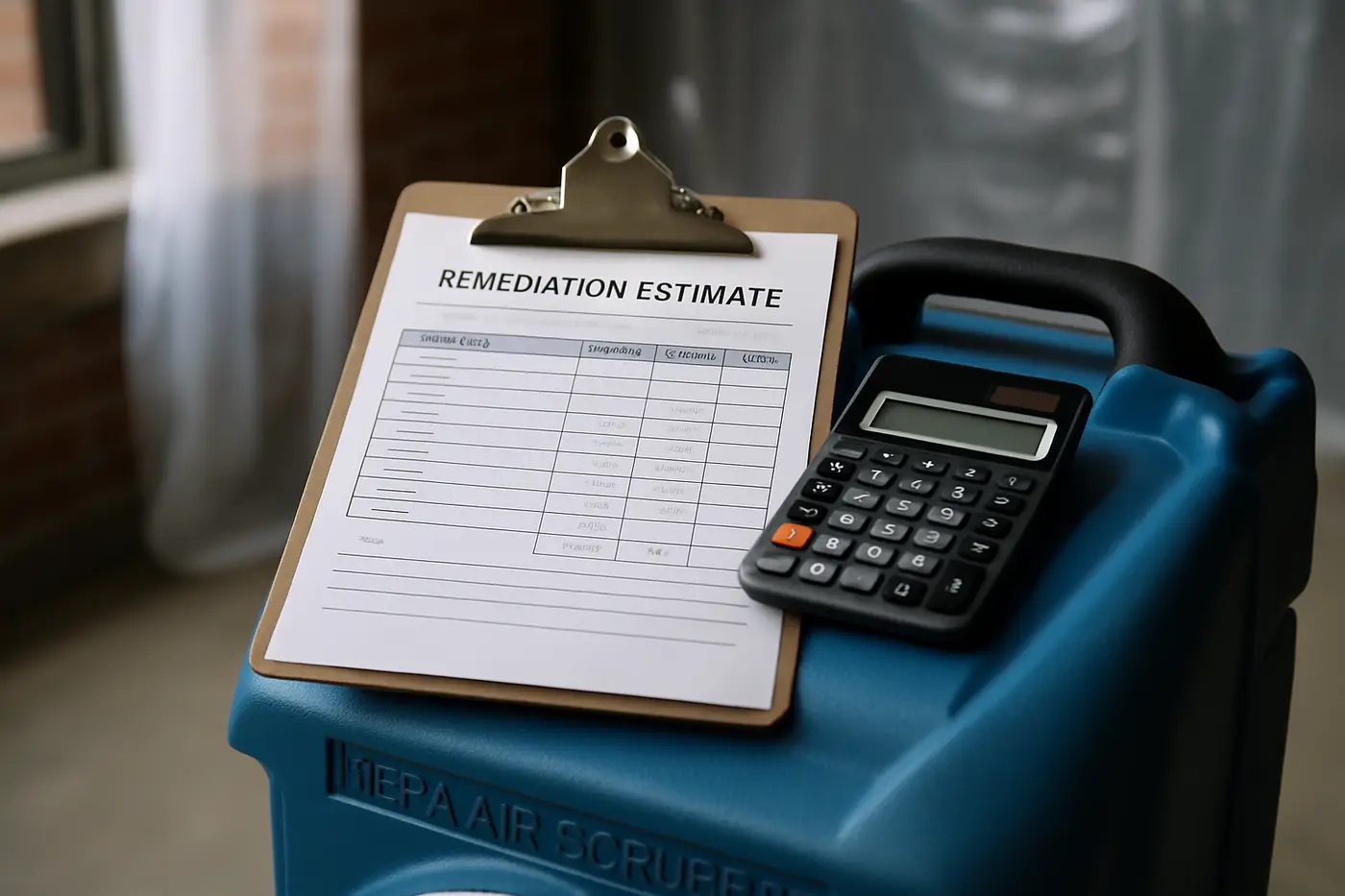
Basement mold remediation in a rowhome runs $2,000 to $8,000. An unfinished basement with growth on the joists and the back wall sits low in that range. A finished basement where the paneling, drywall, insulation and carpet come out sits high, and a wet structure adds 5 to 10 days of drying at $50 to $125 per unit per day beforehand. The full breakdown is in our 2026 cost guide and the basement mold remediation page covers what stays and what goes.
The moisture fixes above are part of every basement scope. Remediating a basement that will be at 70 percent humidity again by August is not a service worth paying for.
Key takeaways
- Rowhome basements are cool masonry boxes. Summer air at a 65 to 75 degree dew point condenses on them, and relative humidity sits above 60 percent all summer.
- Seepage through stone foundations and unsealed slabs after heavy rain, combined sewer backups and cardboard storage supply the rest.
- Fix in order: grading and downspouts, drains, seal the slab, treat the walls, dehumidify to under 50 percent, backwater valve, storage and airflow.
- A 50 to 70 pint per day dehumidifier that drains itself is the workhorse. A hygrometer tells you if it is working.
- PWD’s Basement Backup Protection Program installs backwater valves for eligible properties. Call 311 to report a backup.
- Basement remediation runs $2,000 to $8,000; sewer-related work is $2,500 to $10,000; independent clearance is $300 to $700.
If your basement smells or shows growth, send the form or call us. We work across Philadelphia and the surrounding area, from Point Breeze to Roxborough, and a scheduled visual inspection with a written estimate is free.