- #hidden-mold
- #rowhome
- #signs-of-mold
- #moisture-meter
- #philadelphia
Hidden mold in a Philadelphia rowhome shows up as a musty smell, soft or bubbling drywall, or a wall that reads wet on a moisture meter before any growth is visible. It hides behind basement paneling, in party walls, under flat-roof seams, in bath fan ducts, window returns, under sinks, behind furniture on exterior walls and behind tub surrounds.
This guide walks through each sign, each hiding place and the point at which looking yourself stops being useful.
Trust the smell first
Mold releases gases as it digests the material it grows on, and those gases pass through paint, paneling and drywall long before a stain does. The smell is earthy, musty, close to wet cardboard or a cellar that has been shut for a week.
A few things narrow down where it is coming from:
- The smell is stronger near the floor or at the bottom of the basement stairs. That points to the basement or the base of a wall.
- It is stronger after rain or on a humid July day and fades on a dry, cold day. That points to seepage or condensation rather than a plumbing leak.
- It is stronger in one bedroom, especially a rear bedroom under the flat roof. That points to a roof seam or the bath fan duct.
- It is stronger when the HVAC runs. That points to the air handler, the condensate line or the ductwork.
If the smell disappears while a dehumidifier runs, moisture is the whole story and the fix starts there. If it does not, something is actively growing.
Staining, bubbling and soft spots
Visible signs come later than the smell and are easy to explain away. The ones worth taking seriously:
- A tan or brown ring on a ceiling that is still damp to the touch, or that has grown since you last looked.
- Paint that bubbles, flakes or lifts from plaster, especially low on an exterior wall or below a window.
- Drywall that gives under a thumb or sounds dull instead of hollow when tapped.
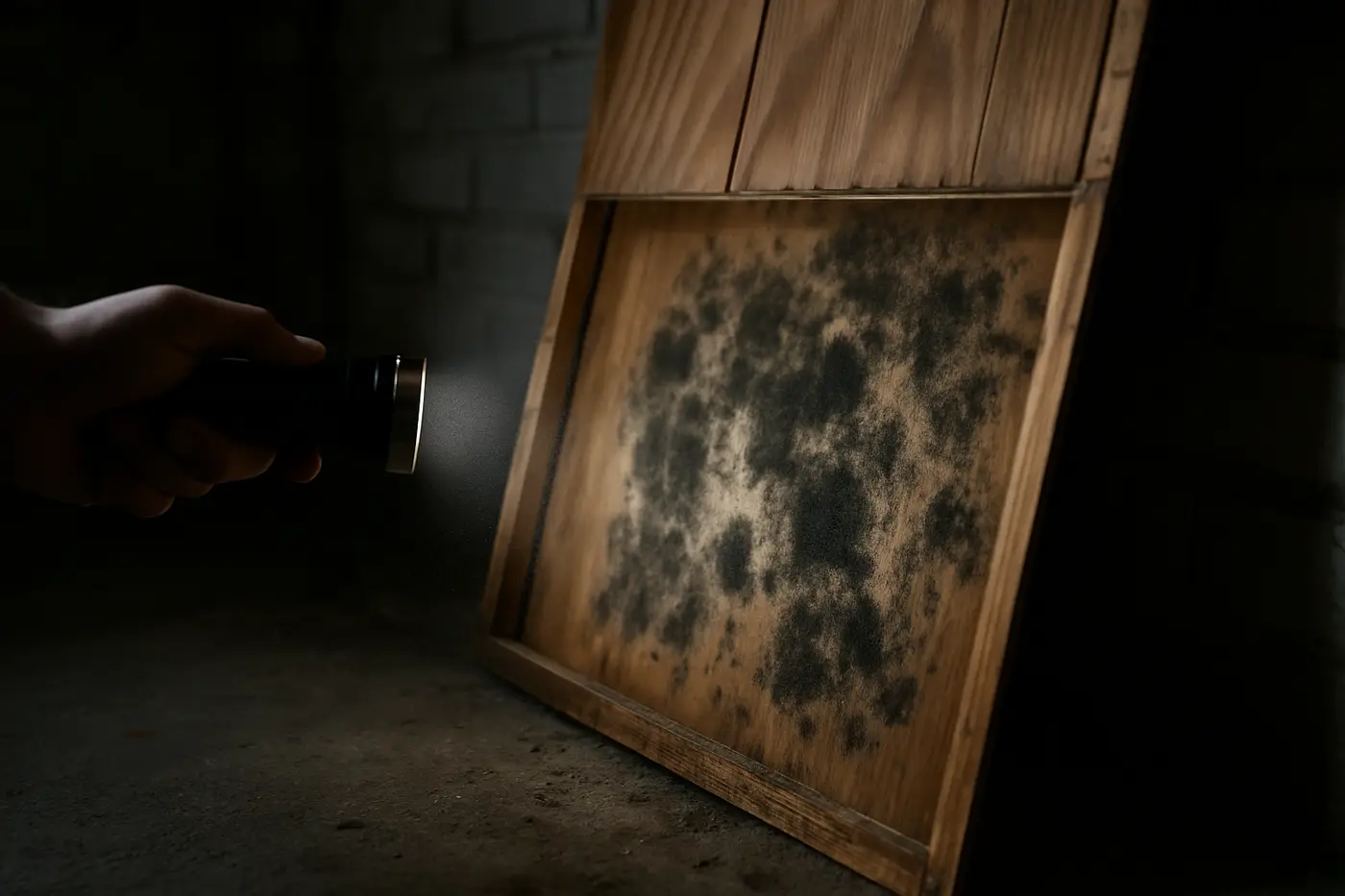
- Black, green or gray speckling on the paint, on grout, on the underside of a windowsill or along the base of a wall.
- Warped baseboard, swollen door casing or a floor that has lifted at a seam.
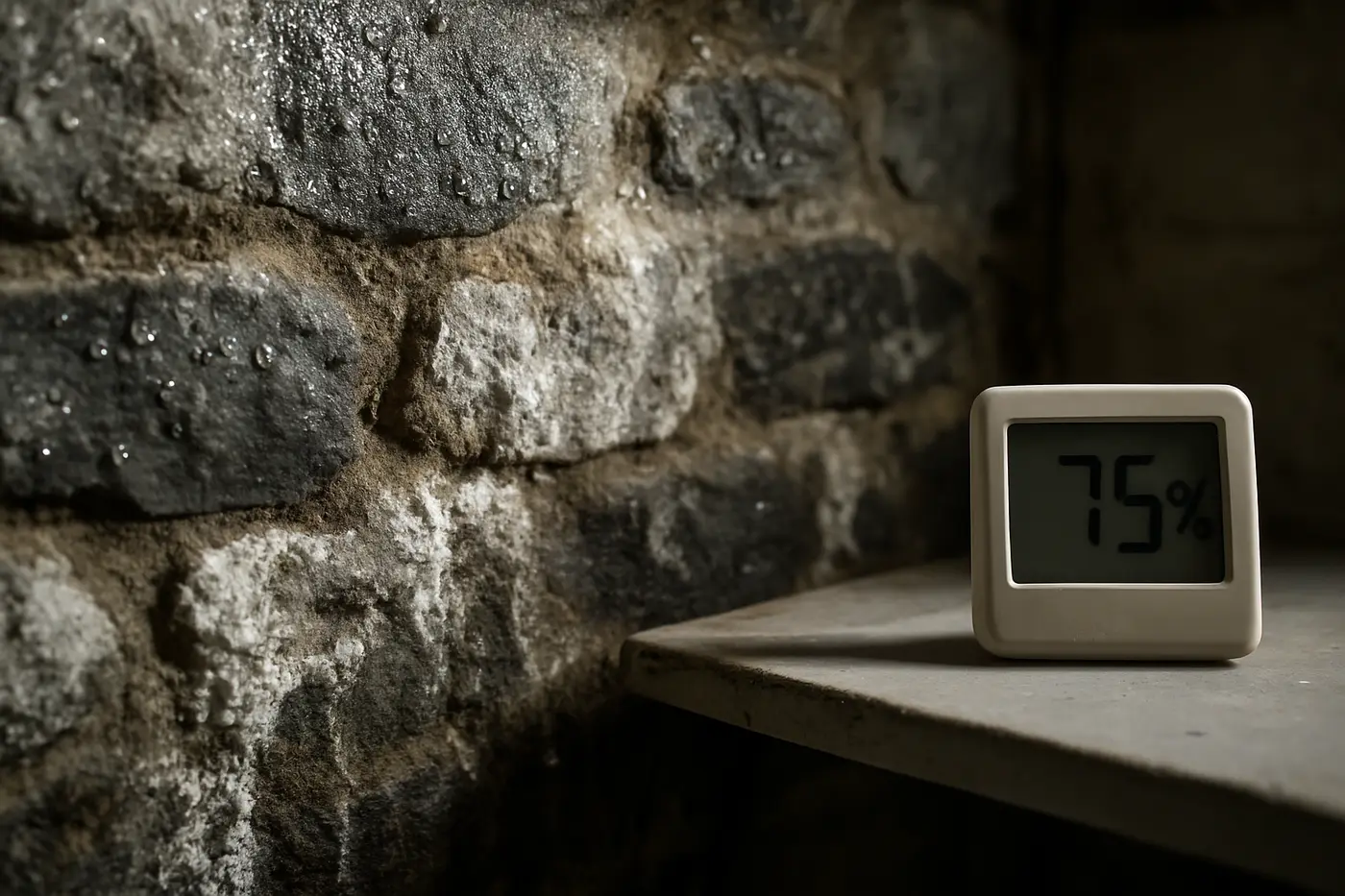
- Efflorescence, the white powder on a stone or block wall, which is not mold but is proof that water is moving through the masonry.
One rule saves a lot of guessing: a stain is a record of a leak. The question that matters is whether the leak is fixed. If it is not, mold is on its way whether or not you can see it yet.
The eight places hidden mold lives in a rowhome
Philadelphia’s housing stock is brick rowhomes from the 1880s through the 1940s, with shared party walls, flat or low-slope roofs and a basement under nearly every one. That layout creates the same hiding places house after house.
| Hiding place | What feeds it | What to look for |
|---|---|---|
| Behind basement paneling | Seepage through stone foundation, summer condensation | Musty smell at the stairs, paneling that bows or stains at the bottom |
| Inside the party wall | Neighbor’s roof or plumbing leak | Damp plaster on one wall only, staining that starts high and runs down |
| Under flat-roof seams | Split seams, parapet and drain leaks | Ceiling stain in a rear room, sagging drywall, drip after a long rain |
| Bath fan duct | Fan venting into the attic or nowhere | Growth on the ceiling near the fan, damp attic insulation above the bath |
| Window returns | Failed flashing on a bay or replacement window | Soft drywall under the sill, peeling paint on the return, cold draft |
| Under sinks | Slow drain or supply leak, dishwasher line | Swollen cabinet floor, black growth on the back wall of the cabinet |
| Behind furniture on exterior walls | Winter condensation on a cold brick wall | Speckled growth on the wall or the back of the dresser |
| Behind tub surrounds | Failed grout, caulk or shower pan | Loose tile, soft wall next to the tub, growth in the closet on the other side |
Behind basement paneling
Someone finished the basement in the 1970s with paneling over furring strips on a stone or rubble foundation wall. Ground moisture comes through the stone, air at 70 percent relative humidity condenses on the cool masonry behind the paneling all summer, and the back of the paneling stays dark and damp. Pull the bottom of a panel back with a putty knife near a corner. If the furring strip is dark or the back of the panel is spotted, the whole run is usually the same. This is the most common hidden mold in the city, and our basement mold guide covers why.
Inside the party wall
The wall you share with your neighbor is brick with plaster or drywall on your side. If their roof drain clogs or their bathroom supply line leaks, the water runs down inside the shared masonry and shows on your side as a damp patch on one wall only, often starting near the ceiling. You cannot fix the source from your side, which is why the report needs to cover both houses.
Under flat-roof seams
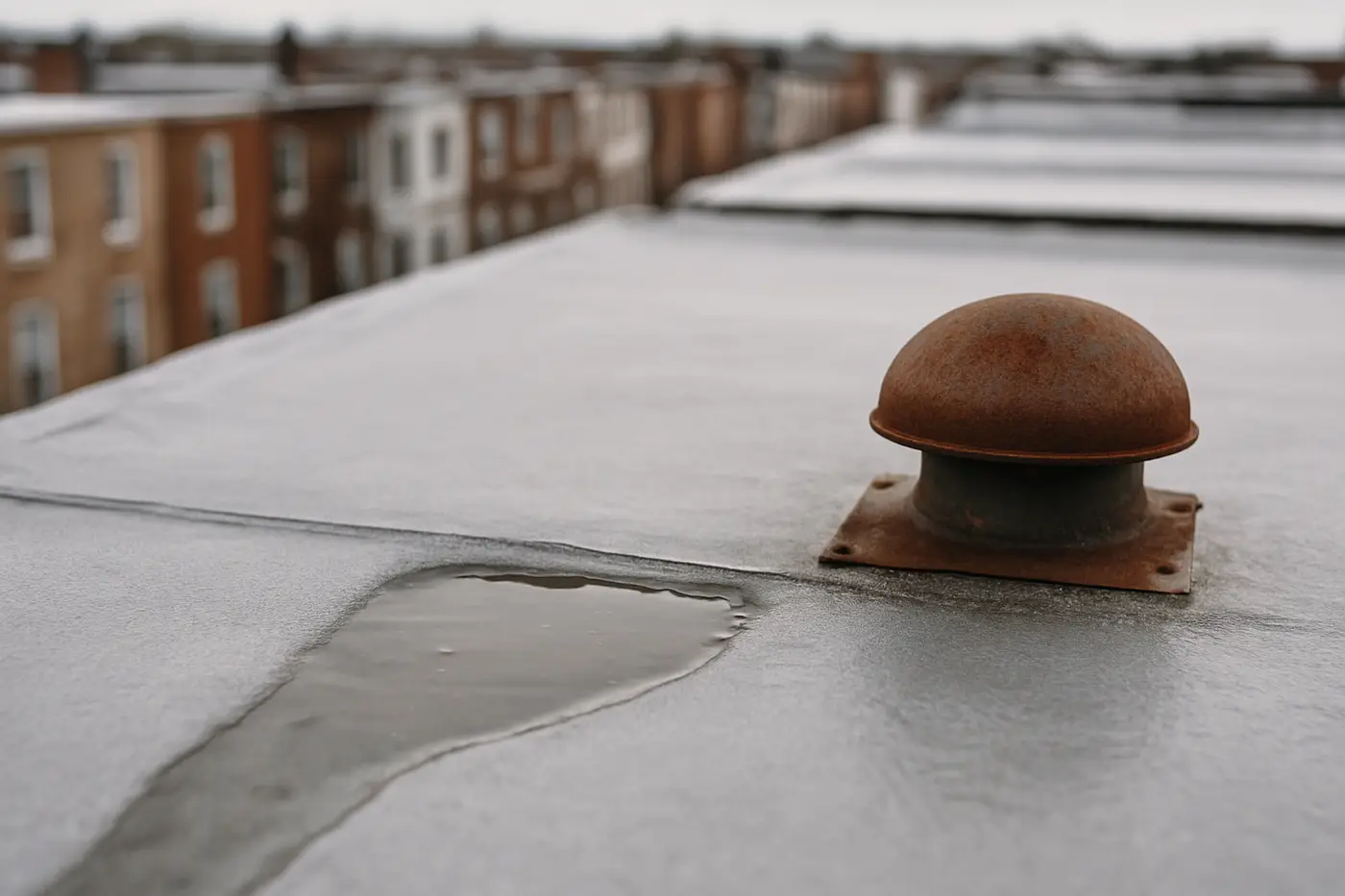
Most rowhome roofs are flat or low-slope with a silver coating that was meant to be recoated every few years and often was not. Seams, parapets and drains open with freeze-thaw cycles. Water pools on the ceiling drywall of the rear bedroom or the bathroom and the growth starts on the top side, where you cannot see it. Any ceiling stain that is damp after a long rain is a roof seam until proven otherwise. The attic mold guide explains the roof and bath fan combination in detail.
Bath fan ducts
Many rowhome bath fans were installed to vent into the attic space or the joist bay, not outside. Every shower sends warm, wet air into a cold cavity where it condenses on the framing. Growth shows on the ceiling around the fan and, when you lift the attic hatch, on the insulation and sheathing above the bathroom.
Window returns and bays
Replacement windows and bay windows in rowhomes are common flashing failures. Water gets behind the frame and runs into the wall below the sill. Press the drywall under the sill and along the return. Soft drywall, peeling paint or a cold draft in winter all point to the same cavity.
Under sinks
A slow drain leak or a dishwasher supply line under a kitchen sink can drip for a year before anyone notices. Empty the cabinet and look at the floor and the back wall. Swollen particleboard and black growth on the back wall are typical.
Behind furniture on exterior walls
In winter, the brick exterior wall of a rowhome gets cold. A dresser or bed pushed against it traps still air, the wall surface drops below the dew point of the room and it stays damp. Pull furniture a few inches off exterior walls and look at the wall and the back of the piece.
Behind tub surrounds
The 1950s bathroom with a tile tub surround over drywall or plaster is the single most common bathroom problem in the city. Grout and caulk fail, water wicks into the wall, and the growth spreads through the cavity into the closet or bedroom on the other side. Loose tile, a soft wall next to the tub or a musty closet next door is the tell. Our bathroom and kitchen mold page covers what stays and what goes.
The moisture meter settles most arguments
A pinless moisture meter, available at any hardware store, reads the top three quarters of an inch or so of drywall or plaster without making a hole. It does not detect mold. It detects the moisture mold needs, which is the better thing to detect because it finds the problem before the growth.
How to use one usefully:
- Take a reading on a wall you know is dry, on the same material, to set a reference.
- Scan the suspect wall in a grid, a foot at a time, low near the floor, around windows, next to plumbing and along the party wall.
- Mark any spot that reads well above the reference. A single high reading can be a nail or a pipe; a patch of high readings is water.
- Come back two days later. Drywall that is still elevated after the water stopped is the material that will need to come out.
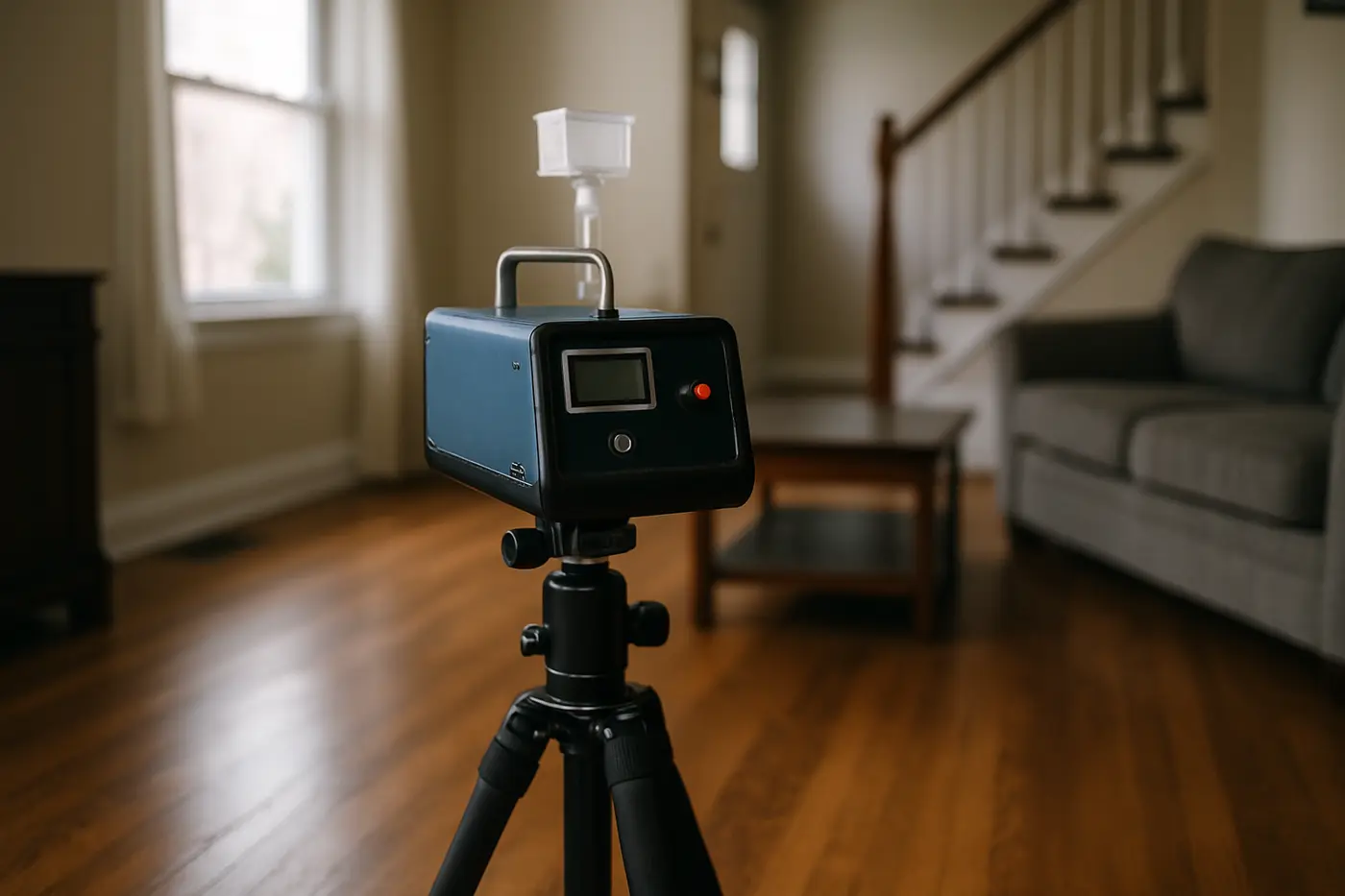
A thermal camera does the same job faster across a whole wall by showing the cooler wet area. That, plus pin readings inside the cavity, is what moisture mapping on a paid inspection means. The inspection with moisture mapping and a written report is $250 to $500 and is credited against remediation work, and the inspection and testing page explains what the report includes.
When to stop looking and call
Looking yourself is worth doing. It also has a limit. Call when:
- You can smell mold and cannot find it after checking the eight places above.
- A meter reads wet on a wall or floor and you do not know where the water is coming from.
- The growth you found covers more than about 10 square feet, which is roughly a three by three foot patch.
- The water was a sewer backup or river flooding, which is Category 3 water and means porous materials are removed rather than cleaned.
- The growth is inside a wall cavity, under a floor or in the HVAC system.
- Anyone in the house has asthma, allergies, is pregnant, is an infant or elderly, or has a weakened immune system.
A scheduled visual inspection with a written estimate is free. EPA guidance is that if you can see or smell mold, sampling is usually unnecessary, and our inspection versus testing guide covers the exceptions.
Key takeaways
- Hidden mold smells before it shows. A musty smell that tracks rain, humidity or one room is a location clue.
- Stains record leaks. Bubbling paint, soft drywall and speckling on grout, sills and low walls mean the leak is still active.
- Check basement paneling, party walls, flat-roof seams, bath fan ducts, window returns, under sinks, behind furniture on exterior walls and behind tub surrounds.
- A pinless moisture meter finds the water that feeds the mold. A patch of high readings is water; a single high reading may be a pipe.
- Call when you can smell it but not find it, when a wall reads wet without a known source, when growth passes 10 square feet, after sewage or flooding, or when someone in the house is at higher risk.
- Sampling is usually unnecessary if you can see or smell mold. Fix the water first.
If you have found any of the signs above, send the form or call us. Our mold remediation crews work across Philadelphia and the surrounding area, from East Passyunk to Mayfair, and the scheduled visual inspection with a written estimate is free.