- #humidity
- #dehumidifier
- #summer
- #prevention
- #basement
- #philadelphia
Keeping mold out of a Philadelphia rowhome in summer comes down to one number: indoor relative humidity under 50 to 55 percent, measured in the basement, where it is worst. With July and August dew points of 65 to 75 degrees, that takes a correctly sized dehumidifier, air conditioning that runs, and a few habits about windows, ventilation and furniture.
Below: why the local climate is so hard on rowhomes, what the hygrometer should read, how to size a basement dehumidifier in pints per day, and a monthly checklist for June through September.
Why summer humidity grows mold here
Philadelphia has a humid subtropical climate. The number that matters is not the temperature but the dew point, which is the temperature at which the moisture in the air condenses. On a typical July afternoon the dew point sits between 65 and 75 degrees. That air carries a lot of water.
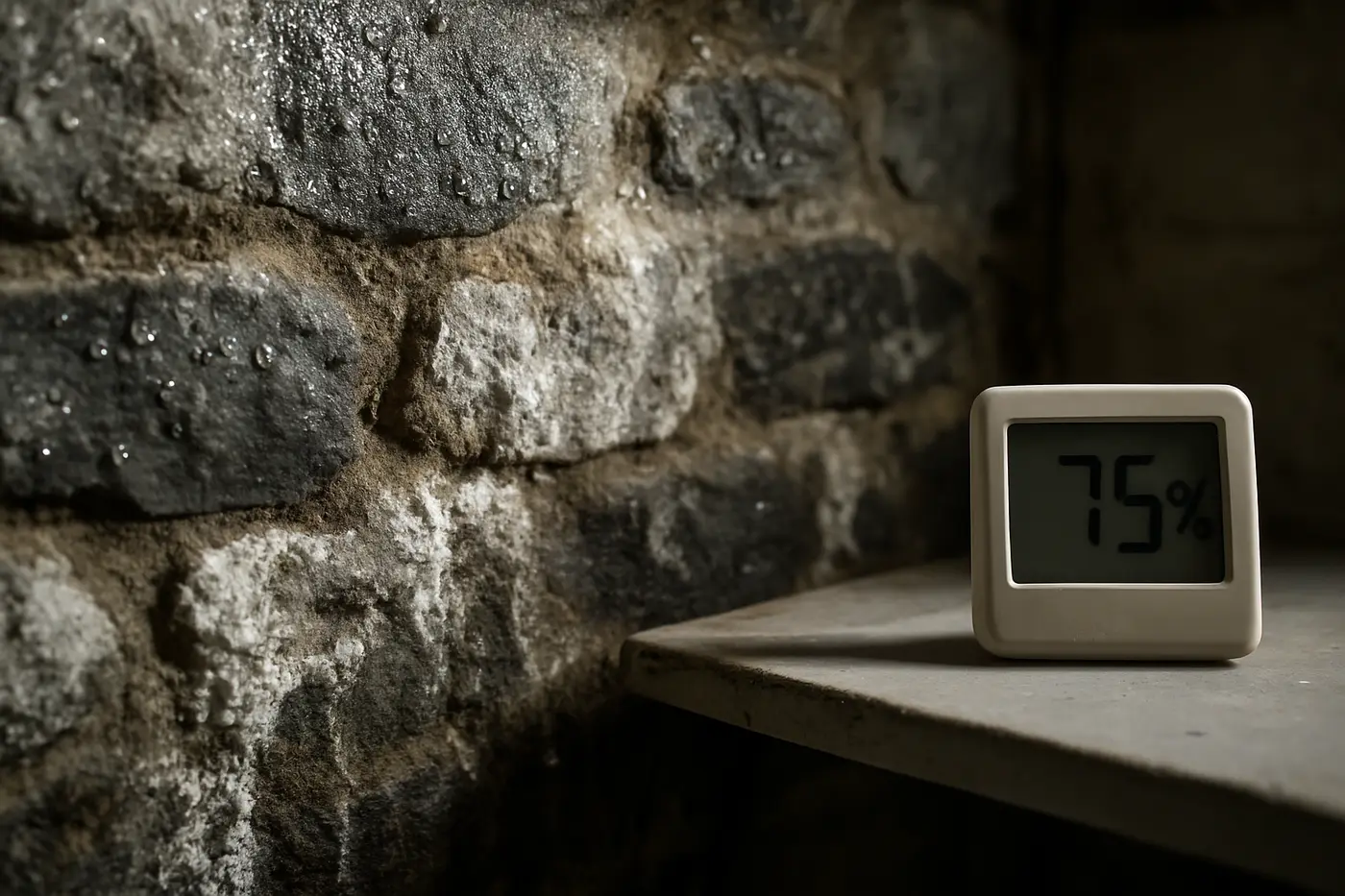
Now take it into a rowhome basement. Stone or rubble foundation, unsealed concrete or dirt floor, no conditioning, and surfaces that sit in the low 60s all summer because they are in contact with the ground. Air with a 70 degree dew point touching a 62 degree stone wall condenses on it, the same way a cold glass sweats. The stone also wicks ground moisture inward from the outside, especially after one of the intense thunderstorms that deliver much of the city’s 42 to 47 inches of rain a year. The result is a basement that routinely sits above 60 percent relative humidity from June to September, and often above 70 percent after a storm.
Mold does not need a leak. It needs the air next to a surface to stay above about 60 percent relative humidity for a few days, and it needs food, which the dust film on every surface provides. Above 70 percent, growth is fast. That is why a basement with no water damage grows mold on joists, paneling and cardboard every August.
Our guide to why Philadelphia rowhome basements grow mold goes deeper on the foundation side.
What the hygrometer should read
Buy two or three basic digital hygrometers. Put one in the basement at chest height away from the dehumidifier, one in a closet on an exterior wall, and one in a bedroom. Read them in the evening.
| Location | Summer target | Take action above |
|---|---|---|
| Basement | 45 to 55 percent | 60 percent |
| Living floors | 40 to 50 percent | 55 percent |
| Closets and behind furniture on exterior walls | Same as the room | 55 percent, or any condensation |
| Attic or crawl space | Dry surfaces, no condensation | Any wet wood or frost in winter |
If the basement reads 60 percent or more for more than a day or two after a storm, the dehumidifier is undersized, not draining, or not running. If the closet reads higher than the room, air is not moving through it.
Sizing a dehumidifier for a rowhome basement
Dehumidifiers are rated in pints of water removed per day. The rating you need depends on the size of the space and how wet it is.
A typical Philadelphia rowhome is 14 to 18 feet wide and 40 to 60 feet deep, which puts the basement somewhere between 600 and 900 square feet. For that footprint:
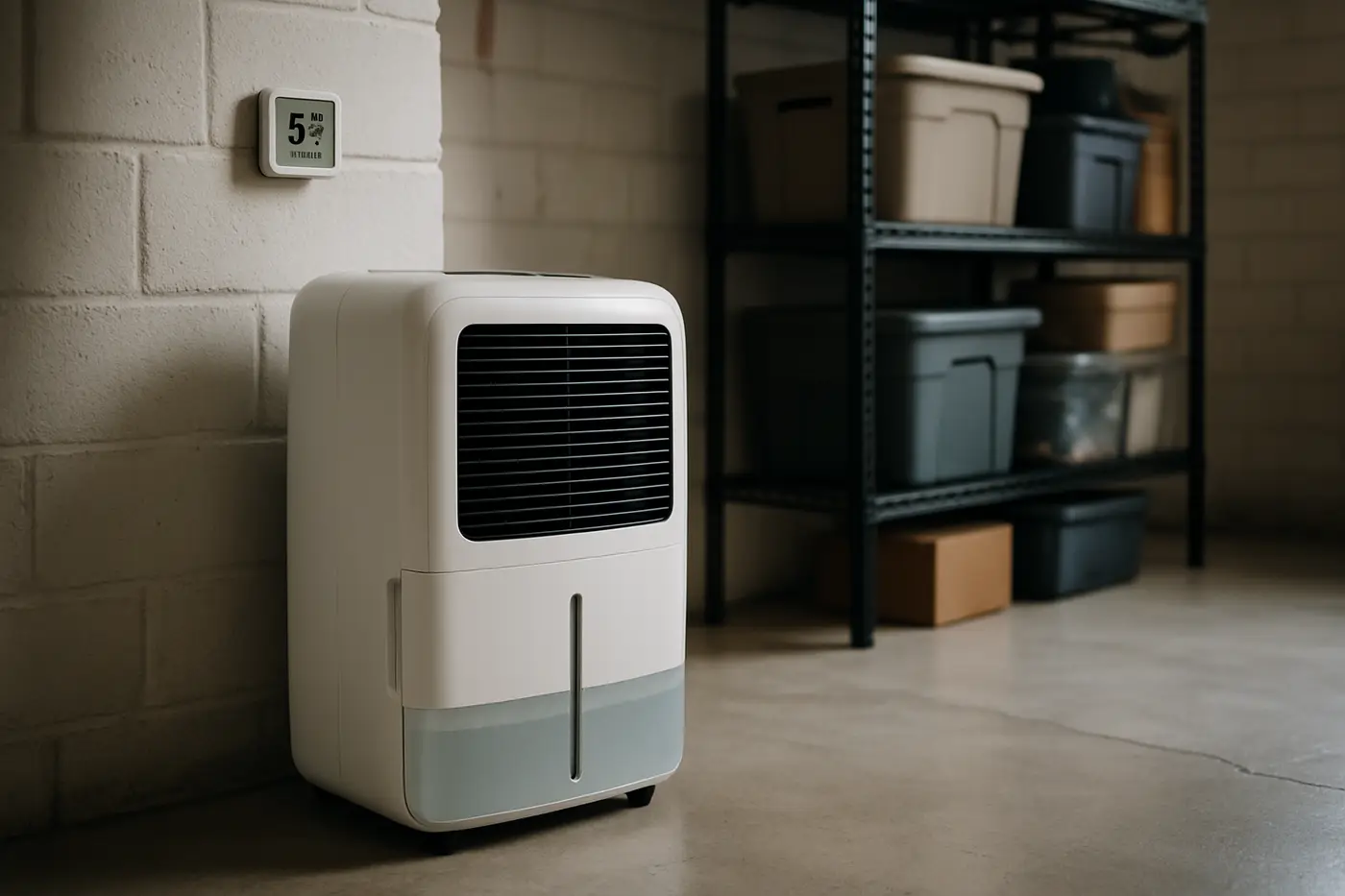
- 35 pints per day for a moderately damp basement: walls and floor feel dry to the touch, the air is heavy, the hygrometer reads 55 to 65 percent in July, no visible dampness.
- 50 pints per day for a wet basement: stone foundation with visible damp patches, a floor that sweats after rain, efflorescence on the walls, or a hygrometer that reads 65 percent or more. This describes most pre-1930 rowhomes with unsealed stone.
How you run it matters as much as the size.
- Drain it continuously. Run the hose to the floor drain or the laundry standpipe, or add a condensate pump. A tank that fills and shuts the unit off at 2 a.m. on a stormy night is a unit that does nothing for the next twelve hours.
- Set it to 50 percent and leave it. Lower settings in a stone basement mean it runs constantly for little gain.
- Place it centrally, a foot or more off the walls, with the airflow unobstructed. Not in a closet, not behind the furnace.
- Close the windows and the hatch. A dehumidifier cannot dry the outdoors.
- Clean the filter monthly.
Running a 50 pint unit through a Philadelphia summer costs real money on the electric bill. It costs less than a $2,000 to $8,000 basement remediation, and it is the single most effective thing on this page.
Air conditioning, windows and ventilation
Air conditioning removes moisture as a side effect of cooling, and a system that runs long cycles does it well. An oversized system cools the room in ten minutes and shuts off before it has removed much water, leaving the house cool and clammy. If your central AC short-cycles, tell your HVAC contractor; if you use window units, a slightly smaller unit that runs longer often leaves the room drier than a large one. Set the fan to auto, not on, so the moisture on the coil drains instead of being blown back in.
Keep the windows closed on humid days, including at night. Opening windows when the outdoor dew point is 70 degrees fills the house with moisture the AC then has to remove. The old habit of airing out the house at night works in September and October, not July.
Vent moisture at the source. Bath fans ducted to the outside, run during and 20 minutes after every shower, ideally on a humidity-sensing switch. A kitchen range hood that vents out, not a recirculating one. A dryer vent that runs outside with a clean, short duct. No laundry drying on racks indoors in summer; in a closed rowhome that is gallons of water into the air.
Stone foundations and the basement floor
The dehumidifier controls the air. These habits control what the air touches.
- Get everything off the concrete. Cardboard boxes on the floor are the most reliable mold in a Philadelphia basement. Use plastic bins on metal or plastic shelving with the bottom shelf several inches off the floor.
- Do not carpet a basement over unsealed concrete, and do not finish it with drywall against the stone without a moisture plan first. Our basement mold remediation page describes what we take out of finished basements that skipped that step.
- On a dirt floor, a heavy plastic vapor barrier cuts the moisture coming up through the soil dramatically.
- Keep downspouts discharging away from the foundation and the alley or rear yard graded away from the house. Most stone-foundation seepage is roof water dumped at the base of the wall.
- If the sewer has ever backed up through the floor drain, ask the Philadelphia Water Department about its Basement Backup Protection Program, which installs backwater valves for eligible properties.
Furniture, closets and exterior walls
Mold behind furniture is a summer problem as well as a winter one. The wall behind a dresser on a brick exterior wall, or a headboard on a party wall, is cooler than the room and the air behind it is still. Humid room air reaches that cool surface and the relative humidity at the wall climbs past 60 percent while the hygrometer in the middle of the room reads 50.
- Pull large pieces 2 to 4 inches off exterior walls and party walls.
- Leave closet doors ajar or fit louvered doors. Do not pack a closet on an exterior wall to the back; leave a gap behind the hanging clothes.
- Plastic bins pressed against a cool wall trap condensation between the bin and the wall. Keep them an inch or two off.
- Bay windows on porch-front rowhomes have a cold base and often failed flashing; look inside the window seat.
Monthly checklist, June through September
- Read the hygrometers: basement under 55 percent, living floors under 50.
- Confirm the dehumidifier is running, draining and set to 50 percent; clean the filter.
- Basement windows and hatch closed.
- Check the AC condensate line and the drip pan.
- Run each bath fan with a tissue at the grille; it should hold. Confirm the duct goes outside, not into the attic.
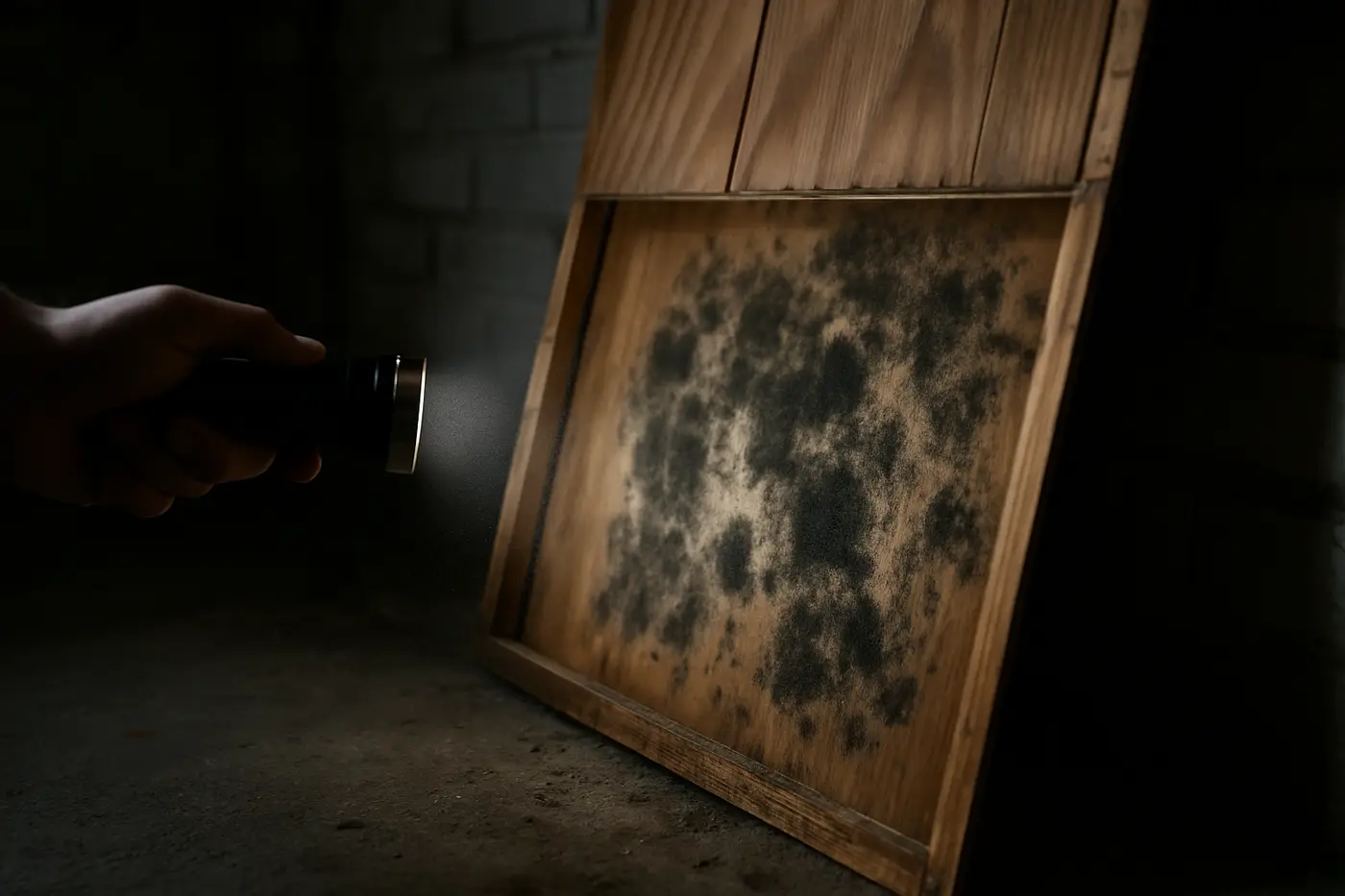
- Flashlight check: behind furniture on exterior walls, closet backs, under sinks, behind the washer, the underside of the basement stairs, stored boxes.
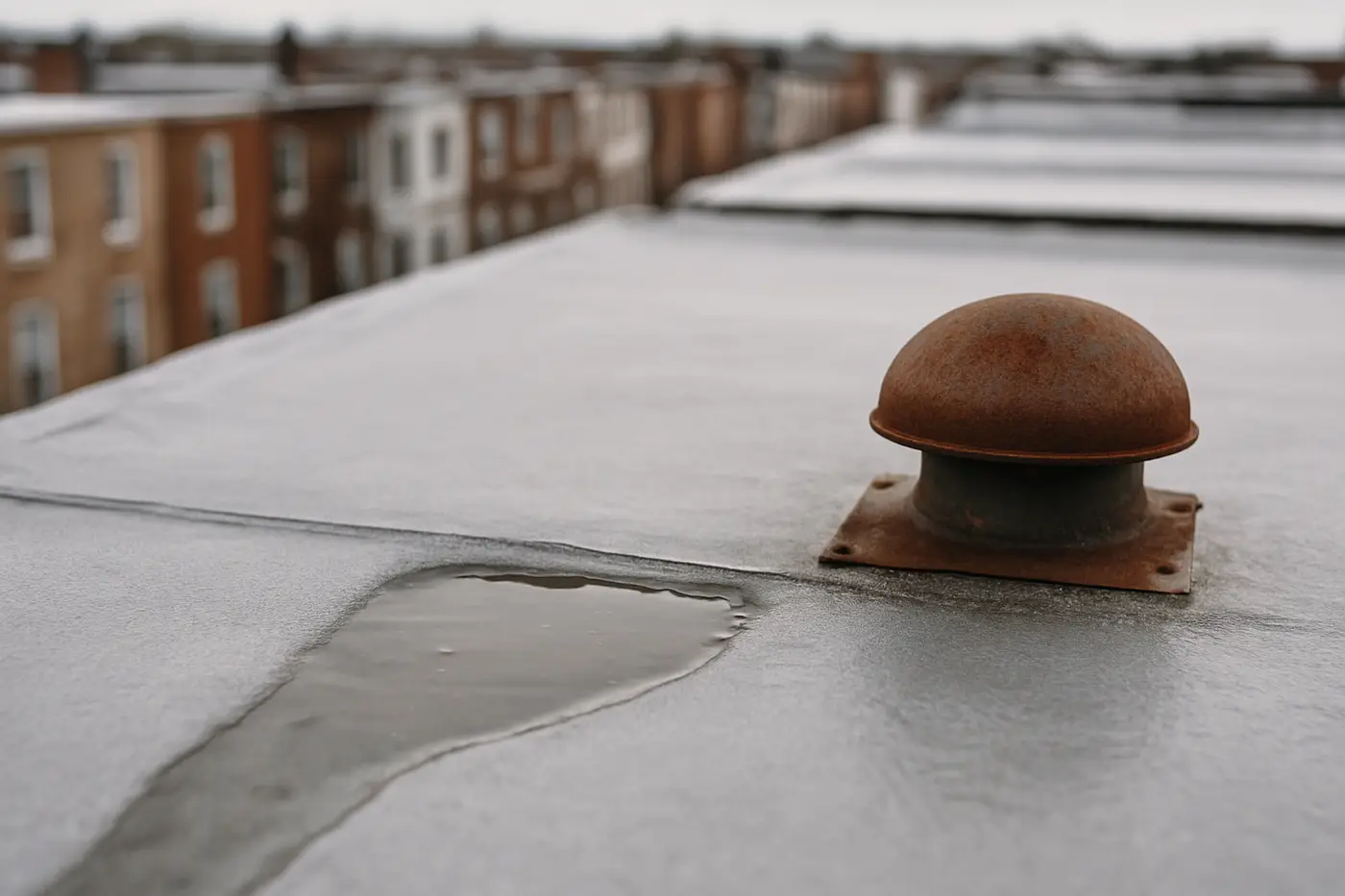
- After any heavy storm: walk the basement for damp patches, check the roof drain is clear, and note whether the hygrometer recovered within two days.
When a musty smell means it is already growing
A musty odor is not the smell of a damp basement in the abstract. It is made up of gases produced by living mold, so a persistent smell means active growth somewhere, whether or not you can see it. Under EPA guidance, if you can see or smell mold, lab testing before the cleanup is usually unnecessary; what matters is finding the colony and the moisture feeding it.
Check the hiding places on the list above first. A patch under about 10 square feet on a hard surface, once the humidity is under control, is a DIY cleaning with detergent, an N95 and gloves; see our DIY mold removal guide. If the smell persists and nothing turns up, or the growth is on drywall, paneling, insulation or joists, a mold inspection with moisture mapping at $250 to $500, credited against remediation, locates it. A small contained area runs $500 to $1,500 to remediate and a rowhome basement $2,000 to $8,000; the full list is on the pricing page. Every one of those jobs costs more than a summer of running a dehumidifier.
Key takeaways
- The target is under 50 to 55 percent relative humidity, measured in the basement, the worst room in the house; 60 percent means act now.
- Dew points of 65 to 75 degrees in July and August condense on stone and concrete that sits in the low 60s, so an unconditioned rowhome basement runs above 60 percent all summer without help.
- Size the dehumidifier in pints per day: 35 pints for a moderately damp 600 to 900 square foot basement, 50 pints for a wet one with a stone foundation. Drain it continuously and set it to 50 percent.
- Keep windows closed on humid days, let the AC run long cycles with the fan on auto, and vent bath fans, range hood and dryer outside.
- Everything off the concrete, furniture 2 to 4 inches off exterior walls, closets with air moving through them.
- A persistent musty smell means it is already growing; find it, fix the moisture, and get it scoped if it is on porous material.
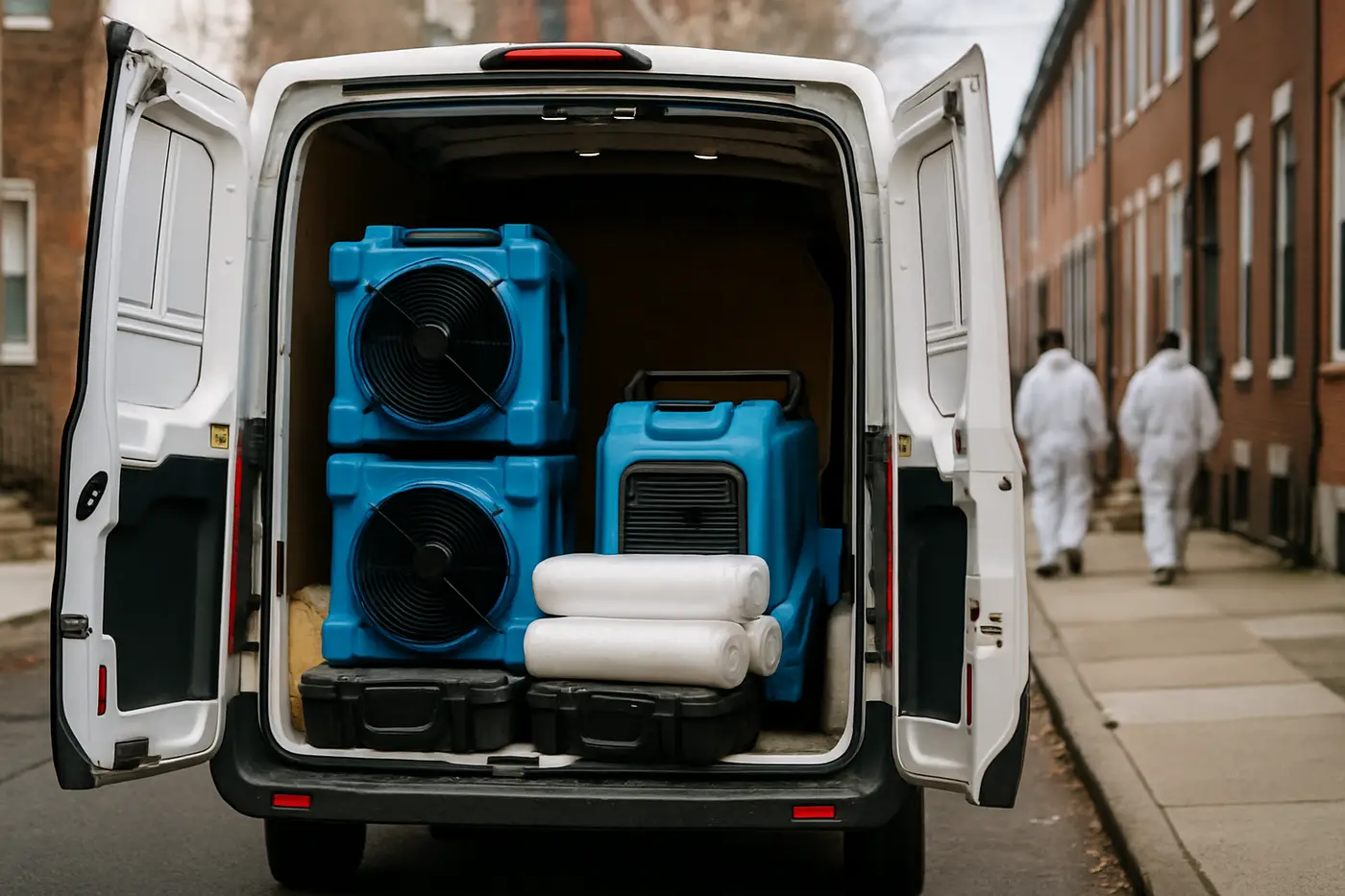
If the hygrometer will not come down or the smell will not go away, send the form or call us. We cover Philadelphia and the surrounding area, and a scheduled visual inspection with a written estimate is free.