- #mold-inspection
- #mold-testing
- #air-sampling
- #clearance-testing
- #philadelphia
A mold inspection finds the growth and the water feeding it, with moisture meters and a thermal camera. Mold testing sends air or surface samples to a lab to identify and count spores. Most Philadelphia homeowners need the inspection and not the testing, because EPA guidance is that sampling is usually unnecessary when you can see or smell mold.
Below is what each one involves, what each costs in 2026, the five situations where testing is worth the money, and why clearance testing should always be done by someone independent.
What a mold inspection actually is
An inspection is a search for two things: where mold is growing and where the water that feeds it is coming from. The second matters more than the first, because remediation without fixing the moisture is a repeat job in six months.
On an inspection with moisture mapping, a technician:
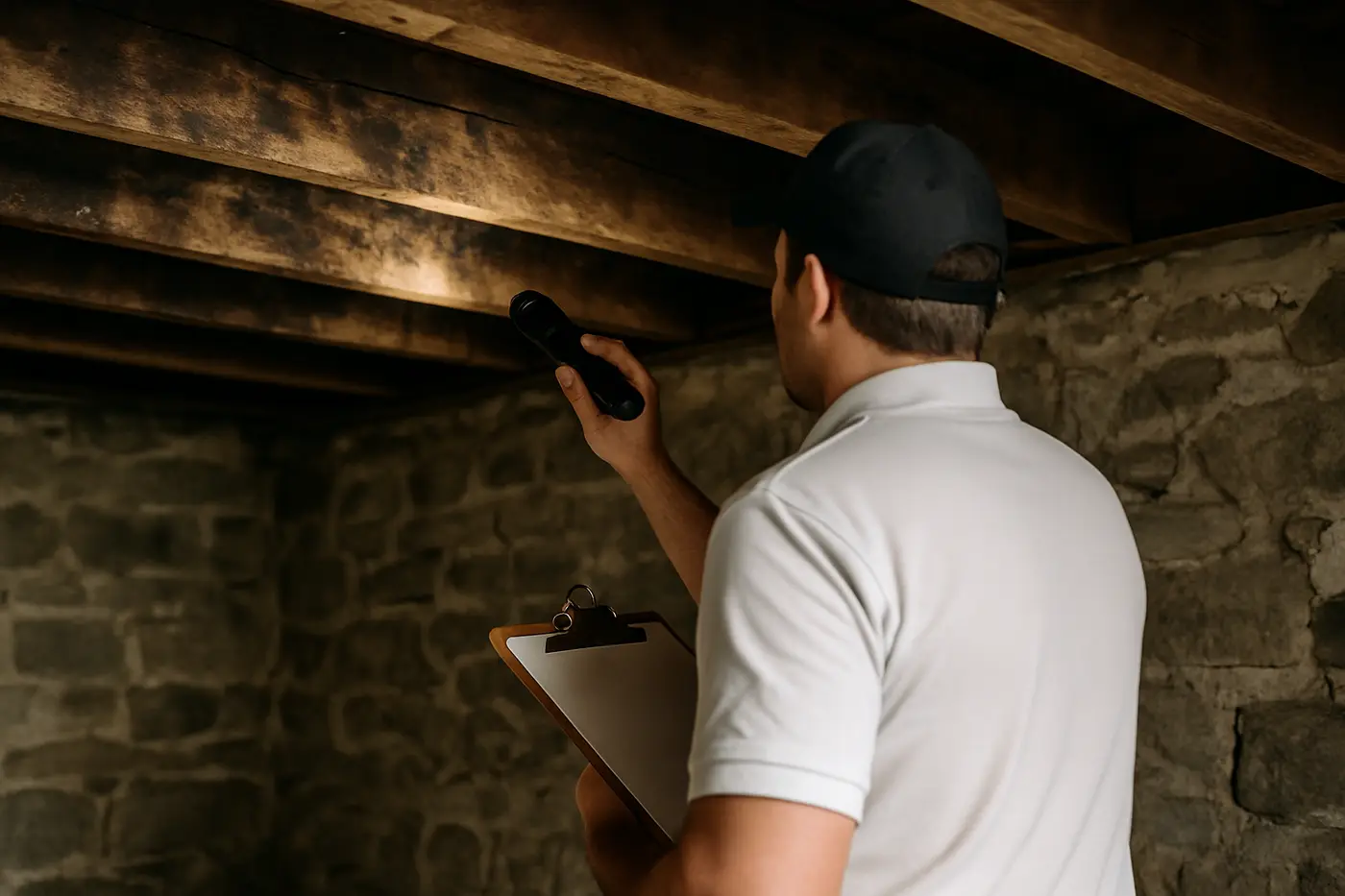
- Walks the house with a flashlight and looks at the places rowhomes hide mold: behind basement paneling, along the party wall, under flat-roof seams, around the bath fan, in window returns, under sinks and behind tub surrounds. Our hidden mold guide lists them in detail.
- Reads moisture content in drywall, plaster, wood and concrete with pin and pinless meters and records the readings on a floor plan.
- Scans walls and ceilings with a thermal camera to find the cool, wet areas that a meter would otherwise have to find one square foot at a time.
- Checks relative humidity and dew point in the basement and any room that smells.
- Identifies the probable water source: a roof seam, a failed tub surround, seepage through the stone foundation, a neighbor’s plumbing.
- Writes a report with dated photos, the moisture map, a scope of work listing what is removed and what is cleaned, and an itemized price.
That report is the deliverable. It is what a landlord, a buyer’s agent, an insurance adjuster or the association in a converted rowhome wants to see. The inspection with moisture mapping and a written report is $250 to $500 and is credited against the remediation if you go ahead. A scheduled visual inspection with a written estimate, without the moisture mapping and report, is free.
What mold testing actually is
Testing means collecting samples and sending them to a lab. There are two common kinds.
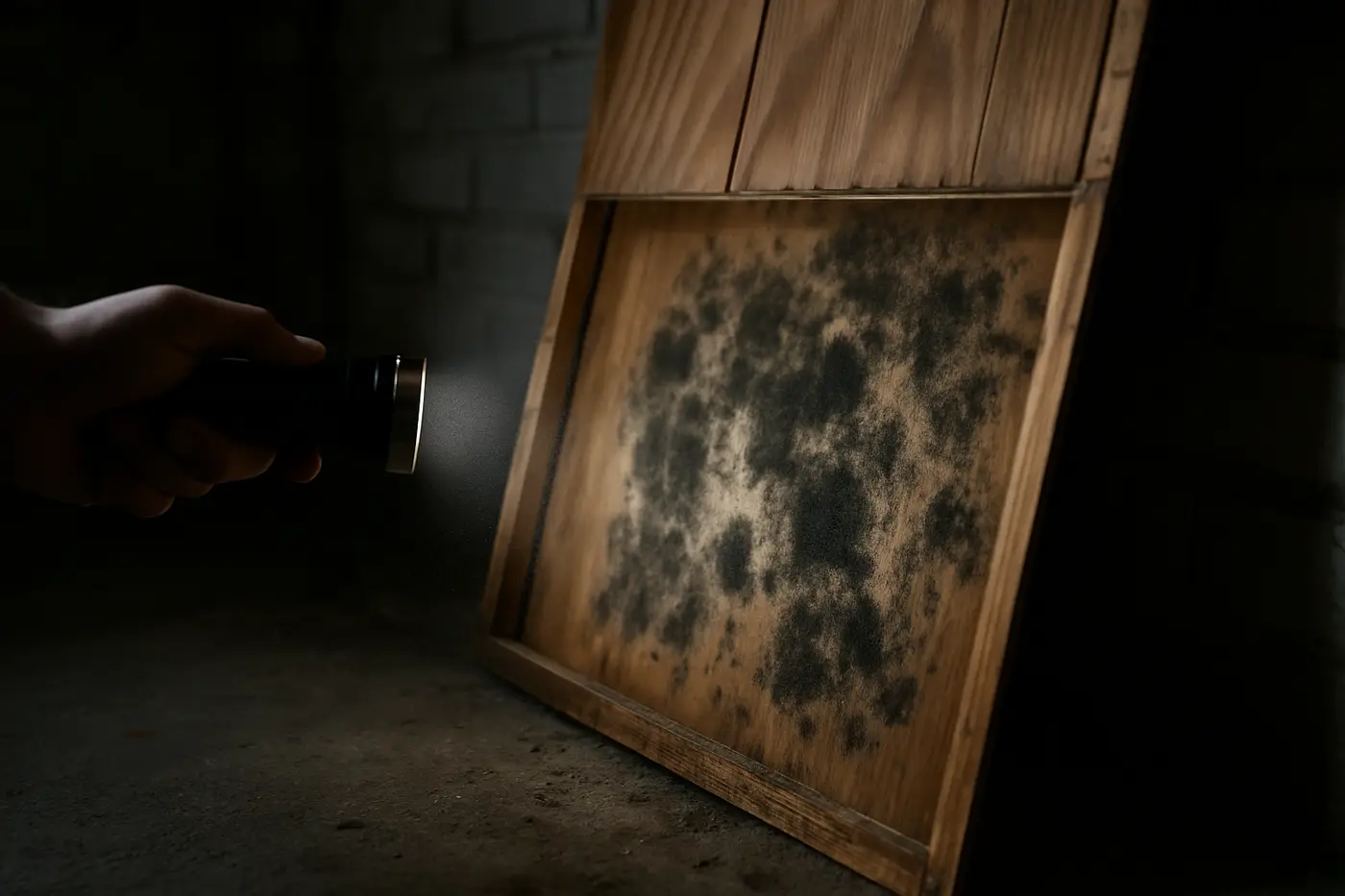
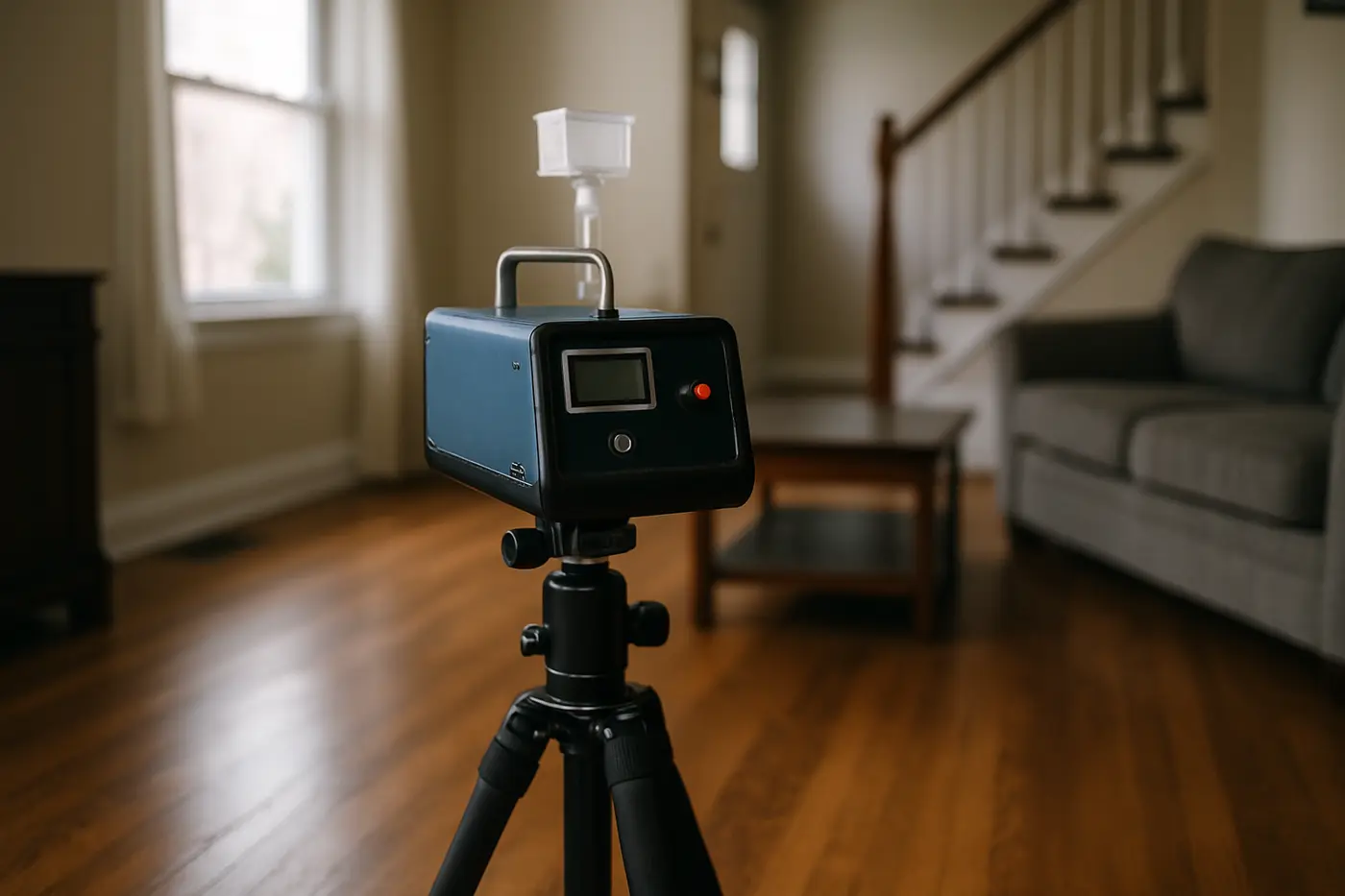
Air sampling draws a measured volume of air through a cassette for a set number of minutes. The lab counts and identifies the spores caught on the slide and reports them per cubic meter of air. A proper set includes at least one outdoor sample as a control, because outdoor air in Philadelphia always contains mold spores and the indoor count only means something in comparison.
Surface sampling uses a tape lift or swab on a stain to confirm whether it is mold and, if so, what kind. It answers the question “is that black stuff on the joist mold or soot” and not much else.
Sampling by an independent lab runs $75 to $150 per sample. A typical set of three to five samples, including the outdoor control, is $300 to $700. The lab needs a few days to return results.
What testing does not do is find the water. A high spore count in the basement tells you the basement has a problem. It does not tell you whether the problem is the stone wall, the floor drain, the dryer vent or the paneling, and it does not tell you what to remove. The inspection does that.
Inspection versus testing side by side
| Mold inspection | Mold testing | |
|---|---|---|
| What it answers | Where is the mold and where is the water coming from | What species are present and how many spores are in the air |
| Method | Visual, moisture meters, thermal camera, humidity readings | Air cassettes, tape lifts, swabs, sent to a lab |
| Result | Written report with photos, moisture map, scope and price | Lab report with counts per cubic meter and species |
| Turnaround | Same day | Several days for lab results |
| Cost (2026) | $250-$500 with moisture mapping and report, credited against work; scheduled visual inspection free | $75-$150 per sample, typically $300-$700 for a set |
| When it is enough on its own | Visible or smellable mold with an identifiable source | Rarely, because it does not locate the source |
What EPA guidance says about sampling
The EPA’s position on mold in homes is direct: if you can see or smell mold, sampling is usually unnecessary. The reason is that the response is the same whatever the species. Fix the water, remove the growth, dry the structure, verify. No lab result changes that scope.
Two other points from the same guidance matter here. Areas under about 10 square feet can often be cleaned by the occupant once the moisture is fixed. And there is no federal standard for an acceptable airborne mold level, which means a lab report cannot pass or fail a house on its own. Labs report counts, and a hygienist interprets them against an outdoor control and against other rooms.
Pennsylvania has no statewide mold license and no state threshold either. That makes the inspection report and the standard the contractor follows, the IICRC S520 mold remediation standard, the buyer’s protection, not a number from a lab.
The five cases where testing is worth it
Testing earns its fee when the lab result is doing a job that eyes and meters cannot.
1. Hidden mold you need to confirm before opening walls
A musty smell in the rear bedroom, no visible growth, and a moisture meter that reads dry. An air sample in that room compared with the hallway and outdoors can show whether there is an indoor source worth chasing into the wall cavity or the flat-roof assembly above. It saves opening a ceiling on a guess.
2. Medical documentation
When a doctor treating asthma, allergies or a respiratory condition has asked whether the home is a factor, a lab report with species and counts is the document they can use. The inspection report should go with it, because the moisture source is the thing that gets fixed.
3. A dispute
A tenant says the apartment has mold and the landlord says it is dirt. A seller says the basement is dry and the buyer’s inspector found staining. An insurer says the growth predates the burst pipe. In each case a dated lab result from an independent party is evidence that a visual opinion is not. Our guide to mold in a Philadelphia rental covers the tenant and landlord side.
4. A real estate transaction
Pennsylvania’s Seller Disclosure Law requires sellers to disclose known material defects, and water intrusion and mold history can be among them. During a purchase, a buyer wants to know whether the stained joists in a Fishtown rowhome basement are an old dry problem or an active one. An inspection with moisture mapping answers most of that. A surface sample and an air sample add a dated record that both sides can rely on. See mold found during a Philadelphia home inspection.
5. Clearance after remediation
This is the one case where we recommend testing on every job of any size. Post-remediation verification confirms that the containment worked, the growth is gone and the air inside the work area is comparable to the rest of the house and to outdoors. Independent clearance testing runs $300 to $700.
Why the clearance should be independent
The person confirming that the remediation worked should have no stake in the result. If the company that did the work also collects and interprets the clearance sample, there is a built-in reason to pass it. We recommend a third-party industrial hygienist for post-remediation verification, and we treat a failed clearance as our problem to fix at no extra charge.
A proper clearance includes:
- A visual inspection of the work area with containment still up: no visible growth, no dust on horizontal surfaces, no damp material left in place.
- Moisture readings showing the structure is dry.
- Air samples inside the containment, outside it and outdoors, collected while the air scrubbers are off so the sample reflects the room and not the filter.
- A written result you can hand to a landlord, buyer, adjuster or association.
The rebuild, meaning new drywall, insulation, trim and paint, is scheduled after clearance passes. Our mold damage repair page covers that step.
What to do with a lab report you already have
Homeowners sometimes call with a lab report from a home inspector or a mail-in kit and no idea what it means. A few things to know:
- Mail-in settle plates that grow whatever lands on them are not a test of anything. Every home in Philadelphia will grow something on an open plate.
- An indoor count similar to the outdoor control on the same day is normal.
- An indoor count much higher than outdoors, or an indoor sample showing species that thrive on wet building materials when the outdoor sample does not, points to an indoor source.
- The report does not tell you where the source is. The next step is the inspection with moisture mapping, not more samples.
Bring the report to the inspection. It helps direct where to look.
Key takeaways
- An inspection finds the mold and the water. Testing counts spores in a lab. Most homes need the first.
- EPA guidance: if you can see or smell mold, sampling is usually unnecessary. Fix the water and remove the growth.
- There is no federal standard for airborne mold and no Pennsylvania mold license, so the inspection report and the IICRC S520 standard are your protection.
- Testing is worth it for hidden mold, medical documentation, disputes, real estate transactions and clearance.
- Inspection with moisture mapping and report: $250 to $500, credited against work. Scheduled visual inspection and estimate: free. Samples: $75 to $150 each, typically $300 to $700 per set. Independent clearance: $300 to $700.
- Clearance should be done by an independent hygienist who has no stake in passing the job.
To book an inspection, send the form or call us. Our mold inspection and testing page explains what the report includes, and the full price list is on the pricing page. We cover Philadelphia and the surrounding area, from Old City to Chestnut Hill.