- #water-damage
- #drying
- #basement
- #mold-prevention
- #philadelphia
- #hurricane-ida
Mold can start growing on wet drywall, wood and carpet pad within 24 to 48 hours of a water loss, and a Philadelphia rowhome basement in July sits at the short end of that window. Stop the source, get the water out and start measured drying on day one. Past 48 hours, a dry-out starts turning into a remediation.
Where the 24 to 48 hour figure comes from
Mold spores are already in every house. They arrive on shoes, clothes and air, and they sit dormant on surfaces until three conditions line up: moisture, a food source and a temperature they can work in.
A water loss supplies the moisture. The house supplies the food. Paper-faced drywall, wood lath, framing, carpet pad, the backing on vinyl flooring, cardboard boxes and the dust on any surface are all cellulose or close to it. Any indoor temperature between roughly 40 and 100 degrees Fahrenheit will do, so a heated house in January is not much safer than a basement in August.
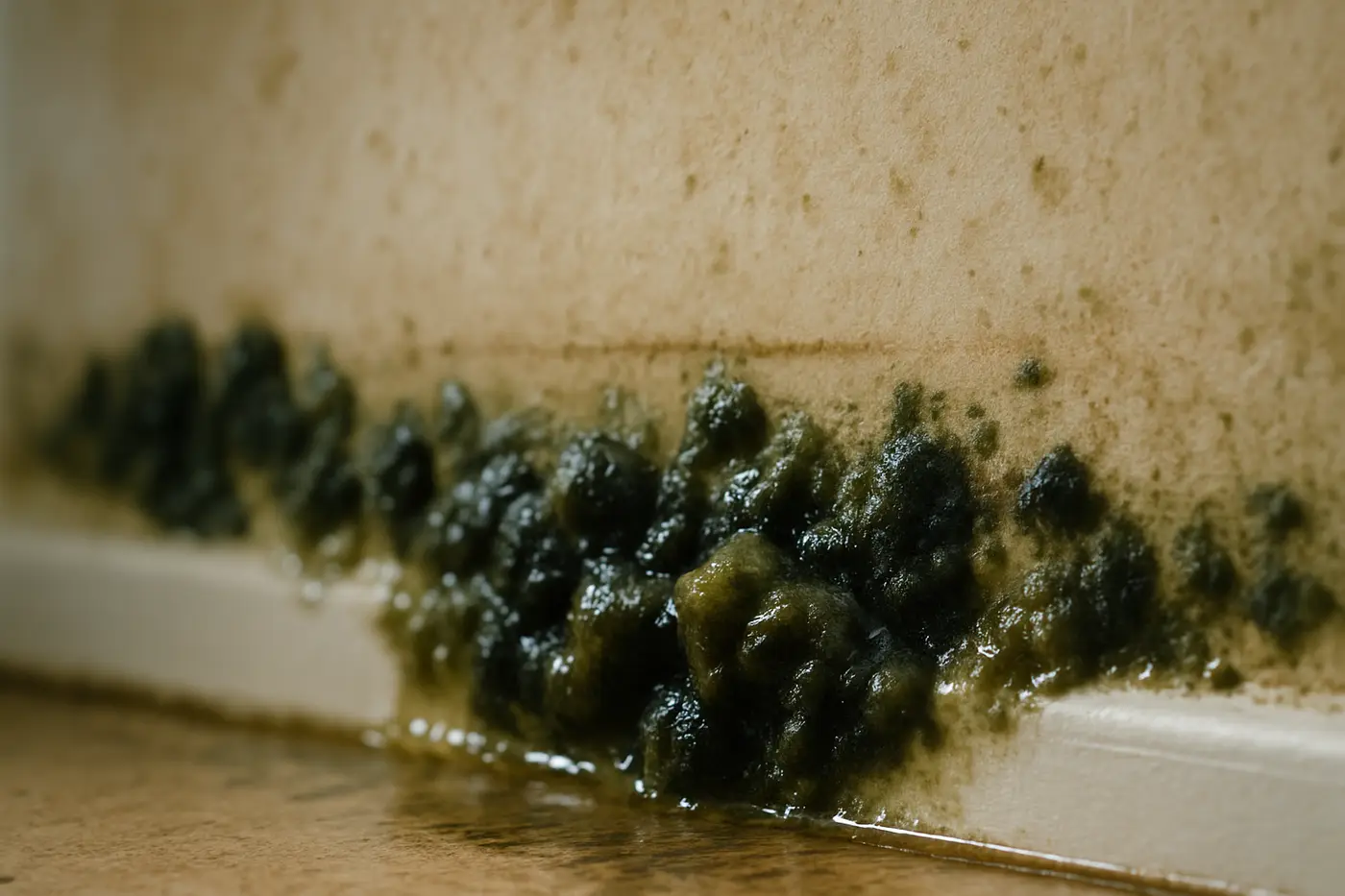
Under those conditions spores can germinate in 24 to 48 hours. Visible colonies follow in three to five days. By a week, the paper facing on wet drywall is usually colonized on the back, where you cannot see it. That is why the IICRC S500 water damage standard and EPA guidance both treat drying inside 24 to 48 hours as the target: it is the window in which material that gets dry usually stays clean.
One caution: the clock starts when the material got wet, not when you noticed. A slow leak behind a tub surround may have been running for weeks before the ceiling stain showed.
Why Philadelphia shortens the window
The 24 to 48 hour figure assumes ordinary conditions. Most of Philadelphia’s housing stock does not offer them.
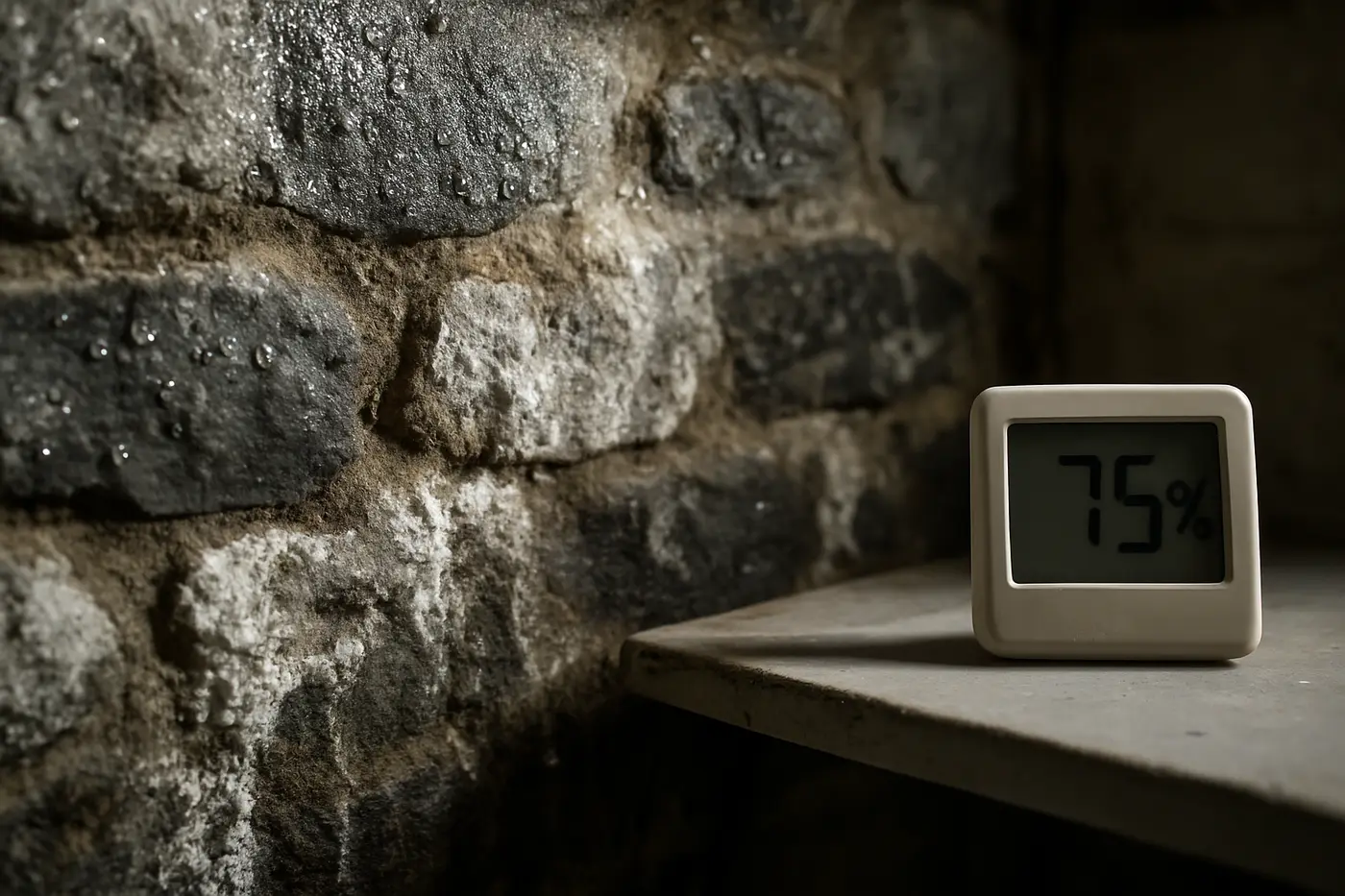
The basement is already damp. Nearly every rowhome has one, and the older ones in South Philadelphia, Fishtown, Germantown and West Philadelphia have stone or rubble foundations over unsealed concrete or dirt floors. Ground moisture comes through year-round. In July and August, outdoor dew points of 65 to 75 degrees mean the basement air often sits above 60 percent relative humidity before anything leaks. Add a water loss and the air simply cannot take on much more; evaporation slows and the wet material stays wet.
The materials are old and porous. Plaster on wood lath, original joists, paneling and paper-faced drywall in a basement finished in the 1960s all hold water and feed growth. A new-build townhome in Northern Liberties or Brewerytown dries faster than an 1890s brick rowhome in Point Breeze because the wall assembly is simpler.
Party walls carry water sideways. A leak from the neighbor’s roof or plumbing can run down a shared wall cavity and show up in your basement. Neither side sees it early, and the cavity dries slowly because it has no air movement at all.
Combined sewers back up. Across the older two thirds of the city, a heavy storm can push sewer water up through basement floor drains. That is Category 3 water under S500. Porous material it touched is removed, not dried, so the 48 hour question becomes a removal question the moment it happens.
If your basement already has a moisture problem, our guide to why Philadelphia rowhome basements grow mold covers the sources worth fixing before the next storm.
The first hours: what to do
Everything on this list is something a homeowner can do before a technician arrives, and each item shortens the job.
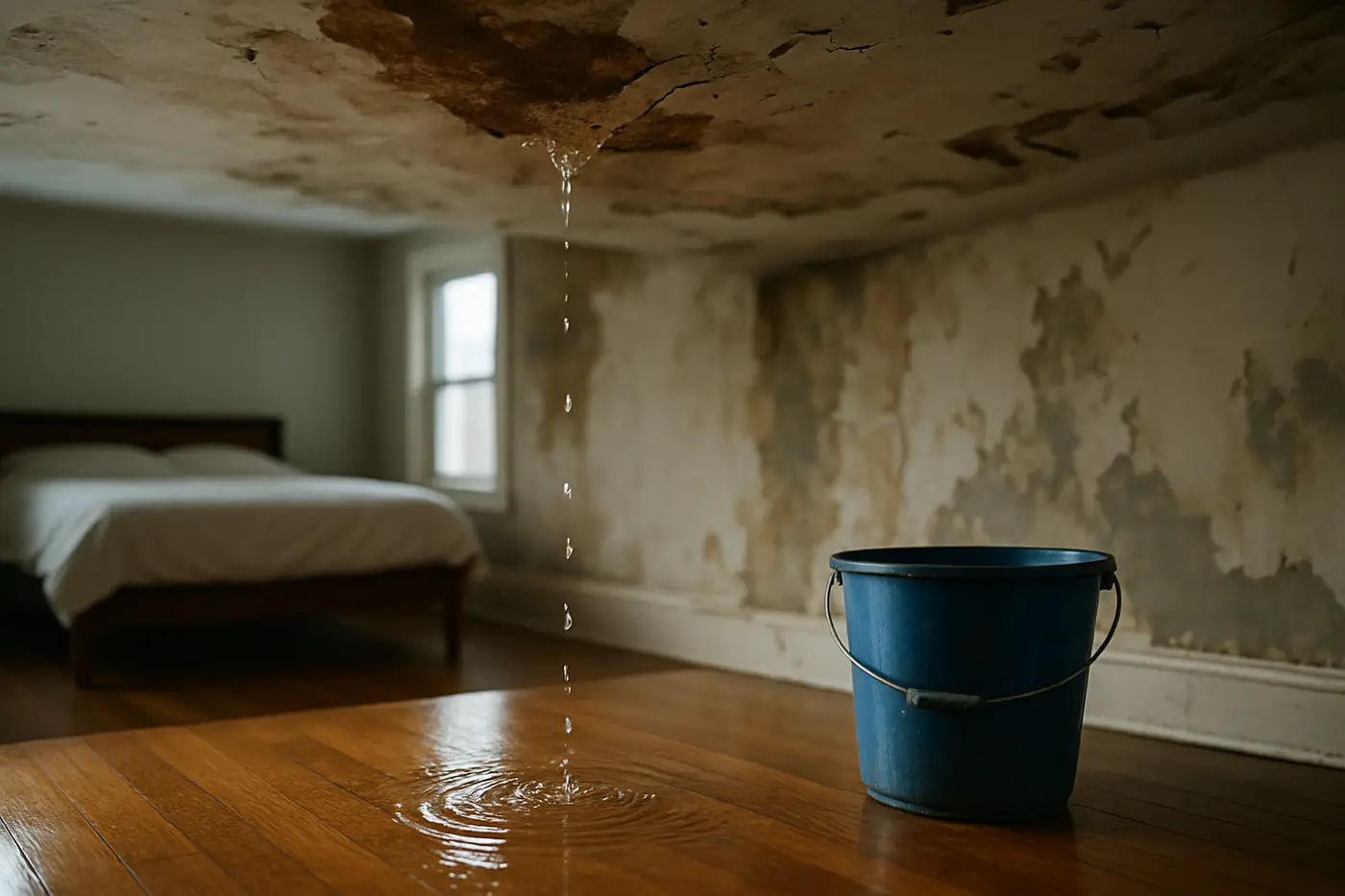
- Stop the source. Close the fixture valve or the main shutoff, which in most rowhomes is at the front basement wall where the water service enters. For a roof leak, a bucket and a tarp. For a sewer backup, stop running water anywhere in the house; the drain is the source, and every flush adds to it.
- Cut power if the panel is dry. If the electrical panel is on a dry wall and you can stand on a dry floor to reach it, switch off circuits serving the wet area. If the panel itself is wet or you would have to stand in water to reach it, leave it and call the utility.
- Lift contents. Cardboard, rugs, clothes and anything on the floor come up first. Put foil or blocks under furniture legs. Wet cardboard is one of the fastest things in a house to grow mold.
- Photograph before you move anything. Dated photos and a short walk-through video of the water line, the wet materials and the contents. Keep a cut of carpet and pad if you discard any. Adjusters pay for what they can see.
- Do not fan sewer water. Fans on Category 3 water spread the contamination through the air. For clean water, fans help only if the outside air is drier than the inside, which in a Philadelphia summer it usually is not.
- Do not tear out clean-water drywall. It can often be dried in place, and drying costs less than removal and rebuild.
- Call the same day. The water damage restoration call-out includes moisture mapping and a written report, and the sooner the equipment is placed the fewer materials are lost.
Extraction and drying to the S500 standard
Proper drying is a measured process, not a rented dehumidifier in the corner.
The technician first sorts the water into Category 1 (clean supply water), Category 2 (gray: washing machine drains, dishwasher overflow, clean water that sat for days) or Category 3 (black: sewer, river, anything from outside). Category decides what is dried and what is removed. The loss is also classed by how much water the materials absorbed, which decides how much equipment goes in.
Extraction comes next. A truck-mount or portable extractor pulls far more water out of carpet, pad and hard floors than evaporation ever will, and every gallon extracted is a gallon the dehumidifiers do not have to process.
Moisture mapping records the starting point with pin and pinless meters and a thermal camera, so the scope covers the water behind the drywall and under the floor, not just the puddle. Those day-one readings are what the drying log is measured against and what an adjuster expects to see.
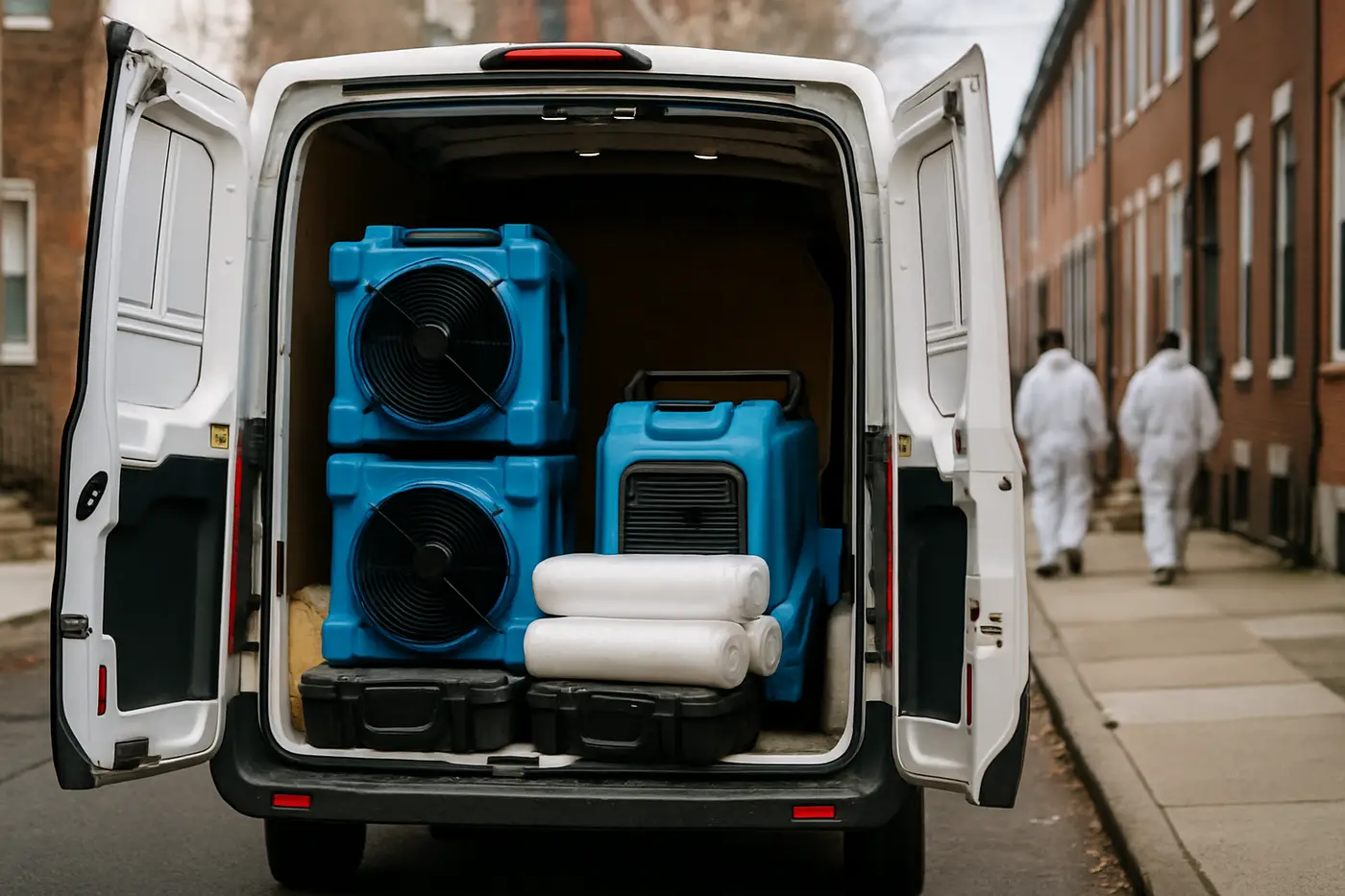
Then air movers and low-grain refrigerant dehumidifiers go in, billed at $50 to $125 per unit per day. Readings are logged daily and the equipment comes out when the material reaches a drying goal set against dry, unaffected material in the same house. Above grade, that takes 3 to 5 days. In a rowhome basement, expect 5 to 10. A full extraction and drying job across two or three rooms runs $2,000 to $6,500; the full table is on our pricing page.
| Time since the loss | What is happening in the material | What it usually means |
|---|---|---|
| 0 to 8 hours | Water on surfaces and in carpet; drywall wicking at the base | Extraction and drying; most materials saved |
| 8 to 24 hours | Bottom plates, pad and subfloor wet; drywall paper saturated | Drying with some pad and trim removal |
| 24 to 48 hours | Spores germinating on paper and wood; odor begins | Drying plus targeted removal; watch for growth |
| 48 to 72 hours | Visible growth likely on drywall paper and pad | Remediation under S520 in affected areas |
| 4 days and beyond | Colonies in wall cavities, joists and contents | Contained remediation, removal, clearance testing |
When a dry-out becomes a remediation
The line is crossed when any of the following is true: there is visible growth, a musty odor persists after the water is gone, porous material sat wet more than 48 to 72 hours in warm conditions, or the water was Category 3.
At that point the job changes character. Under the IICRC S520 mold remediation standard the affected area is contained with plastic sheeting and negative air, HEPA air scrubbers run throughout, colonized porous materials are bagged and removed, remaining surfaces are HEPA vacuumed and treated with an antimicrobial, and the area is verified before the containment comes down. The costs change too: a single room contained remediation is $1,500 to $4,000, a rowhome basement $2,000 to $8,000, and heavy growth or Category 3 water in a contained space $2,500 to $10,000. Independent clearance testing adds $300 to $700. Our mold remediation page explains each step.
Insurance is the other reason the timeline matters. A standard Pennsylvania HO-3 policy covers sudden and accidental water losses, and mold that follows a covered loss is usually paid under a sublimit of $5,000 to $10,000. Mold from a leak that was left, or from humidity, is generally excluded. Fast, documented drying is what keeps the mold inside the claim. See does homeowners insurance cover mold in Pennsylvania for the details.
What Ida showed in September 2021
On September 1 and 2, 2021, the remnants of Hurricane Ida pushed the Schuylkill River to a record crest at Philadelphia of about 16.4 feet. The Vine Street Expressway filled, Main Street in Manayunk flooded, and low ground along the river took water. A federal disaster declaration followed for Philadelphia County.
River water is Category 3. Along the Schuylkill, that was only half the problem. Power was out, sump pumps were overwhelmed or dead, every restoration crew in the region was booked, and many basements in Manayunk and Roxborough sat with a foot or more of water for days before anyone could pump them.
By the time those basements were opened, paneling had growth on the back, the bottom plates of framed walls were colonized, joists had begun to spot, and stored contents in cardboard were a total loss. Jobs that would have been an extraction and drying invoice on day one were full basement remediations by the end of the week: everything porous removed, framing cleaned, containment and negative air for the duration, and clearance testing before rebuild. Homes without a flood policy paid for it themselves, because river flooding is not covered by a standard homeowners policy.
The clock does not pause for circumstances. The fastest thing you can do, even if it is only getting contents up and photographing the water line, still counts.
Key takeaways
- Spores germinate on wet cellulose within 24 to 48 hours; visible growth follows in 3 to 5 days.
- Damp rowhome basements, old porous materials, party walls and combined sewer backups all shorten the window in Philadelphia.
- First hours: stop the source, cut power only if the panel is dry, lift contents, photograph everything, do not fan sewer water, call the same day.
- Proper drying follows S500: categorize the water, extract, map moisture, dry with logged readings. Basements take 5 to 10 days.
- After 48 to 72 hours wet, or with any Category 3 water, the job becomes an S520 remediation with containment and removal.
- Extraction and drying for 2 to 3 rooms: $2,000 to $6,500. Basement remediation: $2,000 to $8,000. Fast documented drying keeps mold inside an insurance claim.
If water is in your house right now, send the form or call us. Our crews cover Philadelphia and the surrounding area, and the call-out report gives you the moisture map and the written scope an adjuster needs.