- #insurance
- #mold-claim
- #pennsylvania
- #sublimit
- #water-backup
- #documentation
Homeowners insurance in Pennsylvania usually covers mold that follows a sudden and accidental water loss, such as a burst pipe or failed water heater, and pays it under a mold sublimit commonly $5,000 to $10,000. It generally excludes mold from gradual moisture: long-term leaks, seepage, humidity and deferred maintenance. The water source decides the answer, not the amount of mold.
This guide explains how that line is drawn, what the sublimit means in practice, where sewer backup and flooding fit, what an adjuster expects to see, and how fast drying keeps the mold inside the claim. It is general information about how these policies usually work, not legal advice. Check your own policy.
Sudden and accidental versus gradual
The standard homeowners form, the HO-3, is built around a single idea: it covers losses that happen suddenly and by accident, and it does not cover the slow deterioration that comes from a house being a house.
On the covered side, the usual examples:
- A supply line splits and floods the kitchen and the basement below.
- The water heater tank fails and empties across the basement floor.
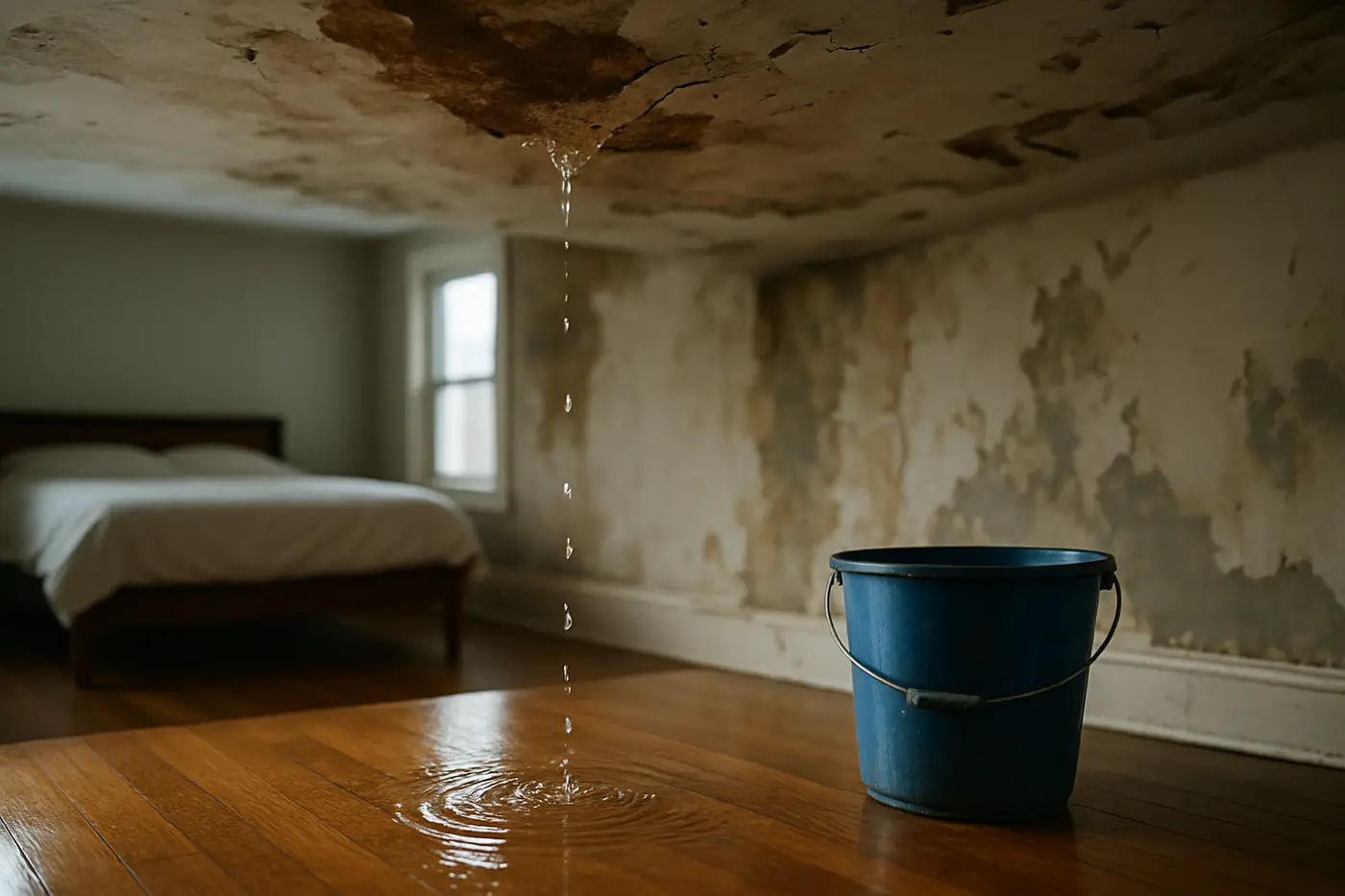
- A washing machine hose lets go in a top-floor unit and water comes through two ceilings.
- A storm tears a section of flat roof and rain gets into the rear bedroom.
- A frozen pipe bursts in an exterior wall.
On the excluded side:
- A tub surround that has been wicking water into the wall for years.
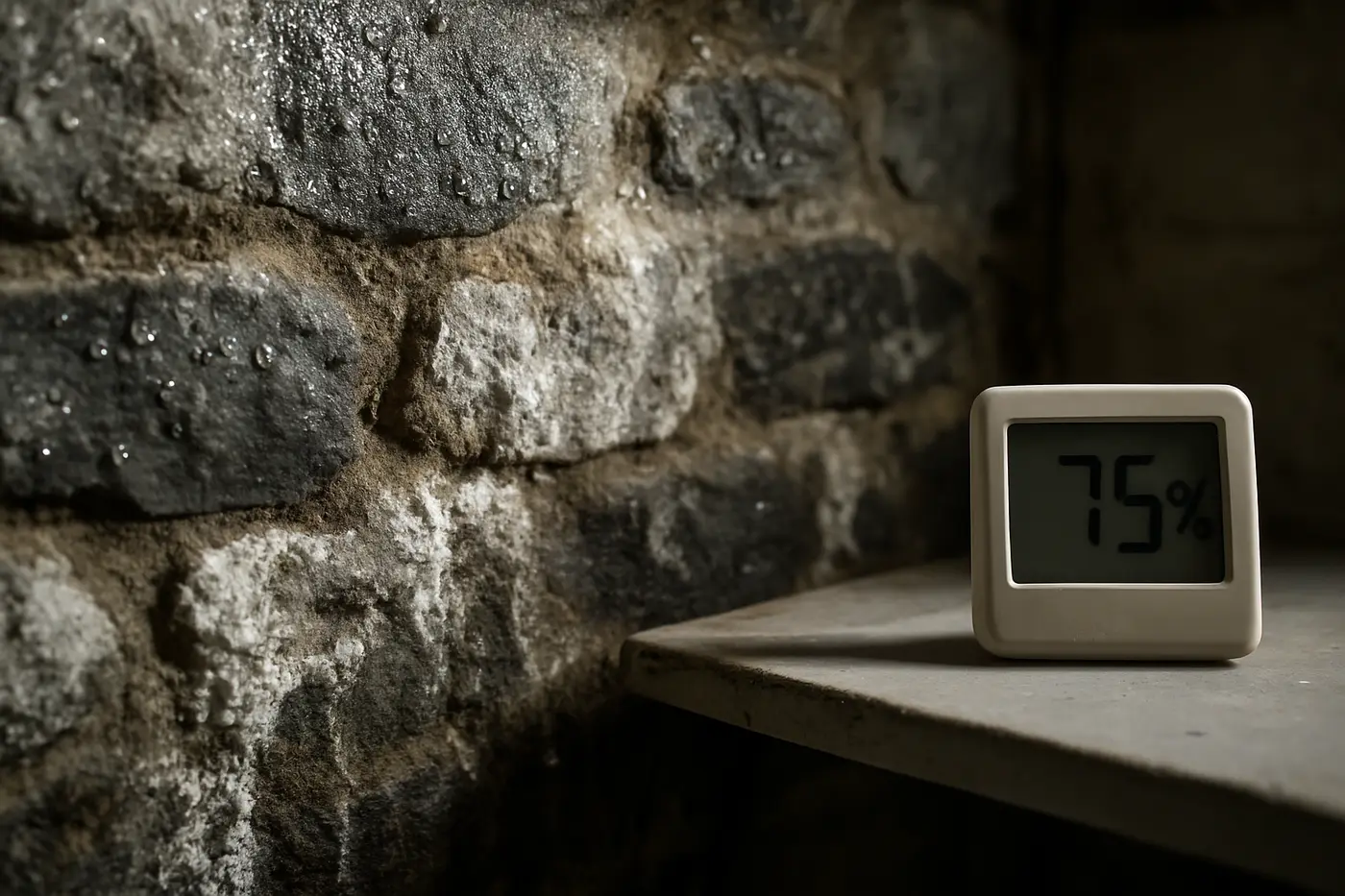
- Seepage through the stone foundation every time it rains hard.
- Summer humidity above 60 percent turning the basement joists fuzzy.
- A roof seam that dripped for three winters before anyone looked.
- A bath fan venting into the attic.
Mold sits on top of that rule. Mold caused by a covered sudden loss is usually covered, subject to the sublimit below. Mold caused by an excluded gradual condition is excluded along with it. That is why the first question an adjuster asks about mold is not “how much is there” but “what was the water and when did it start”.
The gray area is a sudden loss that was not found quickly. A pipe that burst while you were away for three weeks is still a sudden loss, but the carrier will look hard at whether the resulting mold could have been limited by reasonable action once it was discovered. Which brings us to speed.
The mold sublimit
Almost every Pennsylvania homeowners policy written in the last two decades carries a separate limit for mold, fungus, wet rot and bacteria. Commonly it is $5,000 to $10,000 per policy period. Some carriers offer an endorsement that raises it for an added premium.
What the sublimit does in practice:
- The water damage itself, meaning extraction, drying, removal of wet materials and the rebuild, is paid under the main dwelling coverage.
- The mold portion, meaning containment, remediation, antimicrobial treatment, testing and clearance, stops at the sublimit.
- If the mold work costs less than the sublimit, it is paid in full. If it costs more, the difference is yours.
Against our 2026 price ranges, a single contained room at $1,500 to $4,000 fits comfortably inside a $5,000 sublimit. A rowhome basement at $2,000 to $8,000 may not. A whole-house job at $10,000 to $30,000 or more will exceed a standard sublimit by a wide margin, which is why catching a loss early is a financial decision as much as a health one. Our cost guide has the full table.
Where each Philadelphia water source lands
| Water source | Standard HO-3 | What you need instead |
|---|---|---|
| Burst supply pipe, failed water heater, appliance hose | Usually covered, mold under sublimit | Nothing extra |
| Storm damage that opens the roof | Usually covered, mold under sublimit | Nothing extra |
| Upstairs unit or neighbor’s leak in a shared wall | Often covered as sudden; liability may shift | Association or neighbor’s policy may be involved |
| Combined sewer backup through the floor drain | Excluded | Water backup endorsement |
| Sump pump failure or overflow | Excluded | Water backup endorsement |
| Schuylkill, Delaware, creek or overland flooding | Excluded | Separate NFIP or private flood policy |
| Long-term tub surround, roof seam or window leak | Excluded | Not insurable; fix and pay out of pocket |
| Basement seepage and summer humidity | Excluded | Not insurable; grading, sealing, dehumidifier |
Sewer backup needs an endorsement
Roughly the older two thirds of the city sits on a combined sewer, and heavy summer rain can push sewer water up through basement floor drains and fixtures. A standard policy excludes water that backs up through sewers or drains. A water backup endorsement adds it back with its own limit, and it is one of the cheaper add-ons relative to what it covers. If you have a finished rowhome basement on the combined sewer and do not have this endorsement, call your agent this week. Our basement mold guide also covers the PWD backwater valve program that prevents the backup in the first place.
Flooding needs a flood policy
River and overland flooding is excluded from every standard homeowners policy. The remnants of Hurricane Ida in September 2021 put the Schuylkill at a record crest and flooded Main Street in Manayunk and low ground along the river, and Tropical Storm Isaias in 2020 flooded Eastwick along Cobbs and Darby Creeks. None of that basement damage was a homeowners claim. It was a flood claim for those who had a policy through NFIP or a private carrier, and an out-of-pocket loss for those who did not. If you are near the Schuylkill, the Wissahickon, Tacony-Frankford, Pennypack or Cobbs Creek, ask about flood coverage.
Multi-unit leaks
In a converted rowhome or an Old City condo, a leak from the unit above is usually a sudden loss for the unit below, but whose policy pays can depend on the association documents and on whether the upstairs owner was negligent. The practical step is one inspection report covering every affected unit, with moisture readings in each, so each owner has the same documentation to give their own carrier.
Fast drying keeps mold in the claim
The single most important thing you can do for a mold claim happens before there is any mold. A covered water loss that is extracted and dried within the first day or two rarely grows anything. The same loss left for a week in a Philadelphia summer grows mold on the drywall paper, and now the carrier is looking at whether the growth was avoidable.
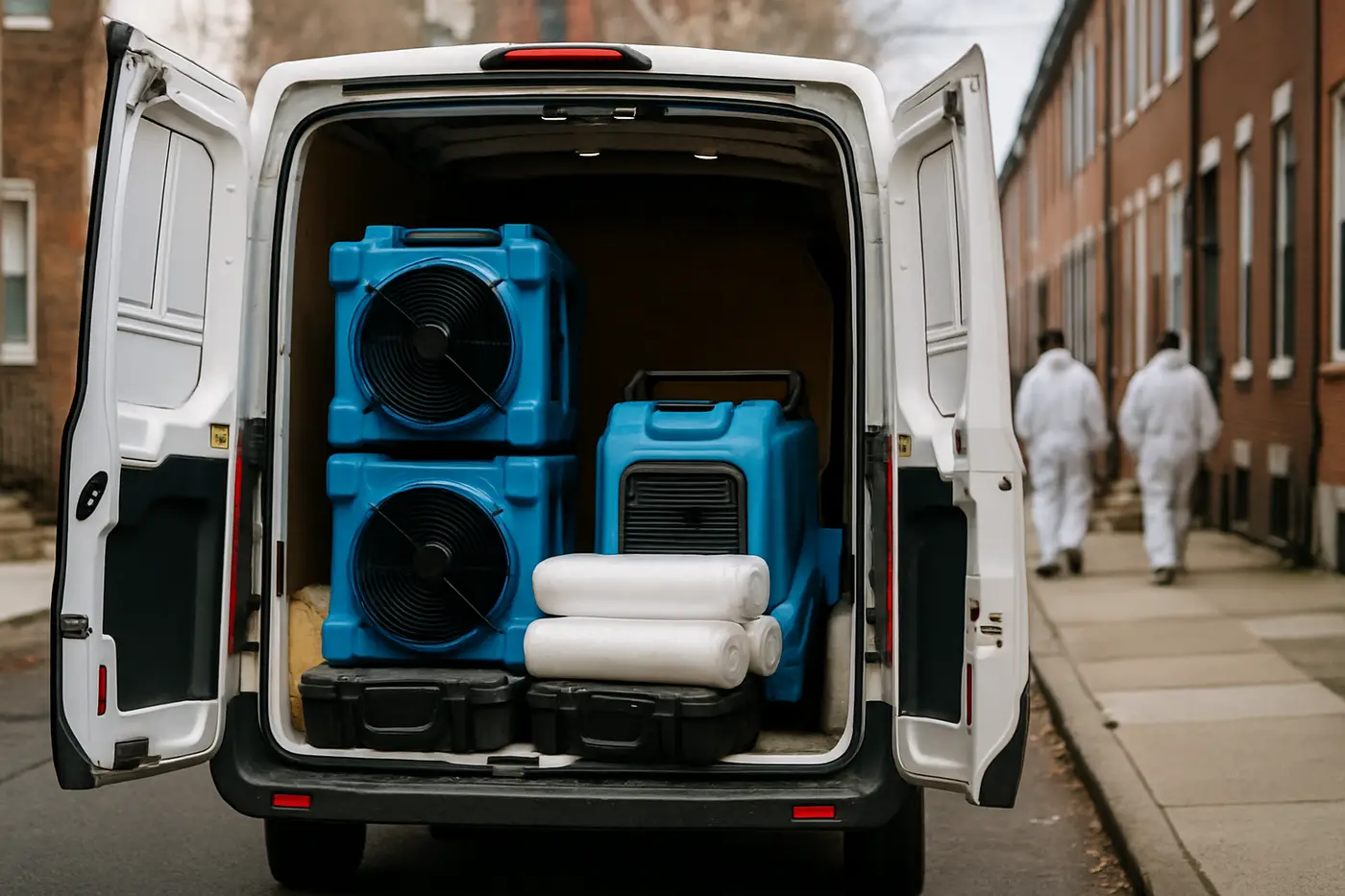
Every standard policy requires the homeowner to take reasonable steps to protect the property from further damage after a loss. Calling a restoration contractor the same day, getting the water out and getting drying equipment running is that reasonable step. It also produces the drying log that shows the adjuster the structure came down to dry readings. Emergency mitigation is generally covered when it is documented. Our guide to the first 24 to 48 hours after water damage covers what to do in that window, and the water damage restoration page covers what the drying involves.
What the adjuster expects
Adjusters handle mold claims on paper. What they want to see:
- Dated photos of the water source, the standing water and the affected materials before anything was moved, discarded or dried.
- Moisture readings from the day of the loss, on each affected wall, floor and ceiling, and a drying log showing the readings coming down day by day.
- A written scope of work that lists what was removed, what was cleaned and why, with the square footage.
- Receipts for emergency mitigation and any equipment.
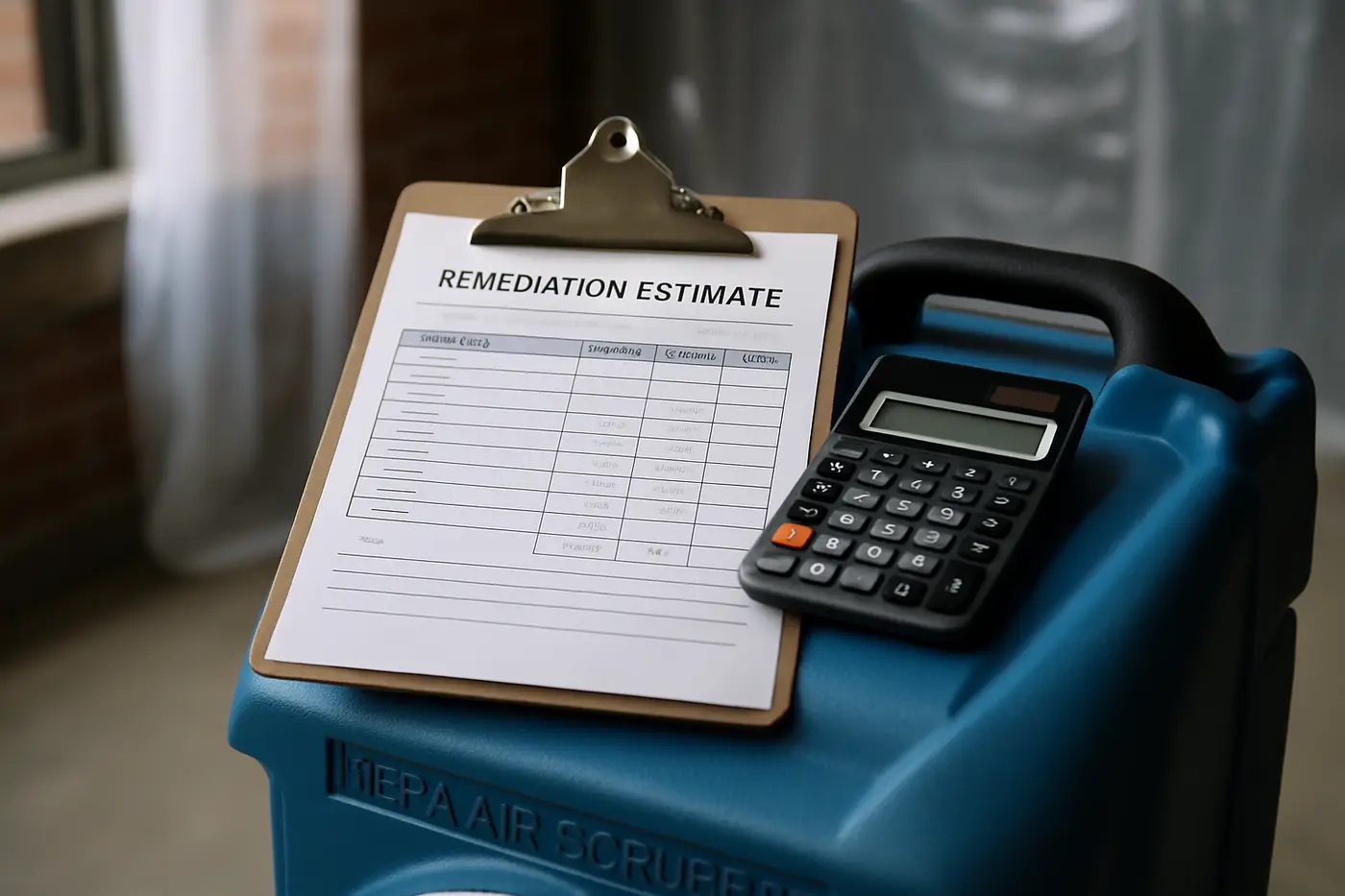
- For larger losses, an estimate in Xactimate format, which is the pricing software most carriers use.
- Where mold is involved, the remediation protocol and an independent clearance result.
A contractor working to the IICRC S520 mold standard and the S500 water damage standard produces all of that as a normal part of the job. We bill the carrier directly where the carrier approves, and we give you the same file we give the adjuster.
Two things that hurt claims: throwing out wet materials before photographing them, and letting a handyman tear out drywall with no readings, no photos and no scope. The loss may be real and still be undocumented.
What to do when a claim is denied or underpaid
Ask for the denial or the settlement in writing with the policy language the carrier is relying on. Then compare it with your file. If the carrier calls the loss gradual and your dated photos and moisture log show a pipe that failed and was dried within two days, that is the basis for an appeal. Ask for a re-inspection. Provide the inspection report, the drying log and any independent lab results.
If you believe the carrier is not handling the claim fairly after that, the Pennsylvania Insurance Department accepts consumer complaints about insurers. Keep every letter, email and call dated. For a large disputed loss, a public adjuster or an attorney is a decision for you to make; we do not give legal advice and this article is not a substitute for it.
Reducing what you pay either way
Whether a loss is covered or not, the same steps cut the bill:
- Know your sublimit and your endorsements before a loss. Ten minutes with your agent.
- Add a water backup endorsement if you are on the combined sewer, and a flood policy if you are near a river or creek.
- Fix the gradual sources now: the tub surround, the roof seam, the downspout at the foundation. They are uninsurable and they are what grows most Philadelphia mold.
- After any sudden loss, call the same day, photograph before touching, and get drying started.
- Keep contents off the basement floor and out of cardboard. Contents claims are the ones with the most arguments.
Key takeaways
- Sudden and accidental water losses are usually covered; mold that follows is paid under a sublimit of commonly $5,000 to $10,000.
- Gradual moisture, seepage, humidity and deferred maintenance are excluded, and so is the mold they cause.
- Sewer backup needs a water backup endorsement. River and overland flooding needs a separate flood policy.
- Fast, documented drying after a covered loss is what keeps mold inside the claim.
- Adjusters want dated photos, moisture readings, a drying log, a written scope and, for larger losses, an Xactimate estimate.
- Denials can be appealed with documentation; the Pennsylvania Insurance Department handles complaints about insurers.
If you have a water loss and want the documentation done right from the first hour, send the form or call us. Our mold remediation and water damage crews cover Philadelphia and the surrounding area, and the scheduled visual inspection with a written estimate is free.