- #diy
- #mold-removal
- #safety
- #epa-guidance
- #prevention
- #philadelphia
You can clean mold yourself when the patch is under about 10 square feet, sits on a hard surface such as tile, glass or sealed wood, and the moisture behind it has been fixed. That is the EPA’s guideline. Larger areas, drywall, insulation, sewage, ductwork, recurring growth or a vulnerable household member means calling a professional.
We spend a good part of every week telling Philadelphia homeowners that the spot on their shower grout is not a remediation job. We spend the rest of it cleaning up after well-meaning cleanups that turned a bathroom ceiling into a whole-floor problem. This guide is about knowing which one you have.
What the 10 square foot rule actually means
Ten square feet is a patch about 3 feet by 3 feet, or a strip a foot wide and 10 feet long along the bottom of a wall. The EPA uses it as a rough line for when an occupant can reasonably handle cleanup without containment and professional equipment. It is a rule of thumb, not a regulation, and it comes with two conditions that matter as much as the size.
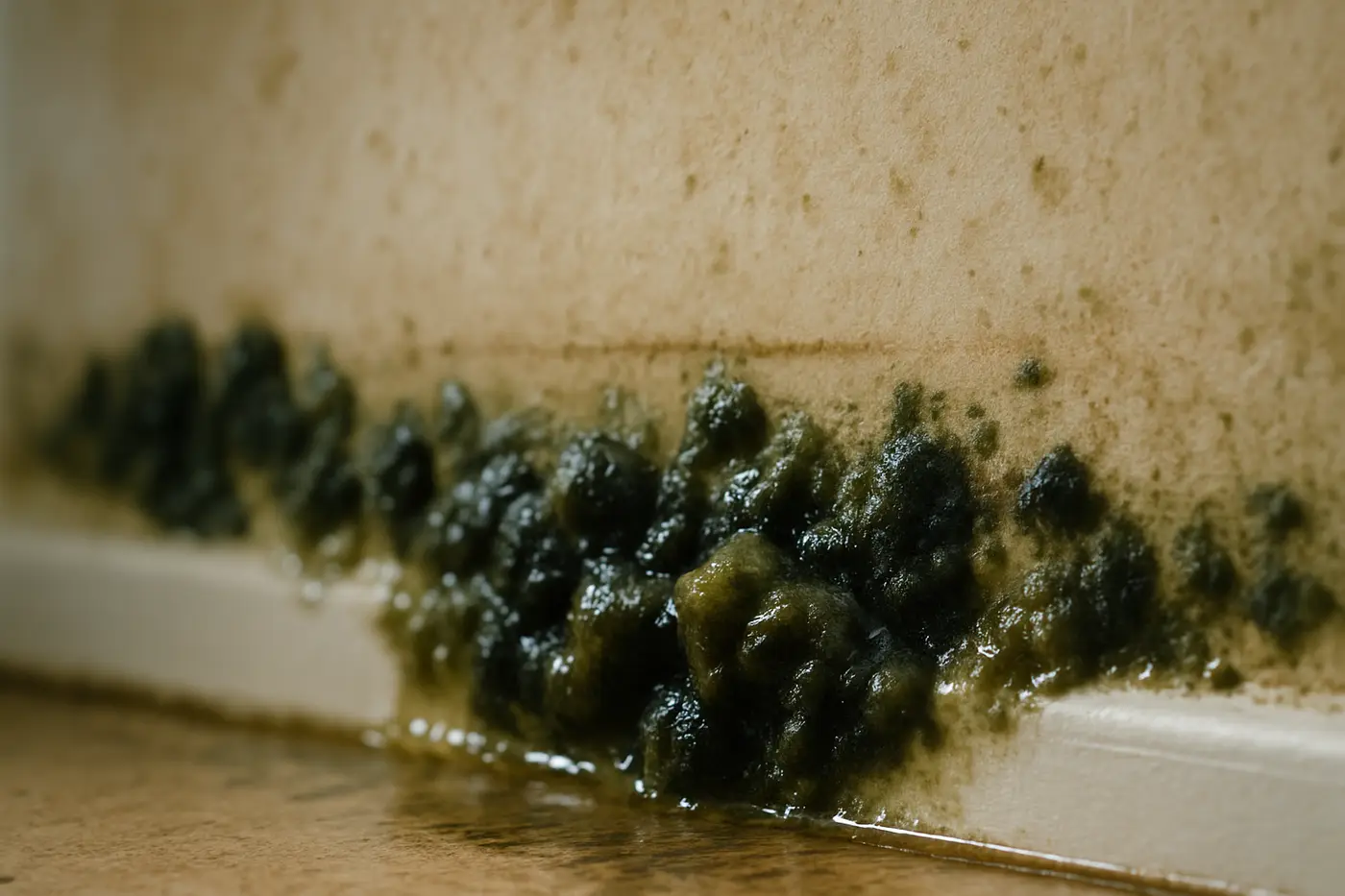
The surface has to be hard and non-porous. On tile, glass, metal, sealed or painted wood and painted masonry, mold grows on the surface and can be scrubbed off. On unpainted drywall, plaster, insulation, ceiling tile, carpet, pad and bare wood, the hyphae grow into the material. Scrubbing removes the color and leaves the organism.
The moisture has to be fixed first. Mold is a moisture problem with a biological symptom. Clean the symptom without fixing the cause and it returns in weeks. The usual Philadelphia causes for a small patch: a bathroom fan that does not vent outside, condensation on a single-pane window or a cold exterior wall behind a dresser, a slow leak under a sink, a tub surround with failed caulk, an AC condensate line, or a basement that sits above 60 percent relative humidity from June through September.
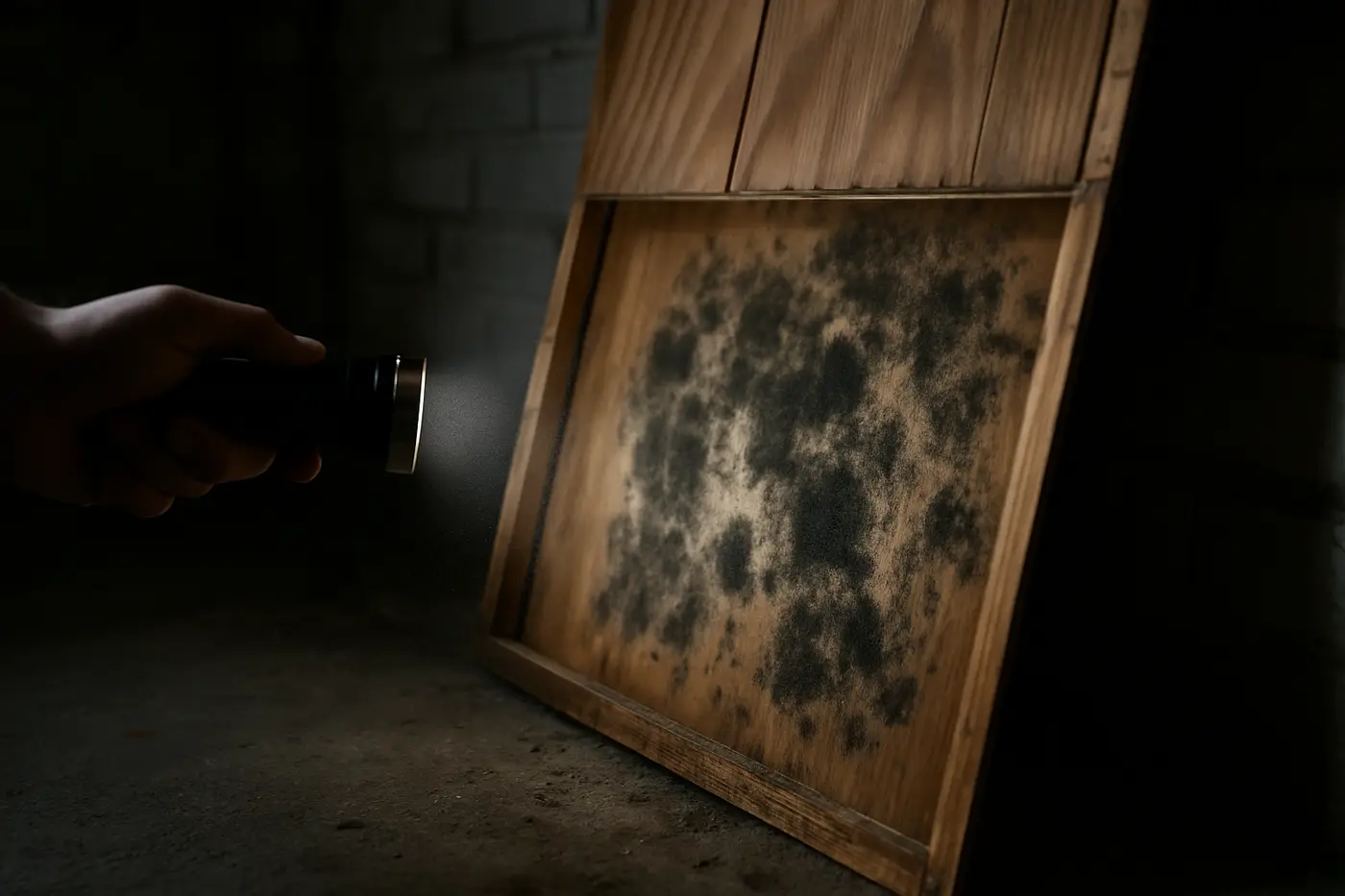
If you cannot see the edges of the growth, if the wall feels soft, or if the smell is stronger than the visible patch would explain, assume it is larger than what you see. Our guide to spotting hidden mold in a Philadelphia rowhome covers where to look.
How to clean a small area safely
Assuming the patch is small, on a hard surface, and the moisture is fixed, here is how to do it without making it worse.
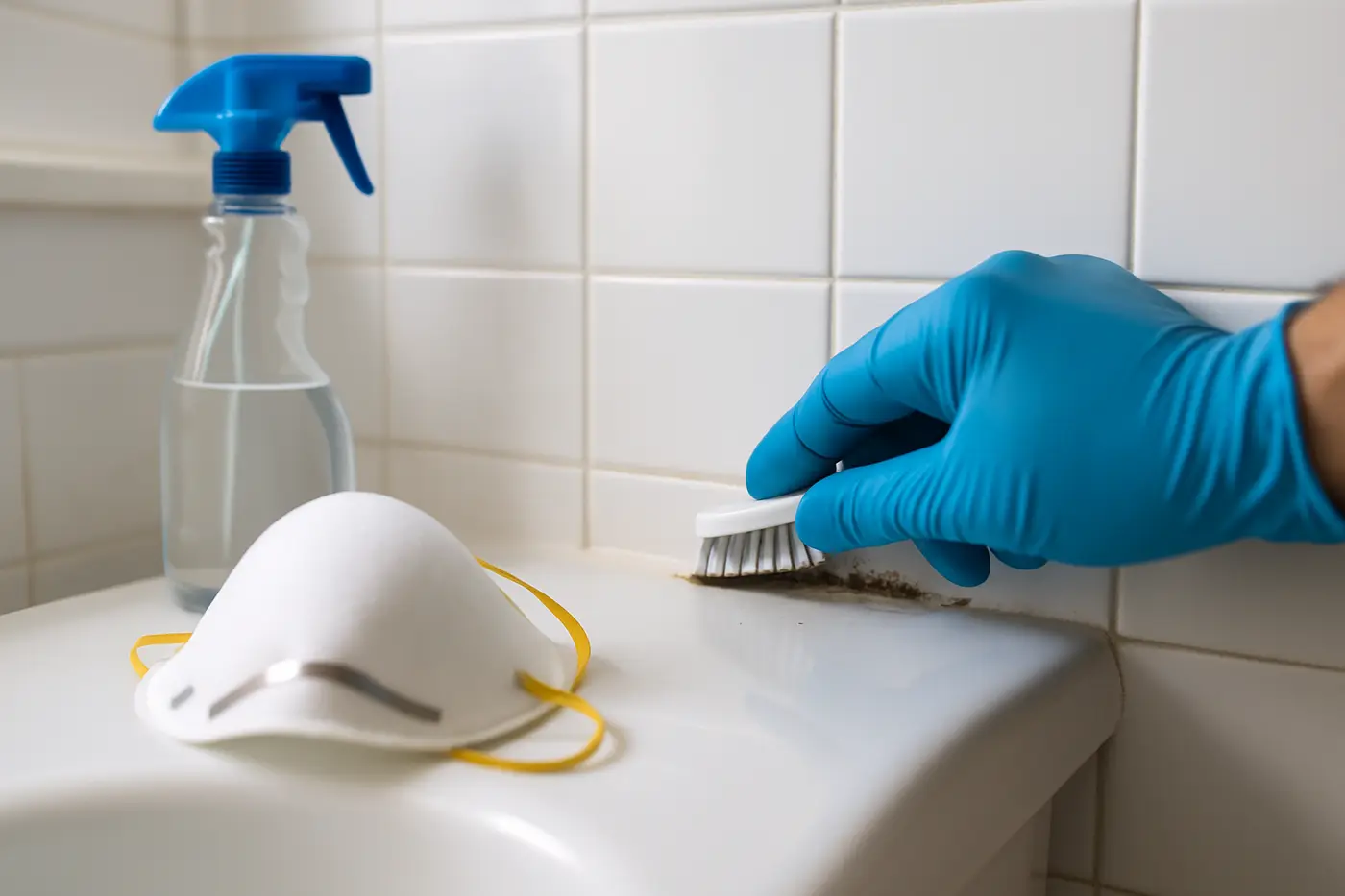
Gear. An N95 respirator fitted properly (not a paper dust mask), long rubber or nitrile gloves, safety glasses without vents, old clothes, a bucket, household detergent, a stiff brush or scrub sponge, rags, a spray bottle of water, and heavy plastic bags.
Steps.
- Close the door to the rest of the house. Open a window in the room and set a box fan in it blowing out, so air moves from the house toward the window, not the other way.
- Keep children, pets and anyone with asthma, allergies or a weakened immune system out of the room until it is clean and dry.
- Lightly mist the growth with water before you touch it. Dry mold releases spores when disturbed; damp mold does not travel as far. Never dry-scrape, sand or wire-brush mold.
- Scrub with detergent and warm water. Work from the edges of the patch toward the center. Rinse the sponge in the bucket often, and change the water when it clouds.
- Rinse the surface with clean water and dry it completely with rags, then leave the fan running until the surface is dry to the touch. Moisture left behind is the next colony.
- Bag the sponges, rags and any removed caulk or grout. Tie the bags and take them outside directly.
- Wipe down surfaces near the work area with a damp cloth to pick up settled spores. If you own a vacuum with a true HEPA filter, run it over the floor. If you do not, skip vacuuming; an ordinary vacuum blows spores back into the room.
- Wash your clothes right away and shower.
- Check the spot in a week and again in a month. If it is back, the moisture is not fixed, and cleaning again is not the answer.
For a shower or tub, dig out and replace the caulk rather than trying to clean it; mold grows behind and inside silicone. Tile grout that stays dark after scrubbing is stained, and the choice is to live with the stain or regrout.
Bleach, ammonia and paint
Three things people reach for that we would rather they did not.
Bleach. The EPA does not recommend routine bleach for mold cleanup. On a hard surface it kills surface growth, but detergent and scrubbing remove the growth just as well without the fumes. On porous materials bleach is actively counterproductive: chlorine does not penetrate, the water it is diluted in does, and the roots are fed while the surface looks clean.
Bleach and ammonia. Never together, and never bleach with any cleaner that contains ammonia, which includes many glass and multi-surface sprays. The reaction produces chloramine gas, which is toxic in a closed bathroom. Read labels, and use one product at a time with rinsing in between.
Paint. Painting over mold, including with so-called mold-resistant paint, seals an active colony against a food source with the moisture still behind it. The paint bubbles and peels within months, and in the meantime the problem is invisible. Mold-resistant primers have a place on clean, dry surfaces after remediation, not on top of growth.
Which surfaces can be DIY
| Where the mold is | DIY? | What to do |
|---|---|---|
| Tile, grout, tub or shower surround | Yes, if small | Scrub with detergent; replace caulk rather than cleaning it |
| Window glass, frames and sills | Yes | Clean, then fix the condensation (storm window, humidity, curtains open) |
| Painted wall or ceiling, surface spotting only | Borderline | If it wipes off and the wall is dry and firm, clean it; if it returns or the surface is soft, stop |
| Unpainted drywall, plaster or ceiling tile | No | Porous; removed under containment |
| Carpet and pad | No | Removed; cannot be cleaned once colonized |
| Insulation | No | Removed and replaced |
| Bare framing, joists or subfloor | Small surface spots only | Anything beyond a few spots needs HEPA vacuuming and treatment under containment |
| Inside HVAC ducts or on the air handler | No | Spreads through the whole house when the system runs |
| Anything wet from sewage or floodwater | No | Category 3 water; porous material removed regardless of visible growth |
When to call a professional
The EPA’s own list is a good one, and our experience in Philadelphia rowhomes adds a few items.
- The area is larger than about 10 square feet, or you cannot see where it ends.
- The growth is in porous material: drywall, plaster, insulation, ceiling tile, carpet pad, paneling. These come out, and removal without containment spreads spores through the house.
- The water was sewage or floodwater. Combined sewer backups into basements are Category 3 water under the IICRC S500 standard, and everything porous it touched is removed whether or not you can see growth.
- The HVAC system is involved. Growth on the coil, in the air handler or inside ducts is distributed to every room the system serves.
- Anyone in the home has asthma, allergies, a chronic lung condition or a weakened immune system, or is an infant or frail. Do not disturb mold in their air.
- It keeps coming back. Recurring growth after a proper cleaning means the source is hidden. A mold inspection with moisture mapping at $250 to $500, credited against remediation, ends the cycle.
- You smell it but cannot find it. The growth is inside a wall, under a floor or above a ceiling.
- The house predates 1980. Pre-1978 paint may contain lead and pre-1980 pipe insulation, floor tile and plaster may contain asbestos. Cutting into either without testing is a bigger health problem than the mold.
- You need documentation. Selling the house, renting it out, or filing an insurance claim all call for a written scope and, ideally, independent clearance testing.
Color does not belong on this list. Dark or black growth is not more dangerous by color, and any mold is treated the same way under the IICRC S520 standard. Our article on black mold in your Philadelphia home covers what the color does and does not tell you.
What professional remediation adds
The difference between a professional remediation and a determined homeowner with a respirator is not the scrubbing. It is everything around the scrubbing.
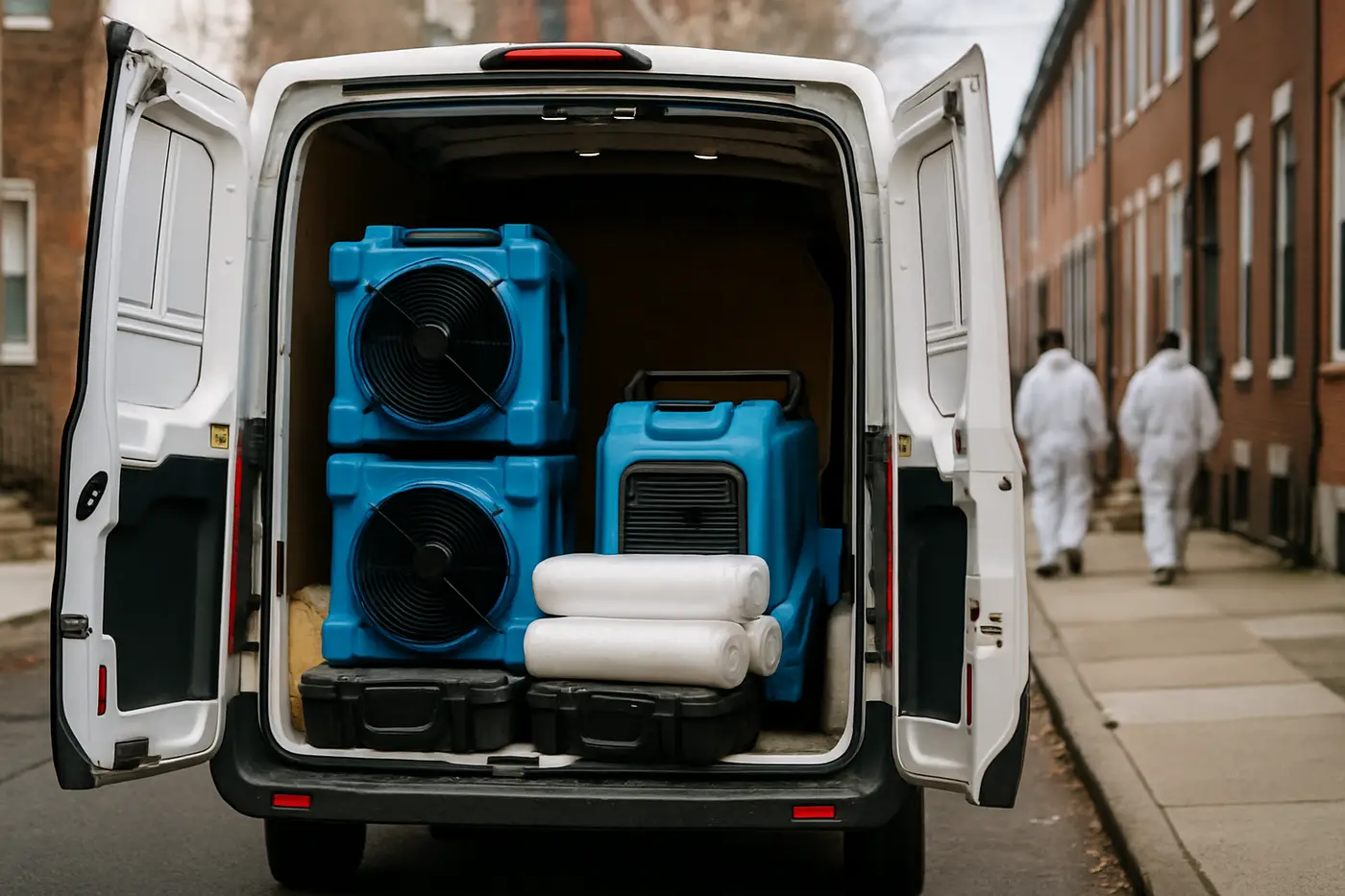
Under S520 the work area is sealed with plastic sheeting and kept under negative pressure by a HEPA air scrubber exhausting outside, so spores released by removal stay inside the containment. Colonized porous materials are cut out and bagged inside the containment. What remains, framing, masonry and subfloor, is HEPA vacuumed, cleaned and treated with an antimicrobial. The moisture source is repaired. Then the area is verified, ideally by an independent hygienist so the tester has no stake in the result, before the containment comes down and rebuild starts.
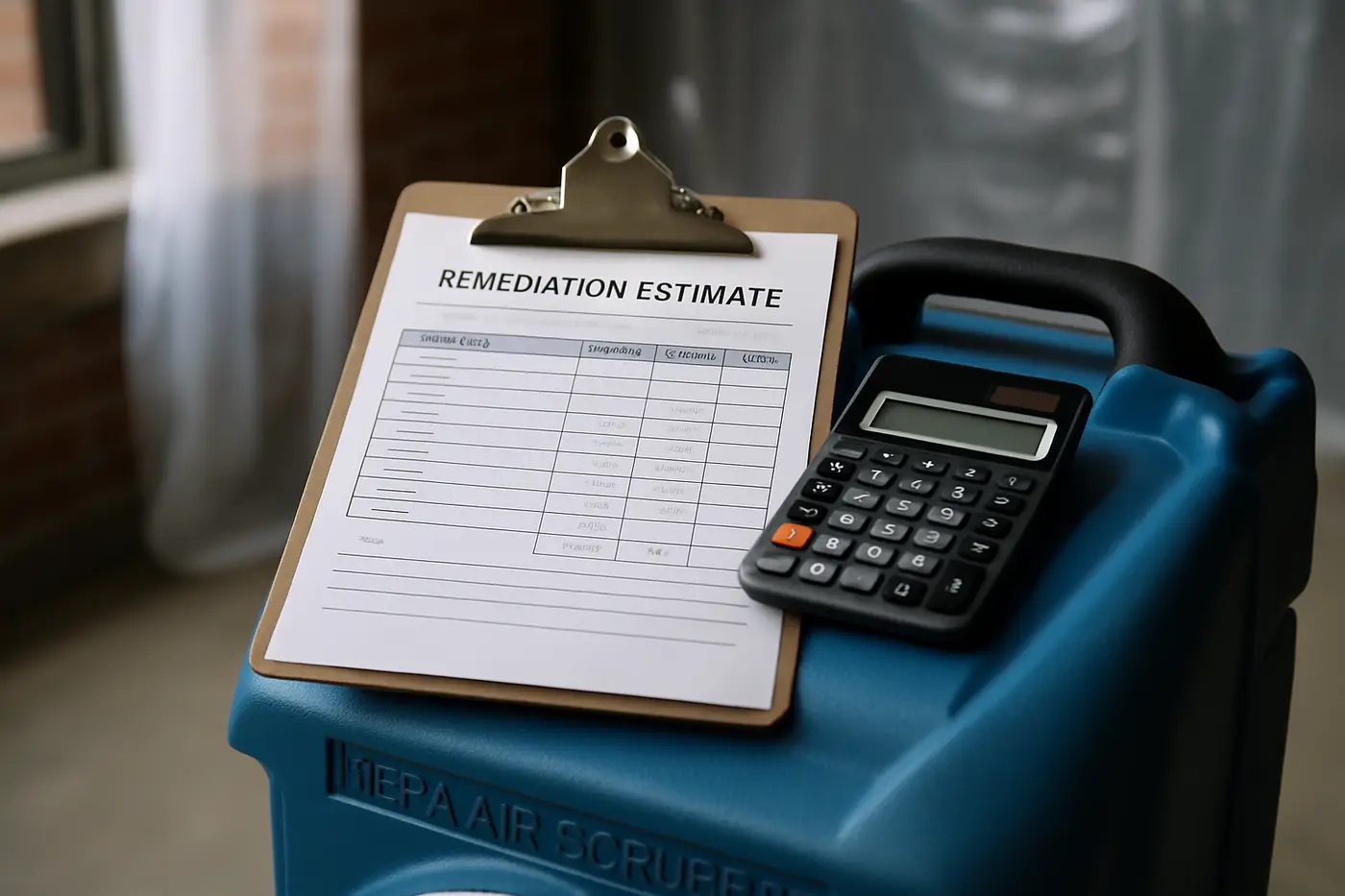
The costs for the jobs that sit just over the DIY line: a small contained area such as a bathroom ceiling, a closet or a window wall is $500 to $1,500; a single room such as a bedroom wall or a full bathroom is $1,500 to $4,000; independent clearance testing is $300 to $700. Our bathroom and kitchen mold removal page covers the most common small jobs, and the full list is on the pricing page.
Key takeaways
- DIY is reasonable under about 10 square feet, on a hard non-porous surface, with the moisture fixed. All three conditions.
- Gear: N95 respirator, long gloves, unvented safety glasses. Mist, scrub with detergent, rinse, dry completely, bag the rags, wash up.
- Skip the bleach on porous materials, never mix bleach and ammonia, and do not paint over growth.
- Call a professional for larger areas, drywall or insulation, sewage or floodwater, HVAC, recurring growth, hidden odor, pre-1980 materials, or anyone in the home with asthma or a weakened immune system.
- Professional work adds containment, negative air, HEPA filtration, controlled removal, a moisture fix and verification: $500 to $1,500 for a small contained area, $1,500 to $4,000 for a room.
Not sure which side of the line you are on? Send the form or call us. A scheduled visual inspection with a written estimate is free, and if it is a spot you can handle yourself, we will tell you so.