- #black-mold
- #stachybotrys
- #health
- #safety
- #remediation
- #philadelphia
Black mold is any mold that looks black, and Stachybotrys chartarum, the species people mean, is one of many. It needs constantly wet cellulose such as drywall paper, wood and cardboard, its color says nothing about toxicity, and remediation to the IICRC S520 standard treats it like any other indoor growth: contain, remove wet material, clean, dry and verify.
This guide covers what black mold actually is, who is at risk from it, what to do and not do when you find it in a Philadelphia rowhome, how professional remediation handles it, and when leaving the house is the right call.
What black mold actually is
Stachybotrys chartarum is a slow-growing mold that feeds on cellulose, the plant fiber in paper, wood and cardboard, and it needs that material to stay saturated for days to weeks. It does not grow from a humid room or a one-time spill that dried. It grows where water is constant: the paper face of drywall under a ceiling that drips every time it rains, the wood and paper inside a wall behind a tub surround that has wicked water for years, the cardboard and drywall in a basement that took a sewer backup and was never properly dried.
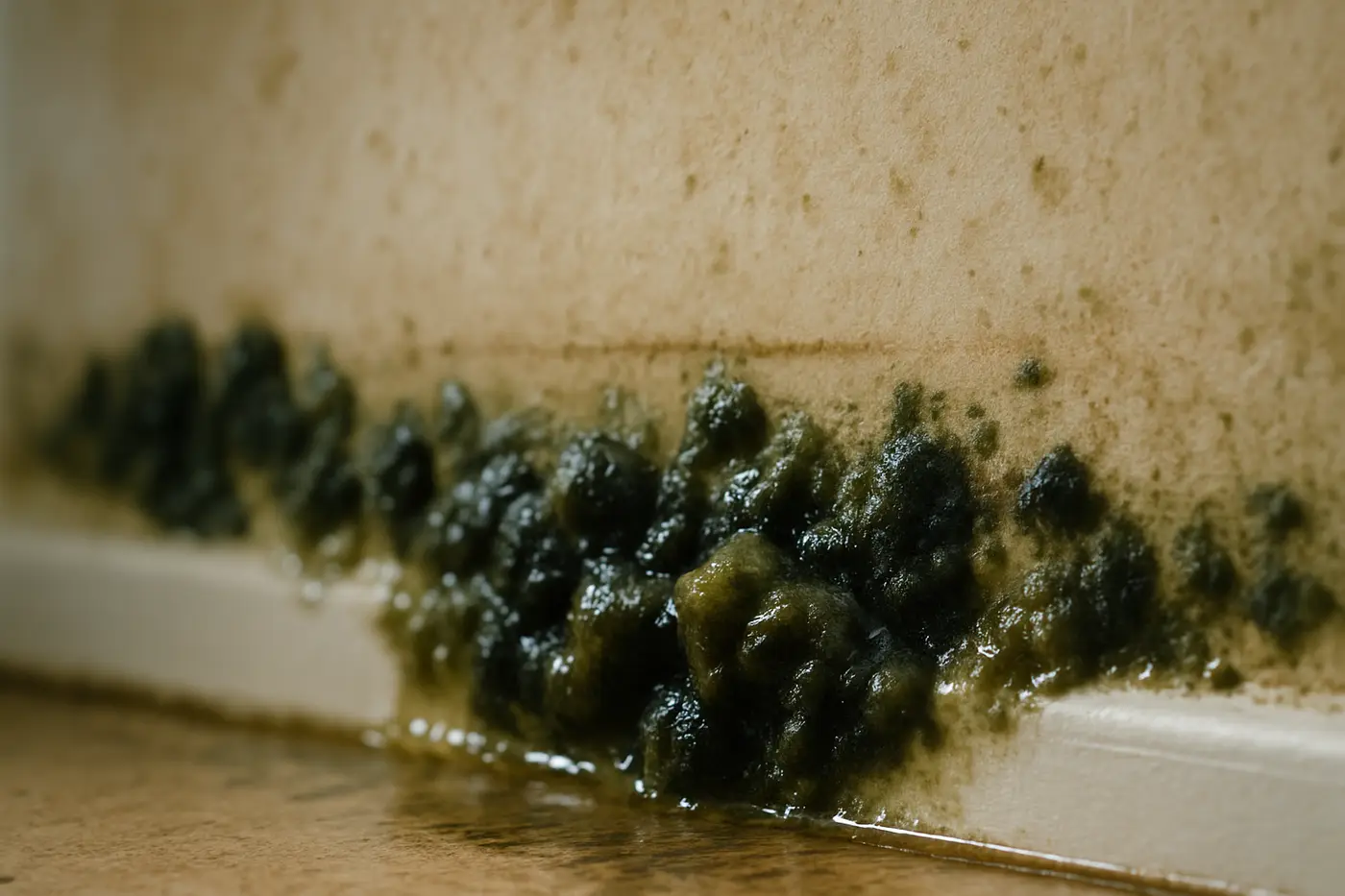
Its color runs black to dark green and it often looks slimy or wet rather than fuzzy when it is active. But a dozen other common molds, including several that grow on the same materials, can look black too. Nobody can identify a species by looking at it, and a lab result is the only way to know. Under EPA guidance, that identification is usually unnecessary, because the response does not change with the name.
Color does not equal toxicity. Some molds produce compounds that can affect sensitive people, and the ones that do are not sorted by color. A green or white growth on wet drywall can be as much of a problem as a black one. The useful measure is not the shade but the extent, the age of the growth, whether it is in the air path and who is breathing it.
In a Philadelphia rowhome, the three places we find heavy dark growth most often:
- The top side of a rear bedroom or bathroom ceiling under a flat-roof seam that has leaked through several winters.
- The wall cavity behind a 1950s tub surround and the closet on the other side of it.
- A basement after a combined sewer backup, on the lower drywall, the paneling, the cardboard and the bottom of the stairs.
Each of those is a constant water source. Find the water and you have found the reason.
Who is at risk
Most healthy adults exposed to a small patch of mold for a short time will notice nothing or have mild irritation: a stuffy nose, itchy eyes, a cough that clears when they leave the room. The people who matter more:
- Anyone with asthma, allergies or another respiratory condition.
- Infants and young children.
- Elderly people.
- Pregnant women.
- Anyone with a weakened immune system from illness or treatment.
For those groups, EPA guidance is that mold of any size or color is a reason for professional remediation rather than household cleaning, and that they should stay out of the affected area until the growth is contained. If someone in the house is in one of those groups and is having symptoms, talk to their doctor. If the doctor wants documentation of the home, an inspection report and an independent air sample provide it, and our inspection versus testing guide explains what each adds.
What to do when you find it
- Stop the water if you can. Shut the supply valve, put a bucket under the drip, stop using the shower. Nothing else matters until the material stops getting wetter.
- Close the door to the room and keep people and pets out, especially anyone in the at-risk groups above.
- Photograph it with the date before touching anything. If a claim is possible, this is the record.
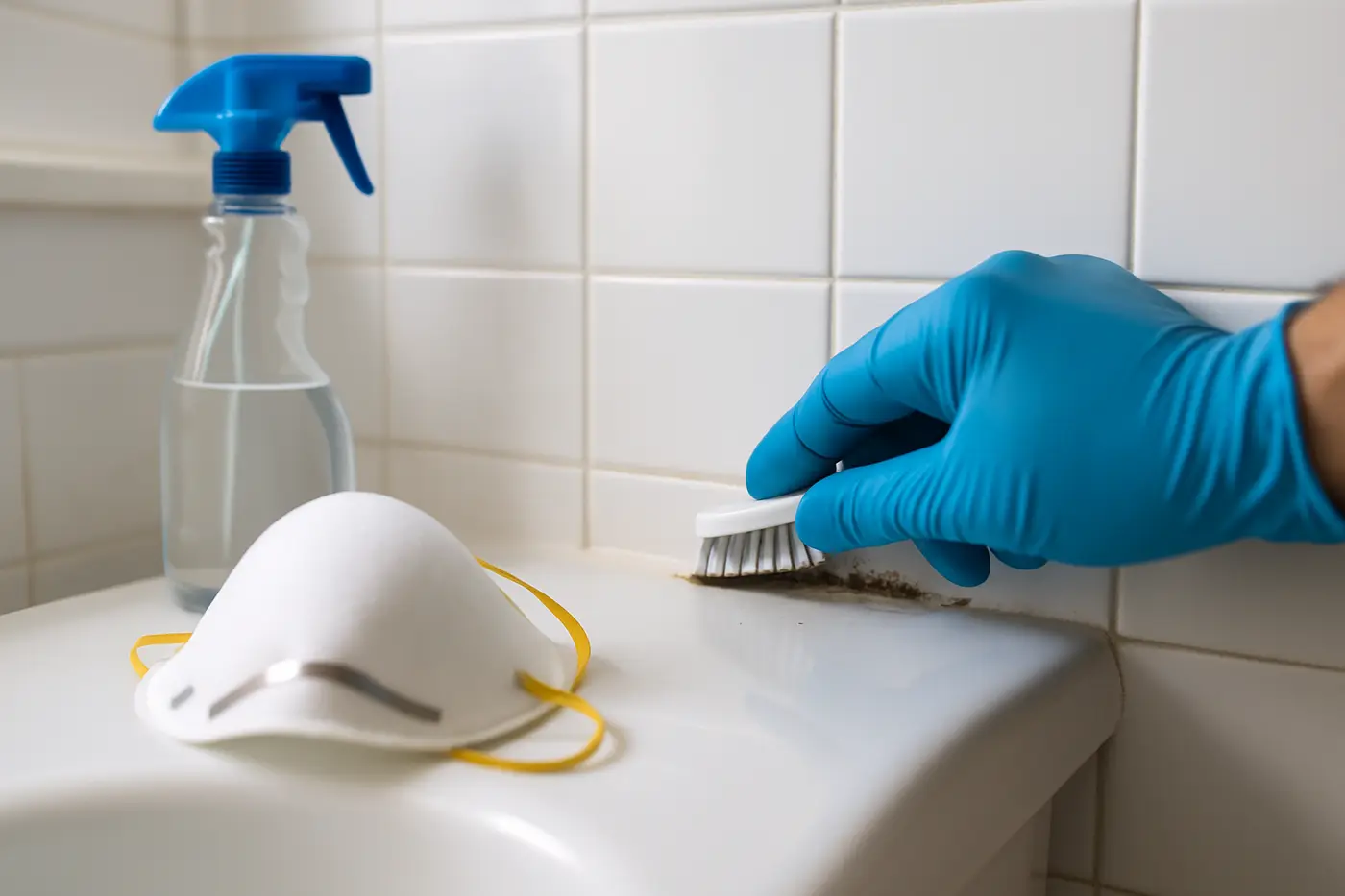
- Check the size. A patch under about 10 square feet on a hard surface, with the water fixed, can often be cleaned by the occupant with detergent and water. Growth on drywall, wood, insulation or carpet, or larger than that, is a remediation job.
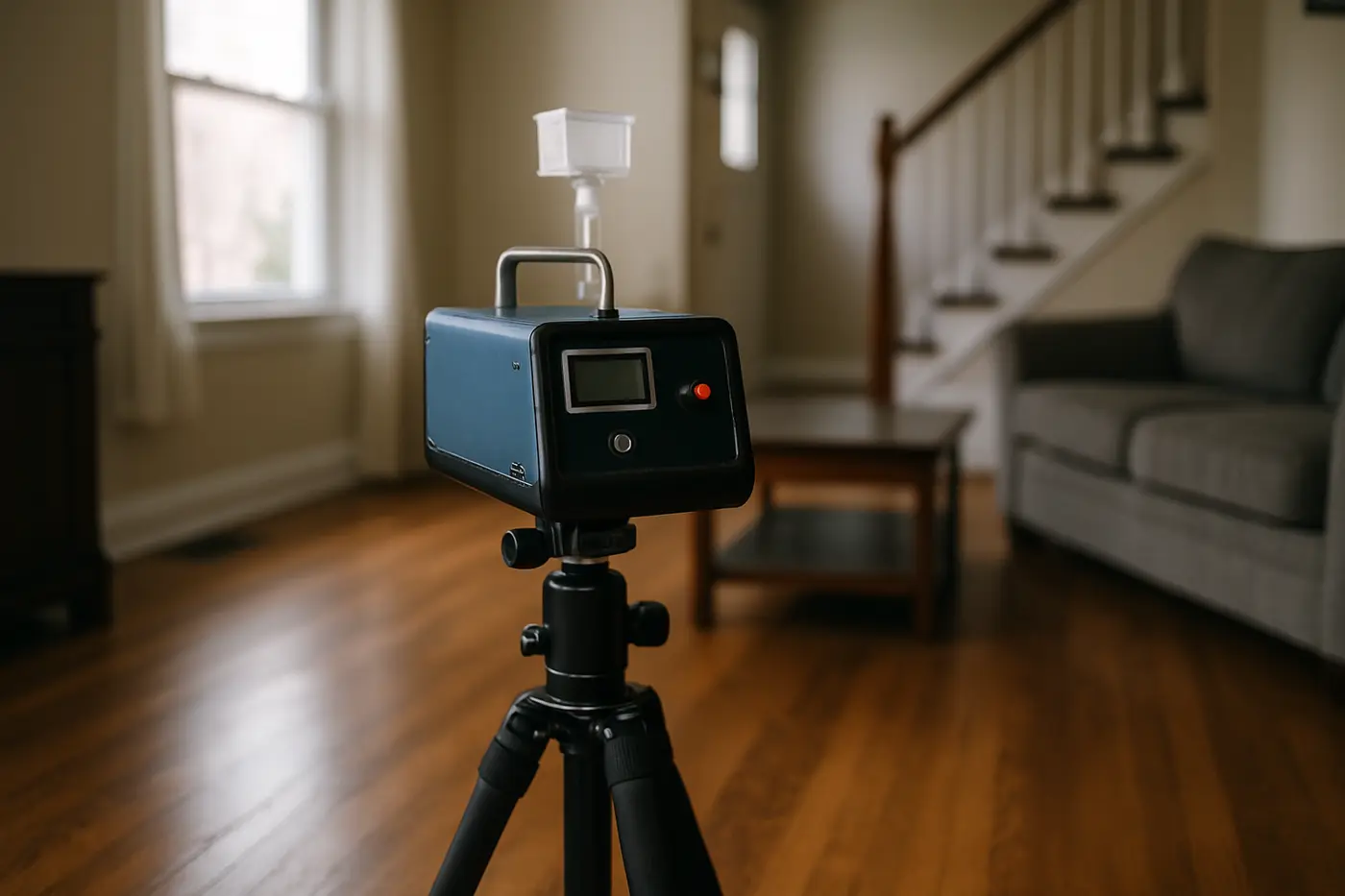
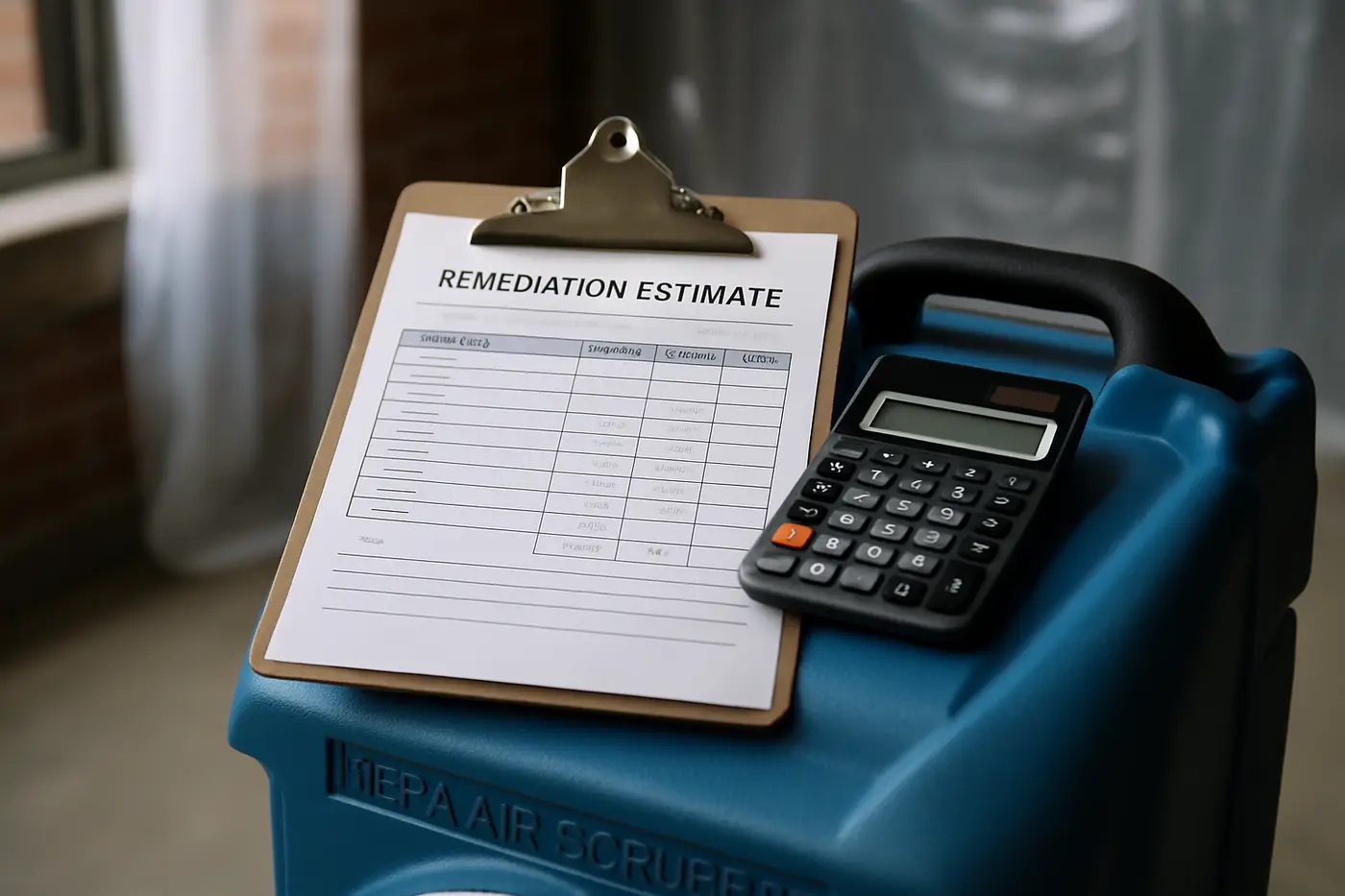
- Call. A scheduled visual inspection with a written estimate is free, and an inspection with moisture mapping and a written report is $250 to $500, credited against the work.
What not to do
Almost every job that has spread from one room to three got there because of one of these.
- Do not dry-scrape, sand, brush or wipe it dry. Disturbing dry growth without containment releases spores into the air and onto every surface in the house.
- Do not point a fan at it. A fan on wet mold to dry it out carries spores to the rest of the floor.
- Do not bleach porous materials and paint over them. Bleach takes the color off the surface of drywall or wood and leaves the growth in the material. The paint hides it until the next humid summer.
- Do not mix bleach with ammonia or any other cleaner. The fumes are dangerous.
- Do not tear out the drywall yourself. Without containment and negative air, demolition is the most effective way to contaminate the whole house, and in a pre-1978 rowhome the paint may contain lead and pre-1980 plaster and pipe insulation may contain asbestos. Test before demolition.
- Do not run the HVAC if the growth is in or near a return, a duct or the air handler.
How remediation to the IICRC S520 standard handles it
Stachybotrys is not handled differently from other molds under S520. What changes is the amount of saturated material that has to come out, and that is what sets the price. The steps:
| Step | What happens | Why |
|---|---|---|
| Moisture source | The leak, seam, surround or backup is identified and fixed or scheduled | Remediation over active water is a repeat job |
| Containment | Plastic barriers seal the work area; a zipper door and a decontamination step where needed | Keeps spores in the room |
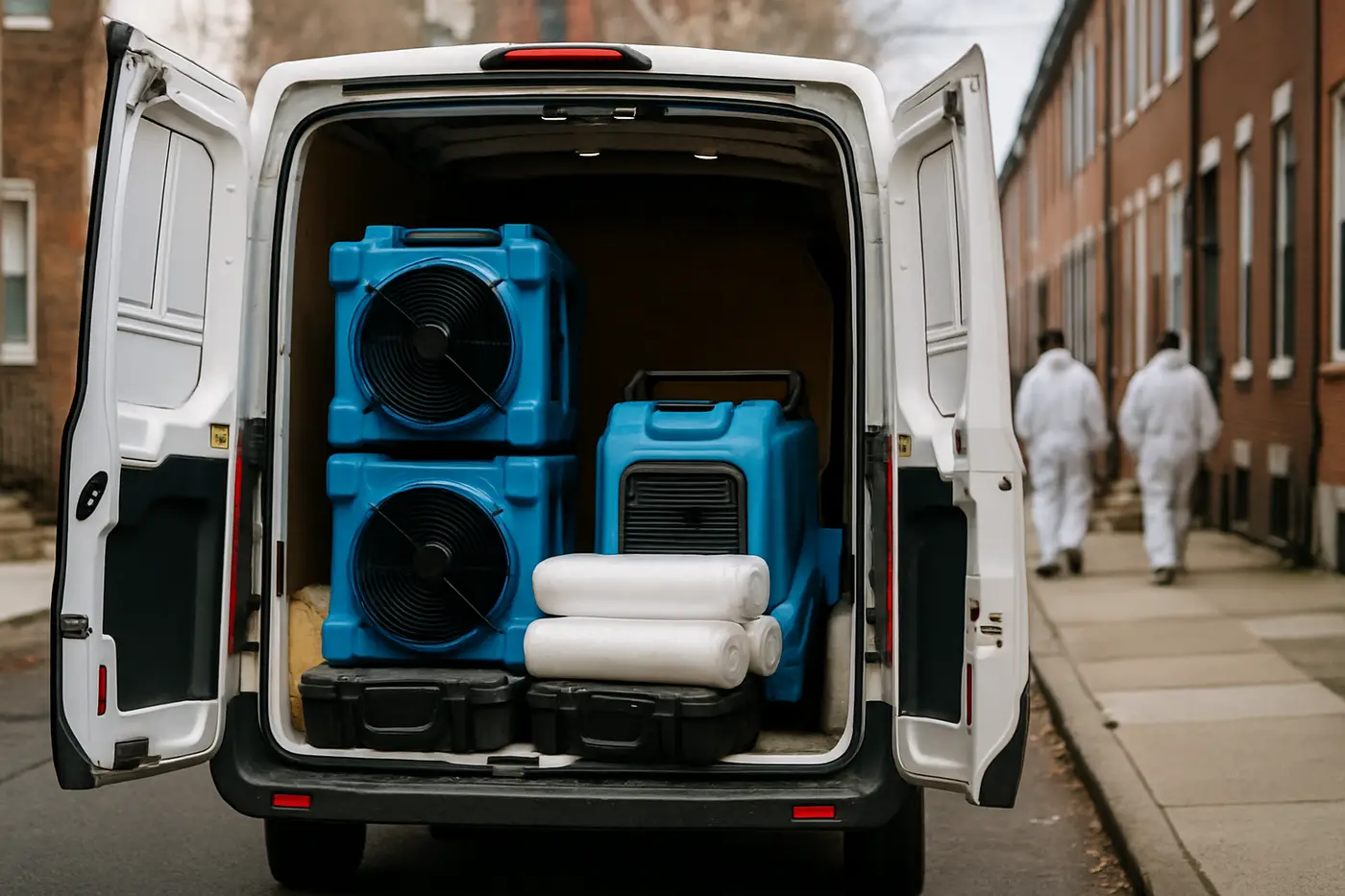
| Negative air | HEPA air scrubbers exhaust filtered air outside, pulling the room below the pressure of the house | Air flows into the containment, not out of it |
| Removal | Wet drywall, insulation, paneling, carpet, cardboard and unsalvageable wood are bagged inside the containment and carried out sealed | Porous material with growth in it cannot be cleaned |
| Cleaning | Framing, masonry and hard surfaces are HEPA vacuumed, cleaned and treated with an antimicrobial | Removes spores and residue from what stays |
| Drying | Air movers and dehumidifiers bring the structure to dry readings, 5 to 10 days for a basement | Dry framing does not regrow |
| Clearance | An independent hygienist inspects and samples inside and outside the containment, $300 to $700 | Verifies the result before rebuild |
| Rebuild | New drywall, insulation, trim and paint, $1,000 to $5,000 per room | Scheduled after clearance passes |
Black mold removal, meaning heavy growth or growth that followed Category 3 water, contained and remediated, runs $2,500 to $10,000 in 2026. A single room with lighter growth is $1,500 to $4,000 and a patch under 10 square feet is $500 to $1,500. Our black mold removal page and the 2026 cost guide break down what moves a job within those ranges.
Category 3 water
The heaviest black growth we see in Philadelphia basements follows water that was contaminated when it arrived. Under the IICRC S500 water damage standard, Category 3 water is grossly contaminated: sewage, a combined sewer backup through the floor drain, river water from the Schuylkill or a creek, or clean water that sat long enough to become contaminated. Roughly the older two thirds of the city sits on the combined sewer, so a heavy summer storm can put Category 3 water into a basement without any pipe failing.
Category 3 changes the scope in one way that matters: any porous material the water touched is removed, not dried. Drywall, paneling, carpet and pad, fiberglass insulation, cardboard, particleboard and unsealed wood all go, whether or not they show growth yet. The framing and masonry are cleaned and treated, the structure is dried and clearance is done before anything is rebuilt. That is why a basement backup is priced under the black mold row rather than the standard basement row.
When to leave the house
For a contained single room in a rowhome, most families stay. The work area is sealed in plastic under negative air and the rest of the house is isolated from it. Leave, or stay off the affected floor, when:
- The growth is extensive across several rooms or a whole floor.
- It is in the HVAC system, which moves air through every room.
- The containment has to run through the only hallway or stairwell to the bedrooms.
- Anyone in the at-risk groups is having symptoms.
- The water was Category 3 and the basement is the only route to the laundry or the rear door.
We tell you before we start which rooms are off limits and for how long. Typical timelines are 2 to 4 working days for a single contained area and 3 to 6 working days for a basement, plus drying time if the structure is wet.
After the work
Clearance is the end of remediation, not the end of the job. The water source that grew the mold has to stay fixed, and in a rowhome that usually means the flat roof gets recoated or the seam is repaired, the bath fan is ducted outside, the tub surround is rebuilt with cement board, or the basement gets grading, a sealed slab and a dehumidifier holding it under 60 percent relative humidity. Our hidden mold guide lists the places to keep an eye on afterward. If the growth was small and the water is fixed, our DIY versus professional guide covers what you can safely handle yourself next time.
Key takeaways
- Black mold is a color, not a diagnosis. Stachybotrys is one of many molds that can look black, and color does not equal toxicity.
- It needs constantly wet cellulose: drywall paper, wood, cardboard, kept saturated by a leak, a failed surround or a backup.
- Asthma, allergies, infants, the elderly, pregnancy and weakened immune systems raise the risk. Keep those people out of the affected area.
- Do not dry-scrape, fan, bleach and paint over, or demolish it yourself. Stop the water, close the door, photograph it and call.
- S520 remediation: fix the source, contain, negative air, remove porous material, HEPA clean and treat, dry, independent clearance, then rebuild.
- Category 3 water means every porous material it touched is removed. Black mold removal runs $2,500 to $10,000; clearance is $300 to $700.
If you have found dark growth in your home, send the form or call us. Our mold remediation crews cover Philadelphia and the surrounding area, from Fishtown to Overbrook, and a scheduled visual inspection with a written estimate is free.