- #attic
- #flat-roof
- #ventilation
- #condensation
- #rowhome
- #philadelphia
Attic mold in a Philadelphia rowhome comes from one of two places: water getting in through a flat or low-slope roof, or moist house air condensing on cold sheathing in winter. Fix the roof seam, parapet, drain or bath fan first. Then decide whether the sheathing needs remediation, which runs $2,000 to $7,000.
This guide covers what is up there in a rowhome attic, how to tell the two moisture sources apart, the order to fix things in, and when the deck needs professional cleaning.
What a rowhome attic looks like
Most Philadelphia rowhomes built between the 1880s and 1940s have a flat or low-slope roof and, under it, either a low crawl-height space between the top-floor ceiling joists and the roof deck or no attic at all where the roof frames directly onto the ceiling. Older houses with a pitched front section or a mansard have a partial attic behind it. Northeast twins and singles from the 1920s onward, and the Victorian houses in West and Northwest Philadelphia, often have full walk-in attics with a pitched roof.
The roof deck is usually original 1 inch plank sheathing, sometimes overlaid with plywood during a later reroof. Insulation ranges from none to a few inches of old blown-in material to modern batts. Running through the space you will typically find the plumbing vent stack, the bathroom fan duct (if there is one), the chimney and whatever wiring has been added since 1930. Access is a hatch in a closet or hallway ceiling, and a lot of owners have never opened it, which is why attic mold here tends to be found late, at a home inspection or during a reroof.
Water from above: flat and low-slope roofs
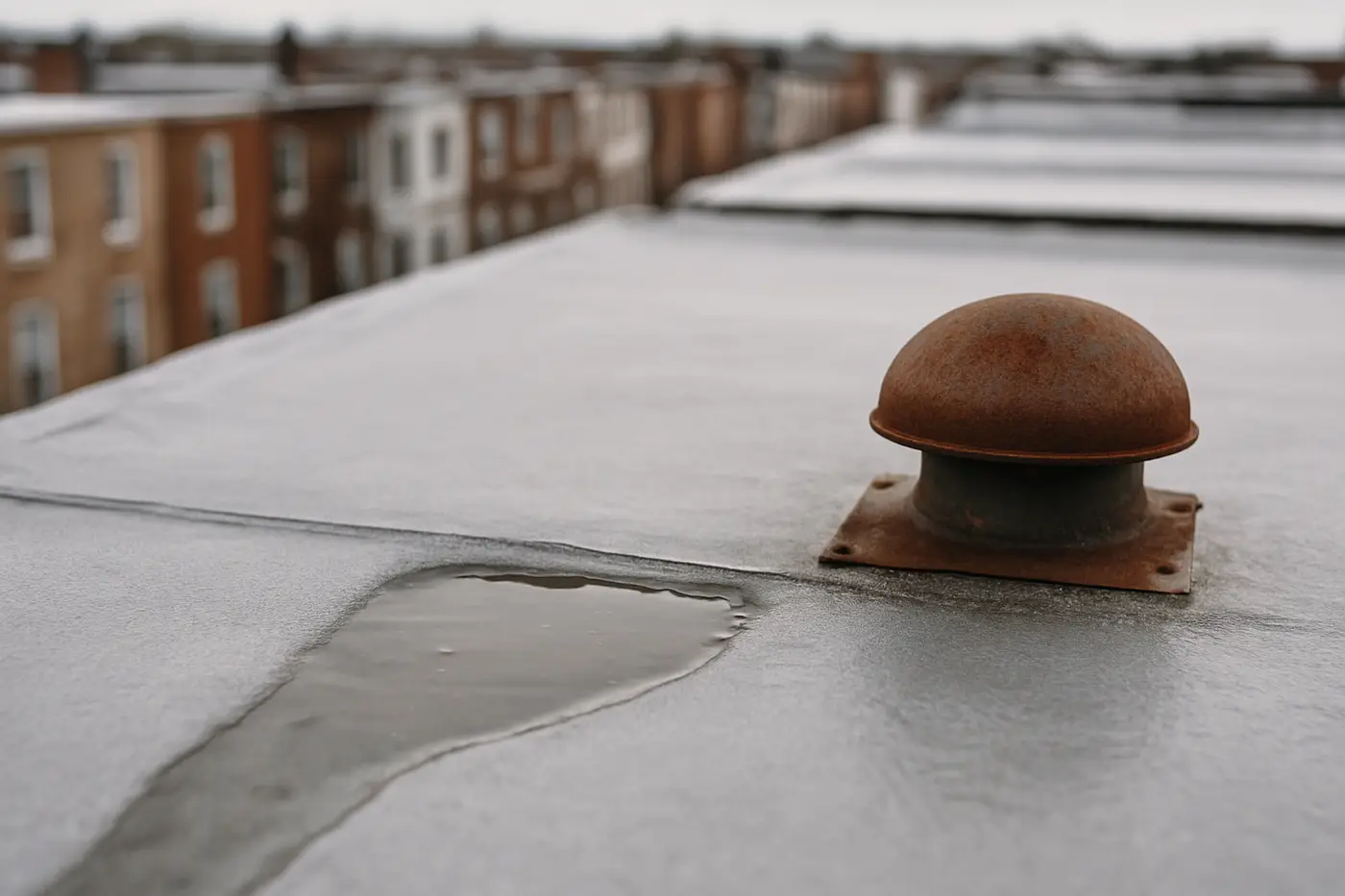
Flat roofs do not shed water; they hold it briefly and depend on every seam and edge to be tight. The failure points are predictable.
Seams. Rolled roofing and modified bitumen are laid in overlapping strips and sealed at the laps. Freeze-thaw cycles in January and February work those laps open, and ponding water in the low spots finds them. A stain on the top-floor ceiling in a line, or wet sheathing in a strip, usually sits under a seam.
Parapets. The party walls extend above the roof as low parapets, capped with metal or tile. The flashing where the roof membrane turns up the parapet, and the cap on top, both fail with age. Water runs down inside the wall and shows up at the edge of the attic or, worse, inside the neighbor’s wall.
Drains and scuppers. Most rowhome roofs drain to a single rear drain or a scupper through the parapet into a downspout. Leaves from a neighbor’s tree, a tennis ball or a dead pigeon block it, the roof ponds, and the water goes through the nearest seam. Clearing the drain every fall is the cheapest roof maintenance in the city.
The silver coating. A large share of the city’s flat roofs are protected by a reflective aluminum coating. It is meant to be recoated every few years. On many houses it was applied once, decades ago, and the membrane under it has been baking ever since. A roof that looks dull gray rather than silver, with alligator cracking in the surface, is past due.
The neighbor’s roof. You share a parapet and often a continuous roof plane. Their neglected seam or clogged drain is your leak, and that conversation has to happen before the remediation does.
Moisture from below: bath fans and winter condensation
The second source is invisible until the sheathing turns gray, and it produces more attic mold than roof leaks do.
Warm indoor air holds moisture. In winter, that air rises through every gap in the top-floor ceiling: the unsealed attic hatch, the chase around the plumbing stack, recessed light housings, holes around wires, and the top plates of partition walls. It reaches the underside of a roof deck that is at outdoor temperature. Water condenses on the wood, and on the coldest nights it frosts. On the next mild day the frost melts and soaks in. Repeat that cycle from December to March and the deck spends the winter wet.
The single biggest contributor is a bathroom exhaust fan that vents into the attic. Some were installed that way, some had the duct fall off the roof cap years ago, and some run to a flexible duct that ends a foot from the hatch. Each shower sends a cloud of warm, saturated air directly onto the roof deck. The signature is a halo of dark growth around the duct outlet, spreading with the years. Kitchen fans and dryer vents that terminate in the attic do the same thing.
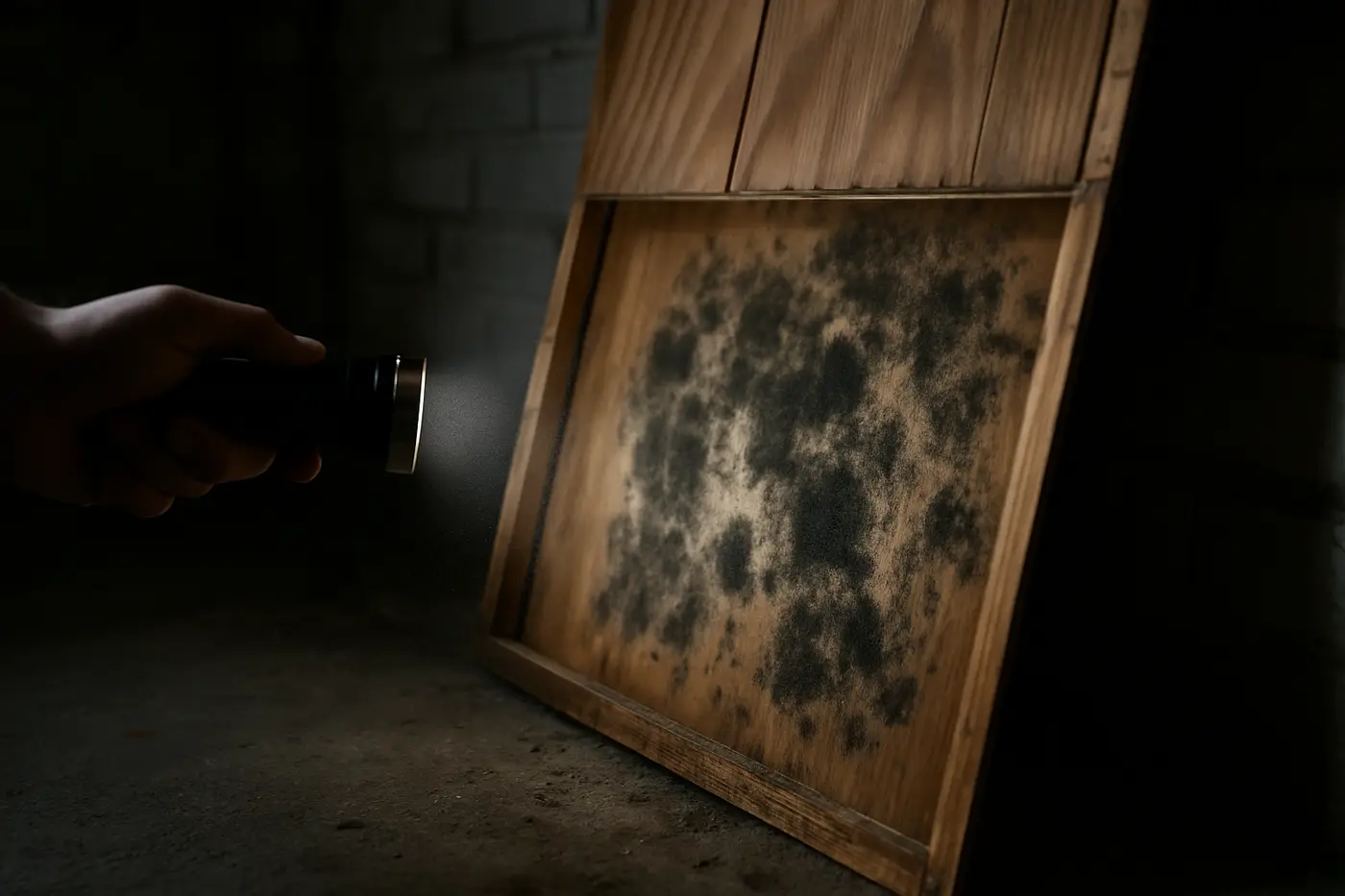
The pattern tells you which source you have. Condensation growth is diffuse, gray to black speckling across large areas, worst along the nail tips (the coldest points) and on the north side or near the eaves. Leak growth is concentrated under a seam, parapet or drain with a trail down the rafter. A ring around a duct outlet is a fan.
What to fix first
The order matters, because remediation before the moisture fix is a temporary result.
| Priority | Problem | Fix |
|---|---|---|
| 1 | Active roof leak | Repair the seam, reflash the parapet, clear and screen the drain; if the coating is chalked and cracked, recoat or reroof |
| 2 | Bath, kitchen or dryer exhaust ending in the attic | Duct it outside through the roof or wall with insulated rigid or semi-rigid duct and a proper cap with a damper |
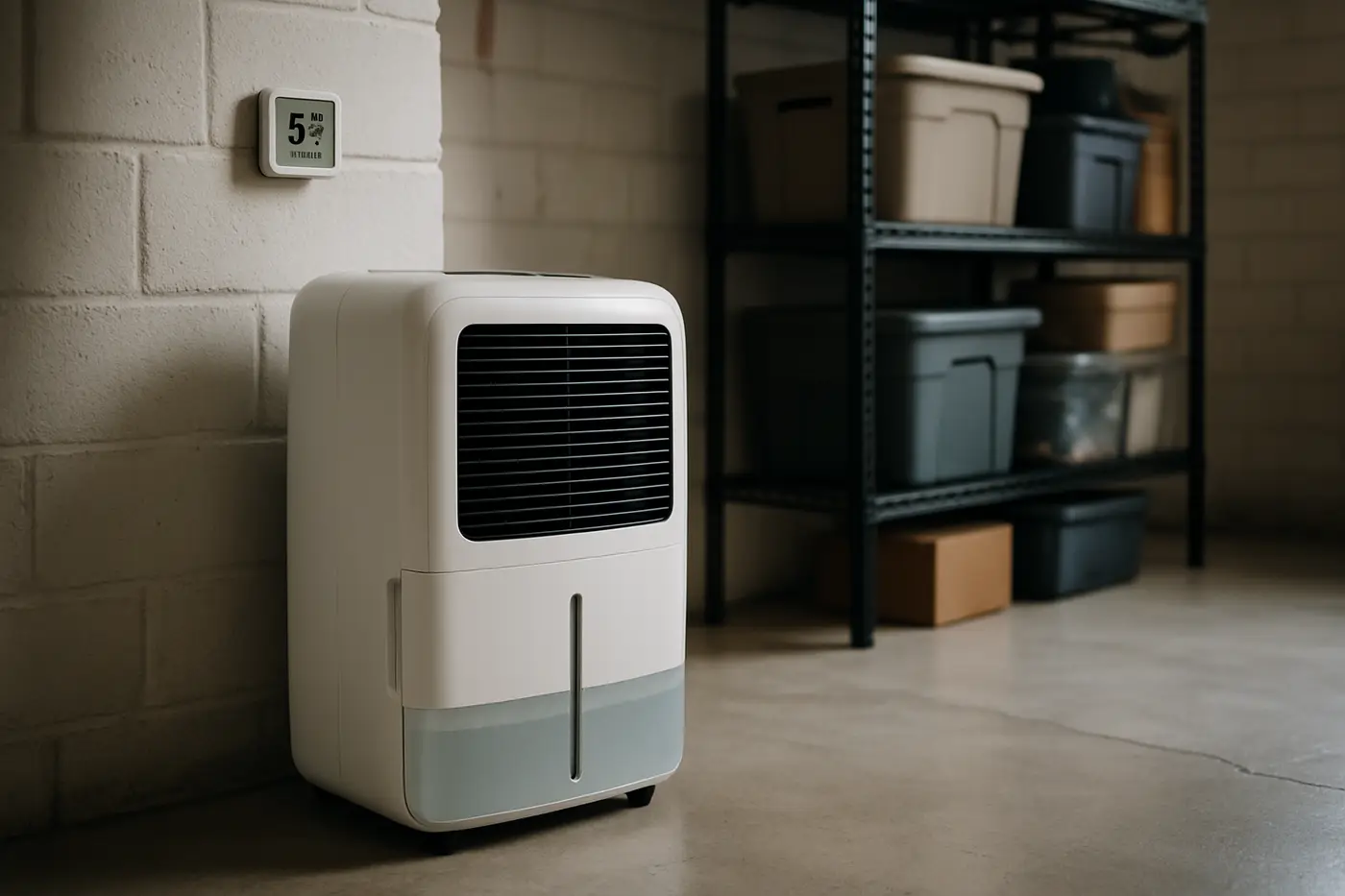
| 3 | Fan that is not used | Humidity-sensing switch or a timer so it runs during and 20 minutes after showers |
| 4 | Air leaks from the house | Weatherstrip and insulate the hatch; seal plumbing chases, wiring holes and around light housings from the attic side |
| 5 | Wet or contaminated insulation | Remove it; replace with dry insulation after the deck is clean and dry |
| 6 | Ventilation | Where there is a pitched section, keep soffit and ridge or gable vents open; on a true flat roof, control moisture at the source rather than trying to vent it |
A word on ventilation. Advice written for pitched roofs in suburban houses says to add vents. A flat rowhome roof has almost nowhere to put them, and adding a few vents to a space that is being fed warm humid air by a fan and a leaky ceiling does not dry it out. Stop the air and the water first; ventilation is the last item on the list for a reason. Roof and duct work belongs to a roofer and an HVAC contractor; we confirm the source with meters and a thermal camera so the right trade fixes the right thing.
When the attic needs remediation
Once the moisture is fixed, the question is whether the growth on the deck needs to be professionally removed or whether a dry attic and time are enough.
Staining versus active growth. Old, dry, gray staining on sheathing where the moisture content now reads under about 16 percent, with no fuzzy or raised texture, is often dead surface growth that can be HEPA vacuumed and left. Fuzzy, wet, spreading growth on wood that reads above 20 percent is active and will keep going until the wood is cleaned and dried. A mold inspection with moisture mapping at $250 to $500, credited against the work, is how that call is made.
Extent. A few square feet around a fan outlet on sound plywood, with the fan now ducted out, is within the EPA’s occupant cleanup guideline; see our DIY mold removal guide. Anything larger, or anything with contaminated insulation under it, is professional work. Attics are cramped, the insulation is the problem as much as the wood, and overhead scrubbing in a confined space is exactly how people end up breathing what they are cleaning.
What the work involves. Under the IICRC S520 standard the hatch is sealed into a containment and the attic is kept under negative air with a HEPA scrubber exhausting outside. Wet or contaminated insulation is bagged and removed. The deck, rafters and joists are HEPA vacuumed, and growth is cleaned back to clean wood, by hand on light growth and by media blasting or sanding under HEPA capture where it is heavy. Surfaces are treated with an antimicrobial, and the deck is verified dry before new insulation goes in. Fogging alone, with nothing removed and the wood still wet, is not remediation.
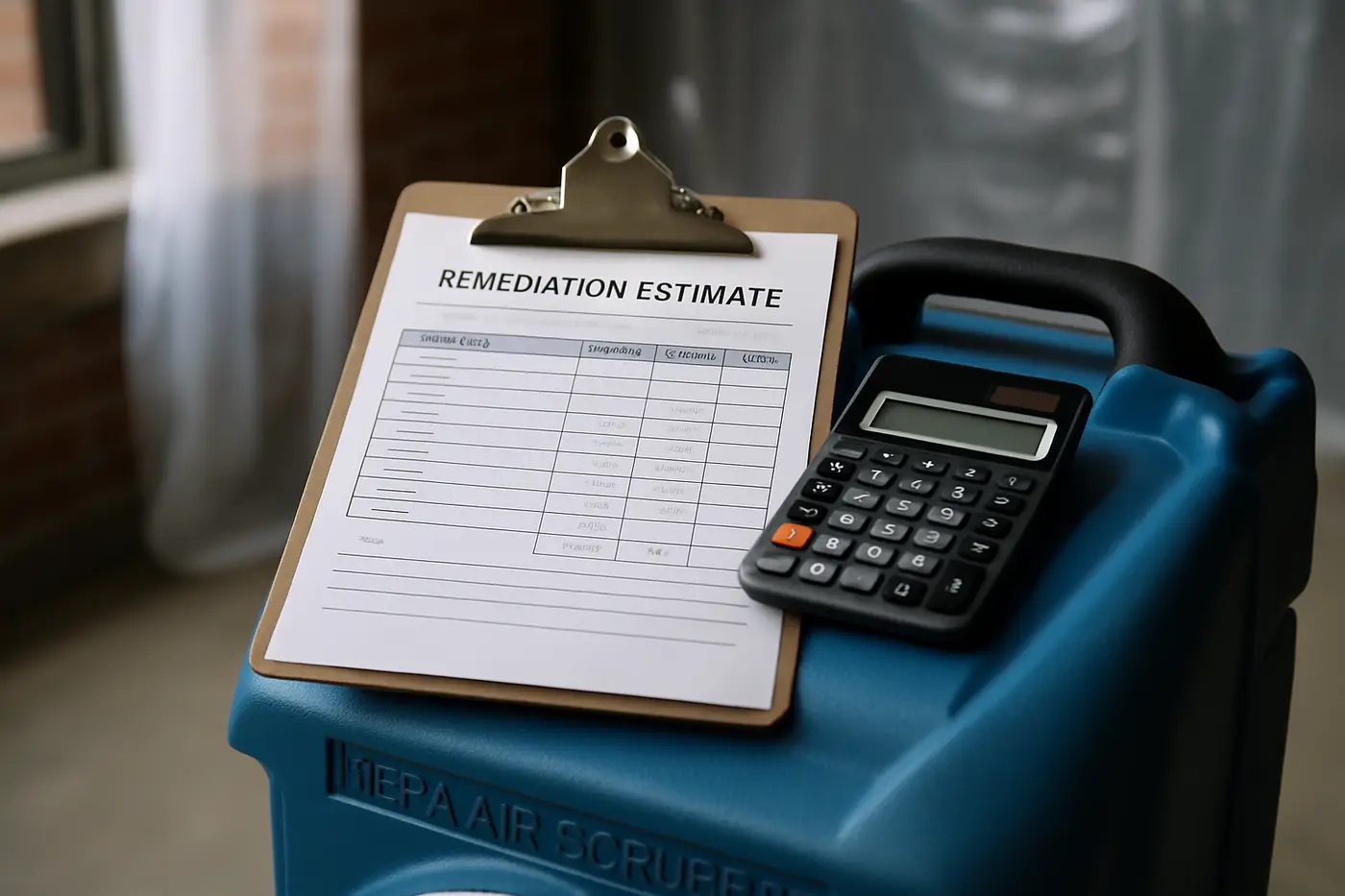
Cost and time. Attic mold remediation runs $2,000 to $7,000, typically 2 to 4 working days, with independent clearance testing at $300 to $700 and insulation and drywall replacement at $1,000 to $5,000 per room. Roof and duct repairs are separate. Our attic and crawl space mold removal page covers the process and the pricing page has the full table.
Insurance. A storm that opens the roof, and the water that follows immediately, is usually a covered loss on a Pennsylvania HO-3 policy, and mold that follows is typically paid under a $5,000 to $10,000 sublimit. Three winters of a slow seam, a coating never recoated or a fan venting into the attic since 1995 is generally excluded as long-term leakage or maintenance. Check your policy.
A seasonal habit that prevents most of it
Twice a year, open the hatch with a flashlight. In late fall, after the leaves are down, look at the underside of the deck for new dark areas and check that the drain on the roof is clear. In late winter, after a cold snap, look for frost or wet nail tips, which tell you house air is getting up there. Put your hand at the bath fan duct while someone runs the fan; if you feel air in the attic, the duct is not going outside. Ten minutes twice a year catches almost everything in this article before it becomes a $2,000 to $7,000 job.
Key takeaways
- Rowhome attic mold comes from flat-roof leaks (seams, parapets, drains, uncoated membranes) or from house moisture condensing on cold sheathing in winter, usually a bath fan venting into the attic.
- Read the pattern: concentrated staining under a seam or drain is a leak; diffuse speckling along nail tips is condensation; a halo around a duct is a fan.
- Fix in order: stop the leak, duct the fans outside, air seal the ceiling, remove wet insulation, then think about ventilation.
- Dry staining on sound wood can be vacuumed and left; active growth on wood over 20 percent moisture content or with contaminated insulation is professional work.
- Attic remediation is $2,000 to $7,000, plus clearance testing at $300 to $700 and rebuild at $1,000 to $5,000 per room; roof and duct repairs are separate.
- Look in the attic twice a year and clear the roof drain every fall.
If you have opened the hatch and found gray sheathing, send the form or call us. We map the moisture, tell you which trade fixes the source, and put the remediation in writing before any work starts.