Service region · 4 core neighborhoods
Mold Remediation
Northeast Philadelphia
Finished basements, twins and singles on creek-side ground
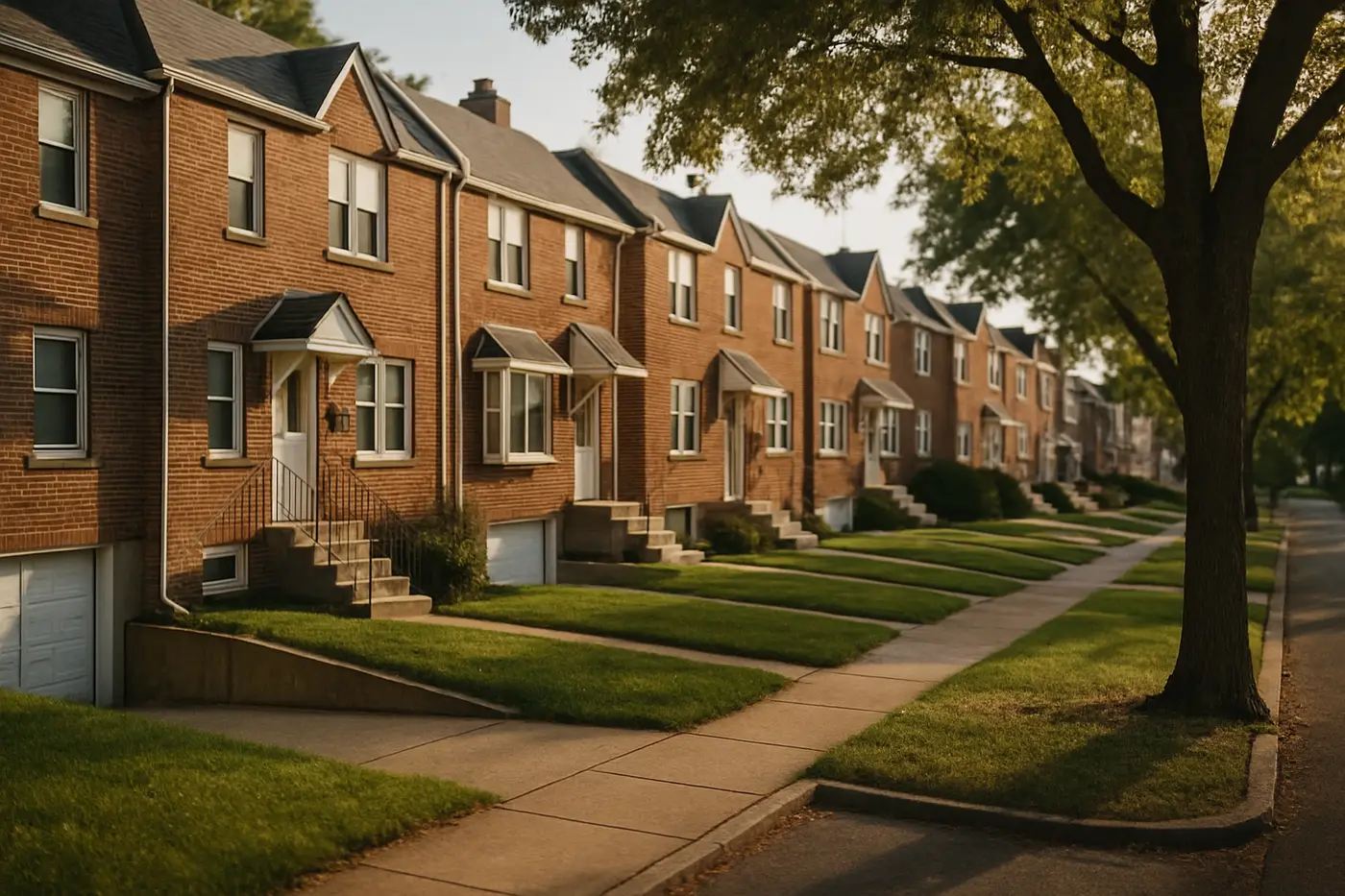
Mayfair, Fox Chase, Bustleton and Frankford: 1920s-1960s brick rowhomes, twins and singles, most with finished basements that hide moisture behind paneling and carpet. The pattern is seepage through block and poured foundations after heavy rain, creek proximity along Tacony-Frankford and Pennypack Creeks, and 1950s bathrooms with leaking tub surrounds and fans that vent into the attic.
- Typically within 45 minutes
- 4 core neighborhoods
- IICRC S520 remediation standard
Get help in Northeast Philadelphia
~45 min
Typical arrival across Northeast Philadelphia
24/7
Emergency response for active water
S520
IICRC mold remediation standard followed
Written
Scope and price before work starts
About Northeast Philadelphia
How moisture moves
through Northeast Philadelphia.
Every section of Philadelphia has its own mix of housing stock, roof type, basement construction and water sources. Knowing which one you are dealing with is what gets the right equipment on the truck.
Core neighborhoods
Mayfair, Fox Chase, Bustleton and Frankford, plus the ZIP codes between them.
What our crews see in Northeast Philadelphia
Northeast Philadelphia is the finished-basement part of the city, and that changes what a mold job looks like. The brick rowhomes, twins and singles of Mayfair, Fox Chase and Bustleton went up mostly between the 1920s and 1960s on block or poured concrete foundations, with a full basement that was paneled, carpeted and dropped-ceilinged decades ago. Many have a rear driveway with a basement garage, so the lowest door in the house sits at the bottom of a slope. Seepage through the slab and the cove joint after heavy rain wicks up the back of the paneling and the carpet pad, and the first sign is a musty smell rather than a visible stain, so the crew opens the wall at the base and moisture maps before anything else.
Fox Chase and Frankford sit near Pennypack and Tacony-Frankford Creeks, and low lots there take ground moisture and overland water in tropical remnants and intense thunderstorms. Upstairs, 1950s bathrooms bring leaking tub surrounds and shower pans, and bathroom fans ducted into the attic instead of through the roof, which grow mold on the sheathing. Summer humidity still runs above 60 percent in these basements, and a finished basement without a dehumidifier grows mold on the back of the drywall and under the carpet without a leak.
What we see most
Four patterns cover most
Northeast Philadelphia calls.
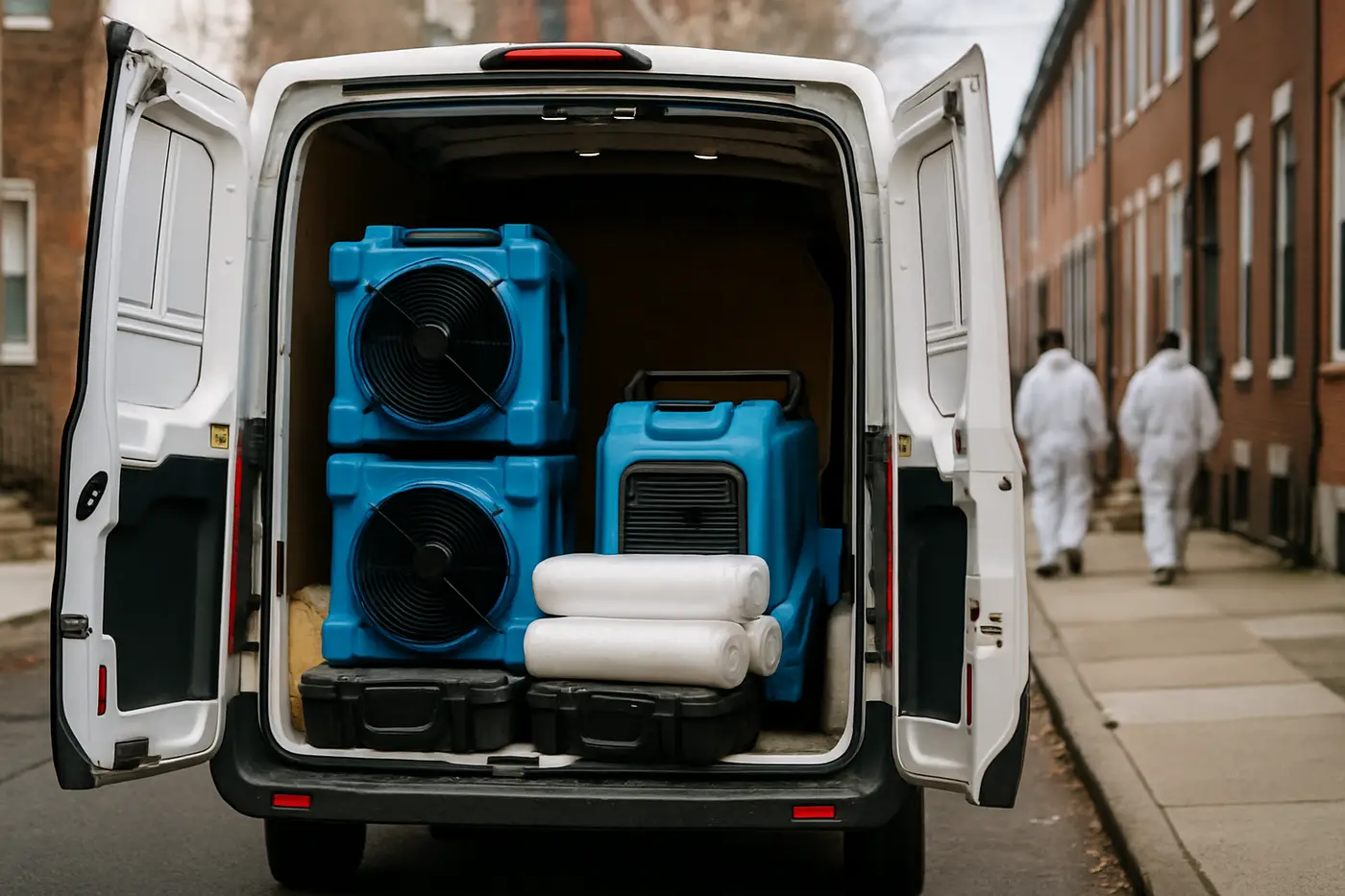
Crews are stocked for these before they leave: containment, HEPA air scrubbers, drying and treatment gear matched to the water source each one usually brings.
Finished basements with paneling, drop ceilings and carpet over slab that hide seepage until the wall cavity is already colonized
Ground moisture and overland water on low ground near Tacony-Frankford and Pennypack Creeks in Frankford and Fox Chase
Leaking tub surrounds, shower pans and bathroom exhaust fans venting into attics in 1950s bathrooms
Window and bay-window flashing failures on brick twins and singles wetting the wall cavity behind drywall and plaster
Where we cover
Northeast Philadelphia neighborhoods
we serve.
Open a neighborhood for the local context: the housing and basement type, the water sources that matter, and the mold patterns particular to that ZIP code.
- 19149
Mayfair
Finished basements with paneling, drop ceilings and carpet over slab hiding seepage at the cove joint and the base of the wall
Mayfair guide - 19111
Fox Chase
Finished basements on block foundations hiding seepage behind paneling and carpet after heavy rain
Fox Chase guide - 19115
Bustleton
Finished basements on block foundations hiding seepage behind paneling, drywall and carpet after heavy rain
Bustleton guide - 19124
Frankford
Stone-foundation cellars with concrete or dirt floors condensing summer humidity onto joists and stored contents
Frankford guide
Services across Northeast Philadelphia
Choose the help your
property needs.
Every service is available across Northeast Philadelphia, with the containment, removal, drying and treatment matched to where the growth is and what got wet.
Mold Remediation
Moisture correction, containment, negative air, HEPA filtration and removal of affected materials to the IICRC S520 standard.
Learn MoreMold Inspection & Testing
Visual inspection, moisture mapping and thermal imaging, with independent lab sampling only when it changes the decision.
Learn MoreBasement Mold Remediation
Stone foundations, damp slabs and humid summer air: remediation plus the dehumidification and sealing that keep it from returning.
Learn MoreBlack Mold Removal
Heavy or dark growth on wet drywall, wood and cardboard handled under full containment, PPE and negative air.
Learn MoreWater Damage Restoration
Extraction, moisture mapping and structural drying to IICRC S500 inside the 24 to 48 hour window before mold takes hold.
Learn MoreAttic & Crawl Space Mold Removal
Roof-seam leaks, bath fans venting into the attic and damp crawl spaces under rear additions: removal, ventilation fixes and vapor barriers.
Learn MoreCommercial Mold Remediation
Phased, after-hours containment for offices, retail, restaurants, schools and apartment buildings, with documentation for tenants and insurers.
Learn MoreBathroom & Kitchen Mold Removal
Behind tile, under sinks, above the shower and around windows: strip-out where growth is inside the material, clean-down where it is not.
Learn MoreResidential Mold Remediation
Rowhomes, twins, trinities and converted apartments, for homeowners, landlords, tenants, buyers and sellers.
Learn MoreMold Damage Repair & Rebuild
Drywall, insulation, trim, flooring and paint put back after clearance, with mold-resistant materials where they earn their cost.
Learn More
How a Northeast Philadelphia job runs
Measured remediation,
not bleach and hope.
From the first call to the clearance report, the same four stages run on every Northeast Philadelphia job, whether it is a closet ceiling or a whole basement.
Contact & triage
Tell us what you see or smell, where it is and whether anything is still wet. Active water and multi-unit jobs in Northeast Philadelphia go to the front of the queue.
Inspect & map moisture
Moisture meters, a thermal camera and a hygrometer find the source and the real extent of the growth, which is almost always larger than the visible stain.
Contain & remove
The area is sealed under negative air. Porous materials with growth come out bagged; framing, masonry and subfloor are HEPA vacuumed, cleaned and treated.
Dry, verify & rebuild
The structure is dried to its dry standard, verified visually and by meter, cleared by an independent tester if you choose, then rebuilt.
Is the water still active right now?
Stop the source if it is safe, keep the room closed and do not fan the growth. Then get in touch for guidance on drying, containment and the next step for your Northeast Philadelphia property.
Request an AssessmentNortheast Philadelphia questions
What Northeast Philadelphia owners ask first.
Straight answers on response times, the regional mold picture, which neighborhoods we cover and how insurers decide mold claims.
All questionsHow quickly can you reach Northeast Philadelphia?
Typical travel time across Northeast Philadelphia is around 45 minutes, and active water is prioritized over everything else, any hour. Scheduled inspections and remediation are booked for a day that suits you. We confirm a real arrival window when you get in touch. While you wait, stop the moisture source if it is safe, keep the affected room closed and do not scrape, sand or fan the growth.
What mold problems are most common in Northeast Philadelphia?
Two patterns account for most Northeast Philadelphia calls: finished basements with paneling, drop ceilings and carpet over slab that hide seepage until the wall cavity is already colonized, and ground moisture and overland water on low ground near Tacony-Frankford and Pennypack Creeks in Frankford and Fox Chase. Both start with water, and both get worse through a Philadelphia summer when basement air sits above 60 percent relative humidity for months. Remediation to the IICRC S520 standard fixes the moisture first, removes the growth under containment and brings the humidity down so it does not return.
Which Northeast Philadelphia neighborhoods do you cover?
Our core Northeast Philadelphia list is Mayfair, Fox Chase, Bustleton and Frankford, and the surrounding ZIP codes are covered on the same basis. If you are on the edge of the service footprint, tell us the neighborhood and we will be honest about the arrival window before anything is booked.
Will my insurer cover mold remediation in Northeast Philadelphia?
Most Pennsylvania homeowners policies cover sudden and accidental water losses such as burst pipes and appliance failures, and mold that follows one of those losses is usually paid under a mold sublimit, commonly $5,000 to $10,000. Mold from long-term leaks, seepage or humidity is generally excluded, sewer backup needs a water backup endorsement and flooding needs a separate flood policy. We document the source, the extent and the moisture readings from the first visit so the claim reflects what actually happened.
Mold in Northeast Philadelphia?
Let's get your Northeast Philadelphia property dry and clear, properly.
Tell us the neighborhood, what you see or smell and whether anything is still wet. A remediation coordinator will confirm coverage, an arrival window and what your adjuster will need.