Center City · 19106
Mold Remediation
Old City
Inspection, containment, removal and moisture correction to the IICRC S520 standard for Old City homes, rentals and businesses, documented from the first visit for your adjuster, landlord or buyer.
- Typically within 30 minutes
- IICRC S520 remediation standard
- Written scope before work starts
Get help in Old City
~30 min
Typical arrival in Old City
24/7
Emergency response for active water
S520
IICRC mold remediation standard followed
1700s-1900s
Colonial and Federal rowhomes, converted warehouses and condo lofts
Mold in Old City
Where the moisture comes from
in Old City.
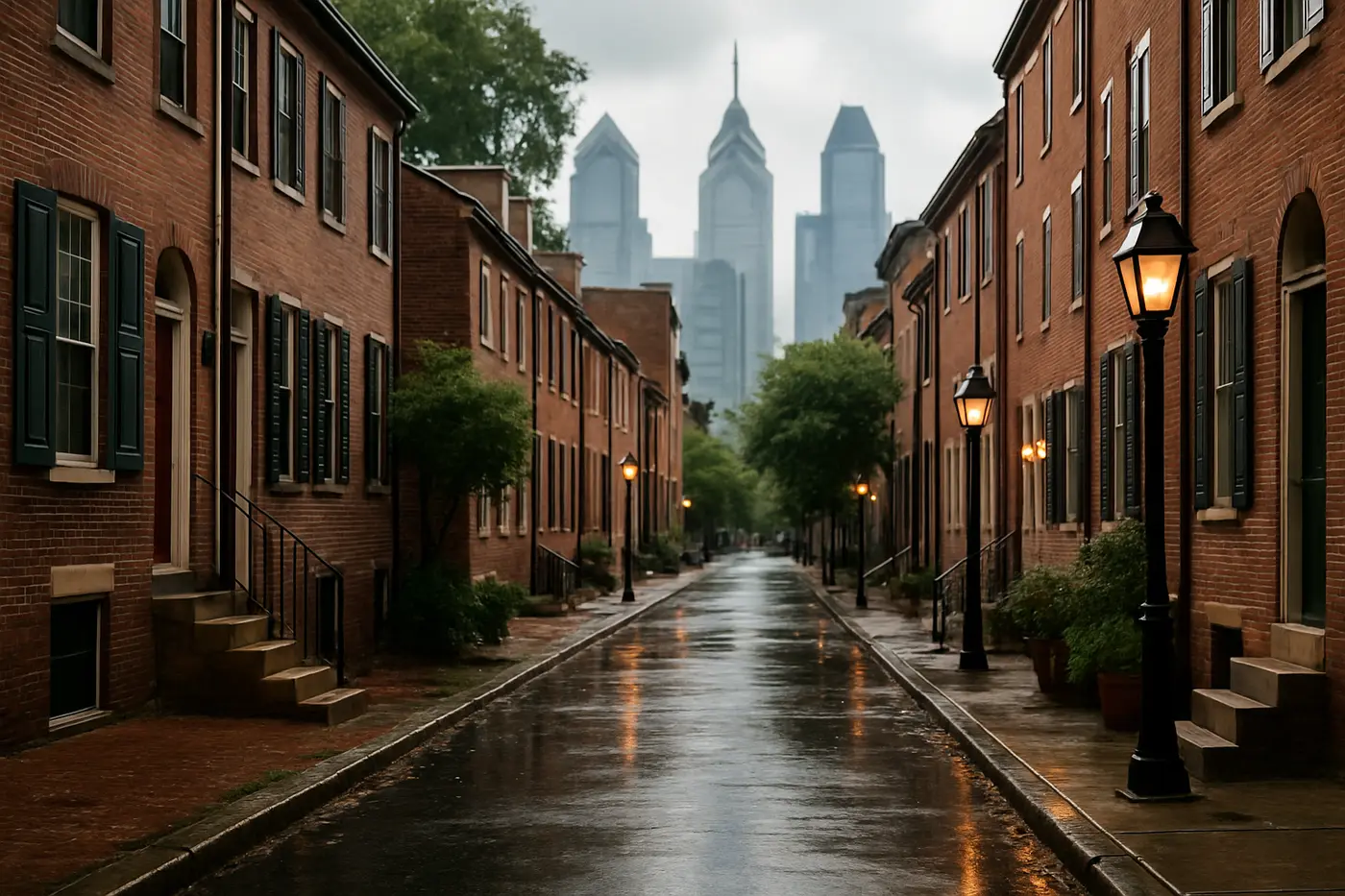
Old City holds some of the oldest houses in the city alongside 1800s and early 1900s warehouses and factories that have been converted into condos, lofts and apartments. It sits on low ground near the Delaware River on the combined sewer, and most jobs are multi-unit with a condo association involved.
Crews on the ground locally
Regular work around Independence Hall, Elfreth's Alley, Christ Church and Penn's Landing, and the blocks between.
- Housing era
- 1700s-1900s
- Typical homes
- Colonial and Federal rowhomes, converted warehouses and condo lofts
Notes from our Old City crew
Old City is two kinds of building. The first is the Colonial and Federal era brick rowhome, some going back to the 1700s, with a brick foundation, a shallow cellar and a floor that may still be brick or dirt. The second is the converted warehouse or factory from the 1800s and early 1900s, now condo lofts and apartments with heavy timber floors, exposed brick and a condo association. The neighborhood sits on low ground a few blocks from the Delaware River, so cellars run damp year-round and hold well above 60 percent relative humidity through the summer, and mold on joists, on the back of storage shelving and on the base of furred-out walls is the routine finding.
In the converted buildings the pattern is an upper-unit failure, a shower pan, a dishwasher line or an AC condensate drain, that runs across the timber floor and down through the ceiling of the unit below, sometimes two floors down, before it is noticed, and the association needs one report covering every affected unit. Old roof drains and parapets on flat commercial roofs leak into the top-floor units. The combined sewer runs under the whole neighborhood, and an intense summer thunderstorm can push Category 3 water through cellar floor drains and ground-floor fixtures; that material comes out, it is not dried. The crew plans for narrow stairs, freight elevators where they exist, hallway containment and negative air, and for lead paint and asbestos testing before any demolition in buildings this old.
What we see most
Common mold problems
in Old City.
Not generic pain points. These are the patterns that make up most Old City calls, ranked roughly by how often they land on the schedule.
Upper-unit leaks in converted warehouses and condo lofts traveling through timber floors to the units below
Brick foundation cellars on low ground near the Delaware River running damp and above 60 percent humidity all summer
Flat and low-slope roof drains and parapets on old commercial buildings leaking into top-floor units
Combined sewer backups through cellar floor drains and ground-floor fixtures in summer thunderstorms
Window and cornice flashing failures on old masonry facades wetting plaster and furring behind the wall
Something else in Old City?
A smell you cannot place, spots that come back after cleaning, a leak from next door: if it is damp, we can assess it. Tell us what you see and when it started.
Request an assessment
Services in Old City
Choose the help your
Old City property needs.
Every service below is available across Old City and the rest of Center City, with the containment, removal and drying matched to where the growth is and what got wet.
Mold Remediation in Old City
Moisture correction, containment, negative air, HEPA filtration and removal of affected materials to the IICRC S520 standard.
Learn MoreMold Inspection & Testing in Old City
Visual inspection, moisture mapping and thermal imaging, with independent lab sampling only when it changes the decision.
Learn MoreBasement Mold Remediation in Old City
Stone foundations, damp slabs and humid summer air: remediation plus the dehumidification and sealing that keep it from returning.
Learn MoreBlack Mold Removal in Old City
Heavy or dark growth on wet drywall, wood and cardboard handled under full containment, PPE and negative air.
Learn MoreWater Damage Restoration in Old City
Extraction, moisture mapping and structural drying to IICRC S500 inside the 24 to 48 hour window before mold takes hold.
Learn MoreAttic & Crawl Space Mold Removal in Old City
Roof-seam leaks, bath fans venting into the attic and damp crawl spaces under rear additions: removal, ventilation fixes and vapor barriers.
Learn MoreCommercial Mold Remediation in Old City
Phased, after-hours containment for offices, retail, restaurants, schools and apartment buildings, with documentation for tenants and insurers.
Learn MoreBathroom & Kitchen Mold Removal in Old City
Behind tile, under sinks, above the shower and around windows: strip-out where growth is inside the material, clean-down where it is not.
Learn MoreResidential Mold Remediation in Old City
Rowhomes, twins, trinities and converted apartments, for homeowners, landlords, tenants, buyers and sellers.
Learn MoreMold Damage Repair & Rebuild in Old City
Drywall, insulation, trim, flooring and paint put back after clearance, with mold-resistant materials where they earn their cost.
Learn More
Before we arrive
Four things that help
in Old City.
Most of the damage we get called to undo happened after the mold was found, not before. These four steps keep the problem the size it is today.
When cleaning is enoughStop the water
If a pipe, appliance or roof leak is still feeding the area, shut the valve or catch the drip if it is safe. Mold work does not hold until the moisture source is under control.
Leave the growth alone
Do not dry-scrape, sand, wire-brush or spray bleach on moldy drywall, and do not point a fan at it. Disturbing it without containment spreads spores through the house.
Close the door
Keep the affected room shut, turn off any HVAC return in that room if you can, and keep children, pets and anyone with asthma or a weakened immune system out.
Photograph and note dates
Timestamped photos of the growth, the stain and any water source, plus when you first noticed it. Adjusters, landlords and buyers all ask for the same record.
Nearby neighborhoods
Also covering the rest of Center City.
Trinities, converted lofts and condo towers on the combined sewer. Same crews, same response and the same remediation standard across every Center City ZIP code.
Explore All Service AreasDocumentation
What people will ask for after a Old City mold job.
Adjusters, landlords, tenants and buyers all want the same three things: the source, the extent and proof it is gone. We build that file from the first visit.
- Insurance: sudden loss or long-term moisture? Mold that follows a sudden water loss is usually paid under a mold sublimit; mold from seepage, humidity or a slow leak is generally excluded. The source decides the claim for Old City homes as much as anywhere.
- Renting in Old City? Tenants can document and notify the landlord in writing, and report persistent dampness through 311 to L&I. Landlords get one written scope and clearance report per building.
- Buying or selling? Pennsylvania's Seller Disclosure Law covers known water intrusion and mold history. A written scope and independent clearance before closing settles the question for both sides.
Old City questions
What Old City owners ask first.
Straight answers on response times, why local homes grow mold, insurance and how long the work takes.
All questionsHow quickly can you get to Old City?
Active water is prioritized over everything else. Typical travel time to Old City addresses is around 30 minutes from the nearest crew, and we confirm a real arrival window when you get in touch rather than a marketing guess. Scheduled inspections and remediation are booked for a day that suits you. While you wait, stop the moisture source if it is safe and keep the affected room closed.
Why do Old City homes grow mold?
The most common pattern we see in Old City is upper-unit leaks in converted warehouses and condo lofts traveling through timber floors to the units below, followed by brick foundation cellars on low ground near the Delaware River running damp and above 60 percent humidity all summer. Colonial and Federal rowhomes, converted warehouses and condo lofts from the 1700s-1900s give moisture plenty of routes in, and Philadelphia summers with dew points in the 65 to 75 degree range keep basement air above 60 percent relative humidity for months. Fix the water first, then remove the growth under containment, then bring the humidity down so it stays gone.
Will insurance cover mold remediation in Old City?
Most Pennsylvania homeowners policies cover sudden and accidental water losses such as burst pipes and appliance failures, and mold that follows one of those losses is usually paid under a mold sublimit, commonly $5,000 to $10,000. Mold from long-term leaks, seepage or humidity is generally excluded, sewer backup needs a water backup endorsement and flooding needs a separate flood policy. We document the source, the extent and the moisture readings from the first visit so the claim reflects what actually happened.
How long does mold remediation take in Old City?
A single contained area such as a bathroom ceiling or one basement wall usually takes two to four working days for containment, removal and cleaning. A Old City basement runs three to six working days, plus five to ten days of drying if the structure is still wet, because stone foundations and slabs give up moisture slowly. Whole-house or multi-room jobs take one to three weeks. Containment stays up until the area passes a visual and moisture check and, where you want it, independent clearance testing.
Mold in your Old City property?
Let's get Old City dry and clear, properly.
Tell us what you see or smell, where it is and whether anything is still wet. A remediation coordinator will confirm coverage for Old City, an arrival window and what your adjuster, landlord or buyer will need.